S M B O measurement-vertical measurement-vertical

Latest Stories

Moving Fast

The Slow Food movement may be all about slow living, but its spread around the world has been nothing short of speedy. What began as a protest against the opening of a McDonald’s in the Piazza di Spagna in Rome in 1986 has morphed into an international organization that safeguards some of the most authentic and unique local food products in 160 countries across the world, and even receives UN recognition and support for this important work. In Spain, the Slow Food movement mainly consists of independent regional groups made up of chefs, producers and other food-related professionals, and its influence continues to grow as new initiatives are gradually launched.

Cup By Cup

Slowly enjoying a coffee under the warm sun with good company or a good book is practically a national pastime in Greece. In fact, Greeks love their coffee so much that owning a coffee shop is considered one of the safest businesses in the country: even when times are tough, who doesn’t want a cup of coffee? Despite (or perhaps because of) Greece’s ongoing economic crisis, the number of quality coffee shops in Athens has mushroomed in recent years, and a rising cadre of professional baristas – a trendy title to hold nowadays – is taking pleasure in sharing their knowledge of coffee making and drinking.

Culinarium-Khasheria

For 2,000 years, people have flocked to the Abanotubani baths, whose hot sulfuric waters have long been fabled to possess magical healing qualities. The Persian king Agha Mohammad Khan soaked there in 1795, hoping to reverse the effects of the castration he suffered as a child. He dried off, found his conditioned unchanged and razed Tbilisi to the ground. While people continue to espouse the curative properties of the sulfur baths, we can only vouch for their powers to relieve stress, loosen up sore muscles and help poach the hangover out of you. It is the latter attribute that inspired the local chef Tekuna Gachechiladze to open a restaurant last year that might not cure erectile disorders, but is definitely designed to nurture alcohol-stricken bodies back to life.

El Pialadero de Guadalajara

At 2pm on most weekdays, slickly dressed business people stroll Mexico City’s trendy Juarez neighborhood, lending its streets an air of well-heeled, buttoned-up formality. The polished glimmer of their shoes marks them as the nation’s best and brightest, if not among its wealthiest. These are the white collar workers of the nearby Paseo de la Reforma, let out of their office towers for lunch. Many will choose to spend their breaks cradling greasy street tacos, craning their necks as they eat, careful not to stain or otherwise tarnish their smart suits.

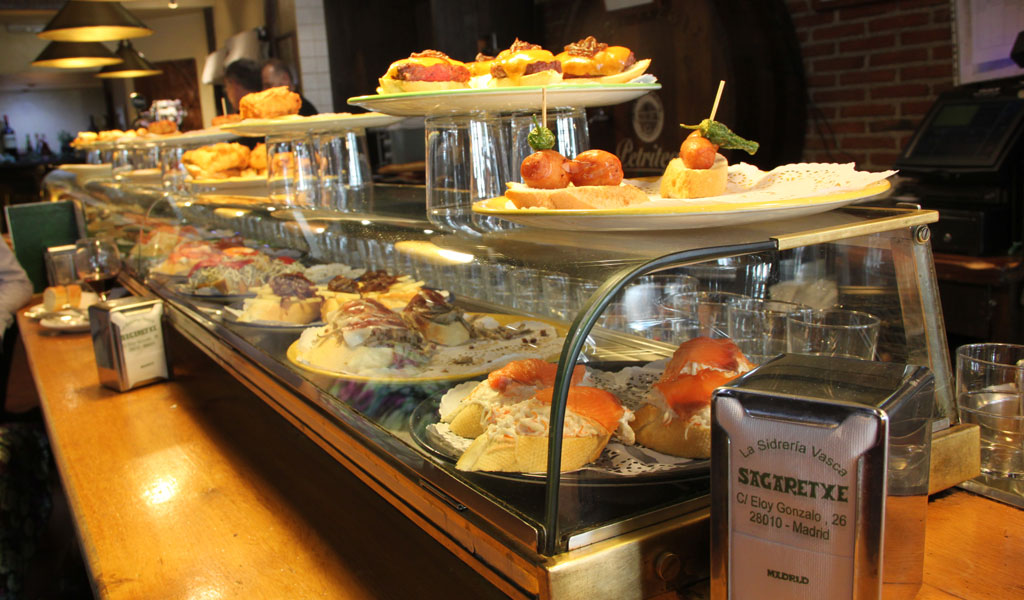
Sagaretxe

The ascendance of Spanish gastronomy has largely had a Basque signature, which, together with the Catalan scene, is seen as the vanguard in Spanish haute cuisine. But while Nouvelle Basque has gotten all the spotlight lately, the food culture of this northern region has always been outstanding, thanks to its abundant rains and a territory that encompasses the Cantabrian Sea and Ebro River. Basque taverns are largely known for their pintxos, a kind of tapas that are more sophisticated in taste as well as in design. At certain times of day these small plates fly nonstop out of the kitchen, usually chosen at the chef’s discretion.

Bar Bunda

Autumn in Rio finds the city at its the best. The days are sunny, the scorching heat of January and February has subsided, and it's low season for tourists, which means the beaches are less crowded. The only problem with fall days is they end too early—the sun sets by 6:00 pm in April. If you want to keep the day going, one good option is to head to one of the city's many beachside pé sujos (literally, dirty feet), ultra-casual outdoor bars. On a recent April evening we found ourselves at Bar Bunda de Fora (Bar Butt-Out), steps from Copacabana Beach. According to owner Deborah Cardoso, the bar got its nickname because the interior used to be so small that when customers placed their orders at the counter their rear ends were technically outside the bar. It's a classic low-key Rio joint: the beer is light, cheap, and bem gelada (very cold); the stools are made of plastic; and the food is fried. The crowd is young and old, mostly made up of families and neighbors.

Pasquale ‘o Nummararo

His name is Pasquale De Stefano, but everyone knows him as Pasquale ‘o nummararo, “the number man.” In this era of plotters and laser printers, De Stefano continues to hand-paint his signs, using ancient paintbrushes on wooden boards, which are then planted in the baskets of all Neapolitan fruit sellers. And even the wooden signposts are still cut by hand. In 65 years of work he has by now created tens of thousands of signs advertising the prices of apples (€0.99) or peaches (3 kg for €2). They can be small or large, on canvas or on wood, promising a “special offer” or “great value.” Sometimes Pasquale’s signs will feature a more pointed message: “Whoever touches the fruit will be touched by the fruit seller,” is one that comes to mind.

Here Come the Grills

For a few weeks during June, large swathes of Lisbon turn into one extended outdoor cookout. It’s the festival of Santo António, Lisbon’s favorite local saint, and the city celebrates his memory by way of grilling up copious amounts of sardines, so much so that during this period the scent of sizzling fish rolls through the streets of the city’s historic neighborhoods like a bank of fishy fog. In these old-time neighborhoods, the festival also provides residents a chance to play caterer to the masses, with seemingly every local with a halfway decent charcoal grill setting up shop outside their home and grilling sardines for the revelers partying in the streets. The whole scene is a complete departure from the more staid rest of the year and it often feels as if these neighborhood grillers live for just this time, allowing them to play the role of guardians of Lisbon’s most important social tradition.

Revetlla de Sant Joan

On the night of June 22, a fire is lit at the top of Canigó mountain in the Pyrenees. All through the night, hundreds of volunteer torchbearers carry the flame to towns and villages throughout the four provinces of Catalonia. The arrival of the flame the next day signals the start of the Revetlla de Sant Joan (St. John’s Eve celebration). Bonfires, firecrackers and fireworks light up the night, and people while away the hours drinking, eating and dancing in public squares and beaches or at parties. Fire, noisemaking and dancing are the main ingredients of St. John’s Eve, the Christian adaptation of ancient pagan celebrations of the summer solstice.

Sevda Gazozcusu

Istanbul's Vefa neighborhood is home to a rich collection of historic treasures. Framed by the vast and beautiful 4th-century Valens Aqueducts, Vefa is in the heart of the old city but retains a sense of locality and rusty charm perhaps lost in the more touristy neighborhoods nearby. Among its institutions is Vefa Bozacısı, which has sold boza – a thick, fermented millet-based drink popular in the winter – since 1876. Immediately across the street is an establishment that has only been around for a few months but also specializes in another beloved local beverage, gazoz. Opened last year by Istanbul University economics student Mahmut Saklı, Sevda Gazozcusu is likely the only shop in Turkey that exclusively sells the drink.

A Little Taste of Home

Have you ever met a restaurant owner who has been a house painter, real estate agent, rug dealer, bread deliverer, camel trainer and interpreter as well as running a tourism business? Meet Ahmad Alssaleh from Palmyra, Syria. Although he is only 31 and the youngest of ten children, he is not only unstoppable, he is about to celebrate the first anniversary of one of the most imaginative and best restaurants we have ever been to anywhere – not just Athens. But we’ll get to the food later. His story will whet your appetite, as it did ours. It all started back in 2009 when Alssaleh met Magda, a Greek girl who’d gone to Syria as a tourist.

Gleba Moagem & Padaria

Bread may be fundamental to Portugal’s food culture, but over the last few years the baked goods landscape in the country has begun looking increasingly uniform, with fake neo-classic franchising playing no small part in its decline. Although many old and family-run bakeries can’t keep up with the competition – especially in the cities – there are a few initiatives kneading a small revolution. Courses, workshops and experimental research are creating a new class of future bakers who often rework old techniques. Among them is 21-year-old Diogo Amorim. Gleba, his bakery, with its contemporary look and historic techniques, attracts customers from all over Lisbon. It opened six months ago in Alcantara, a neighborhood that shows traces of many past lives, from industrial working-class to the aristocratic.

CB on the Road

The streets are nearly empty. As light cascades down cobbled thoroughfares, dog walkers shield their eyes and market-goers tow their rickety carts toward Mercado de la Bretxa. The market of San Sebastián sits underneath a square just a pebble’s skip from crashing waves surging up the mouth of the Urumea Itsasadarra River. Lamps glowing red illuminate butchers navigating dangling strings of txistorra, Basque chorizo, while across the aisle, an bright white storefront advertises every imaginable form of bacalao, or salt cod. Tucked in a rear corner, Bar Azkena has been crafting delicate fluffy breakfasts for nearly 20 years. Tortillas, or omelets, stuffed with surprises like squid ink and blood sausage fill the bar counter, necessitating foldout tabletops and overflow seating across the aisle.

Friggitoria Masardona

Pizza, as you might already know, was born in Naples. What you might not know is that in Naples, fried pizza existed before baked pizza. And although Neapolitans have raised pizzamaking in the oven to an art form, their skill at turning out fried pizza is even greater. As with so many local specialties in this city, it’s hard to say who makes the best fried pizza here; there are improvised pizzerias in every corner of Naples, street vendors that make a really good pie. There’s a saying here, voce e’ popolo, voce e’ dio (the Neapolitan version of vox populi vox dei), which means that something is certain – there’s no doubt. And that applies to Masardona's pizza being one of the best in the city.

Out of Sight

Greeks love going out till late, even on weekdays, so it’s no surprise that Athens is legendary for its nightlife. There are bars to suit every taste: bars with a great view, bars by the sea, mainstream bars, bars with great cocktails or music, etc. But for us, the really special bars are the ones that fly under the radar, bars that feel like a real discovery. We’ve done our homework and found some of the best of these “hidden” bars. Just between us, of course.

logo

Terms of Service