S M B O measurement-vertical measurement-vertical

Latest Stories

El Bisaura

Inside Barcelona’s lesser-known Mercat de Les Corts is a small, unassuming bar offering up the bounty of the Mediterranean. El Bisaura opens up shop at 6:30 a.m., serving esmorzars de forquilla (hearty Catalan breakfasts like sausage and beans, tripe stew and grilled cuttlefish) to local workers. At lunch, it serves a more refined seafood menu composed of whatever owner Alfonso Puig gets from Peixateria Anna, the fish stand on the other side of the market. The fish and seafood of the day are always seasonal, local and impeccably fresh – which is no surprise, since Puig is also the owner of the fish stand.

Lucio, photo by Francesca Savoldi

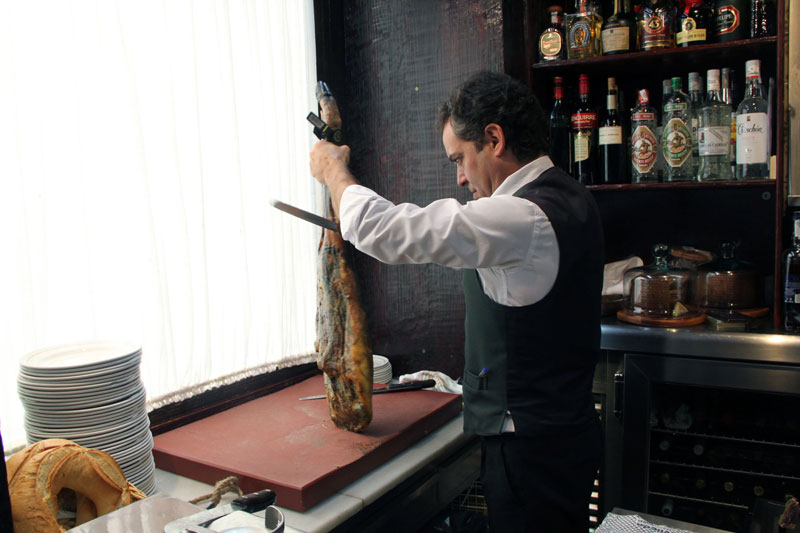
Sitting at a table in Lucio, a long-established tavern in the heart of Madrid’s most famous tapas street, is a singular experience that has a slightly surreal, Buñuel-esque touch. Queues formed of Madrid’s born-and-bred elite snake past the elegant wooden bar, the coiffed connoisseurs greeted with affection by the landlord himself as they wait to eat his restaurant’s specialty dish. Lucio’s signature white suit and the hushed, apparent dignity of the place are quite a contrast to the actual holy grail itself: a plate of fried eggs and fries. The eponymous owner keeps repeating in a whisper that this is the most famous restaurant in all of Spain; perhaps it truly is.

Biscoito Globo

Asking cariocas if they remember their first Biscoito Globo, the ubiquitous, crunchy beach snack, is like asking anyone who teethed in the United States if they remember trying Cheerios for the first time. Globo biscuits and sweet iced mate are to Rio's beaches what hot dogs and beer are to American baseball stadiums. Calls of “Ó Globo! Ó mate!” are the soundtrack along the shores of Copacabana, Ipanema and Leblon. The iconic packaging, which features a globe-headed mascot surrounded by the Eiffel Tower, the Tower of Pisa, Portugal's Belém Tower and Rio's Sugarloaf, has been reproduced on t-shirts, tote bags, and cangas (sarongs).

Post-Colonial Lisbon: Angolan Edition

Although Angolans are not known to emigrate en masse like their continental counterparts, they do form the second largest African diaspora community in Lisbon. The seventh largest country in Africa, Angola has undergone considerable upheaval, which has contributed to this. Violent civil conflict began after the country gained independence from Portugal in 1975 and continued – with a few interruptions – until 2002. Caused by a power struggle between two former liberation movements influenced by the larger cold war, this conflict has caused half a million deaths, significant displacement and severe damage to national infrastructure, stoking a steadily burning atmosphere of social instability and insecurity.

Angola in Lisbon: Taste

Although it opened four years ago, Shilabo’s has gone mostly unnoticed by many lisboetas – perhaps due to its minimal size (only 12 seats) or to the discrete nature of owner Santiago Afonso Julio. From his tiny open kitchen, he serves up just three or four daily dishes, indicated on the menu outside the door. Most are traditionally Angolan, such as the iconic national dish, moamba. The classic format is made up of stewed chicken pieces served with funge, the gelatinous porridge of cassava (or corn, in the southern part of the country), and can be prepared either with peanut butter or with palm oil. Afonso Julio’s version is a fusion of the two.

Angola in Lisbon: Go Deep

A three-floor cultural association in Rato, the neighborhood just north of sleek Principe Real, Casa de Angola has for decades focused primarily on bridging Angolan and Portuguese cultures. Created in 1971 by Angolan students, it launched without state support and is still subject to some intrigue. “Some say that this was an Angolan masonry house because of some indicative symbols on the building,” says chef Paulo Soares, who moved to Lisbon in 1981.

Sergi de Meiá

Sergi de Meiá, in his own words, “started in cuisine the day he was born,” growing up as he did in his mother’s restaurant. He received his first cooking lessons from her and from a family full of chefs and cooks before heading off to cooking school at 14. Nowadays, his mother, Adelaida Castells, is still a fundamental part of the team at de Meiá’s restaurant and is in charge of the most traditional recipes they make. Those dishes are part of a concept dedicated to Catalan cuisine that is, de Meiá says, “evolutionary” and “determined by nature,” a tribute to local products, mixing tradition and modernity in the same pot and in a menu that includes a few historic recipes as well as vegan options.

Arsi's Pateseria

Tucked away from the constant hustle and bustle of Queens Boulevard, Anna and George Artunian’s Sunnyside bakery, Arsi’s Pateseria, is a pleasant surprise. As we walk down 47th Avenue towards the gauzy Midtown Manhattan skyline, the smell of freshly baked burekas greets us long before we get to the bakery’s wide window. Inside, in metal trays behind the counter, four different types of burekas, savory sesame ring cookies and even baklava gleam in different shades of gold. Also behind the counter is 60-year-old Anna Artunian, one-half of the husband-and-wife team running the establishment and chatting with the customers, most of whom are regulars.

Mapping Queens' Roosevelt Avenue, Bite by Bite Featured Image

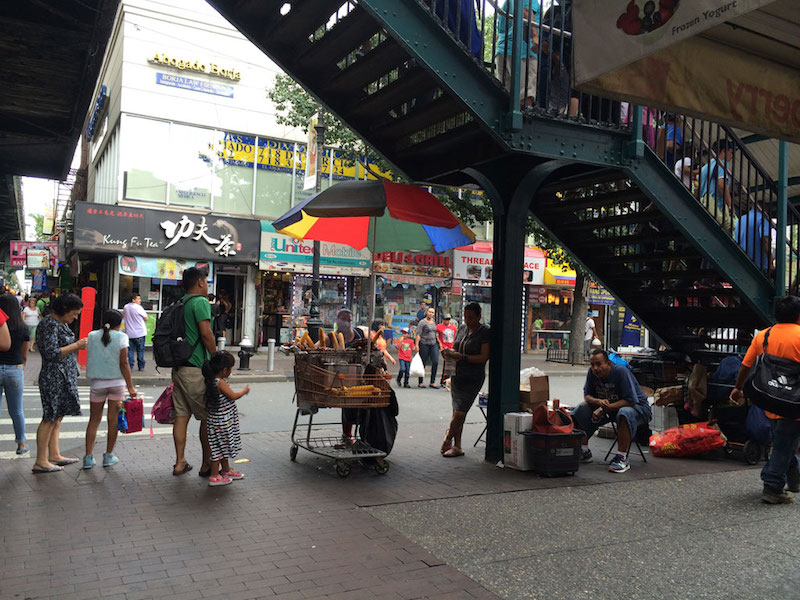
Queens may be home to diverse communities representing almost every country in the world, but if there’s thing that unites many of these immigrants it’s Roosevelt Avenue, a 5.8-mile corridor that runs east/west underneath the elevated tracks of the 7 subway line. Running through neighborhoods with some of the highest concentrations of immigrants in the borough, Roosevelt Avenue might be one of the most culturally – and culinarily – diverse commercial thoroughfares in the United States. In 2015, Noah Allison, a PhD candidate in Urban Policy at The New School, had the brilliant idea of walking the length of Roosevelt Avenue in order to map all of its restaurants. We recently caught up with him to talk about the project and his findings.

Fly By Jing

Whether we’re heading to Sichuan province for a little culinary vacation or just looking for the best bowl of dan dan mian in the city, there’s one person we call for dining recommendations: Jenny Gao. Born in Chengdu and raised in Canada, Gao’s family still lives in Sichuan, and since moving to Shanghai in 2012, she visits them often. Over the past couple years, she’s turned her love for her hometown cuisine into a full-time job, becoming Shanghai’s unofficial Sichuan food ambassador. For years, Gao was the writer behind Jing Theory, a popular food blog about Shanghai’s best places to eat, drink and more.

Taquería El Progreso

Deep in the trenches of one of the oldest union strongholds in Mexico City, there’s a deeply democratic taquería that manages to bring together office workers, blue-collar workers, locals and tourists alike. When you walk by this place, chaos seems to reign. However, once you step into the current you realize there’s a system that keeps the flow of people, tacos, and drinks under control. Taquería El Progreso started serving beef head, suadero (a cut similar to brisket) and tripe tacos 23 years ago. Javier Ramos, an employee who has been working there since the beginning, told us that at first the taquería was about a third of its current size.

A Bounty of Fresh Fish at the Athens Market

All the seafood that Mother Sea gives us is well presented and decorated at the Athenian market. Daily fresh fish, delivered from the Greek islands of the Aegean.

Tasca Carvalho

Portuguese gastronomy is at the core of Rio's botequins, the small, often family-run gastrobars spread all over the city. Traditional botequins offer European food and some unique aspects of Brazilian culture – mix you’ll find only in Rio. That being said, it’s hard to say whether Tasca Carvalho, the brand new Portuguese gastrobar in Copacabana, is a typical botequim. Run by two young Portuguese friends newly arrived from Porto, Tasca Carvalho is not a mix, but 100 percent Portuguese. And that makes it unique in Rio's street food landscape. Perhaps the only indication of Brazilian influence you might find at Tasca Carvalho is in the ambience. The tables and benches, spread all over the sidewalk, follow the carioca rules of informality.

Com-Tradição

The menu at Com-Tradição might not be as revolutionary as the vintage posters on the walls, but it’s certainly democratic and affordable. After all, Com-Tradição is the restaurant of the Associação 25 de Abril, founded by the military men who planned the 1974 Carnation Revolution, the coup that ended Portugal’s fascist regime and restored democracy. Nowadays anyone can become a member of this non-profit association. Besides preserving the spirit of the revolution, it also aims to preserve documents and memories of this historical event. The association is located in a beautiful Bairro Alto old building, whose renovation and interior design were overseen by the renowned architect Álvaro Siza Vieira.

Spring Greening

In terms of greenness, Athens doesn’t even come close to other European capitals with their verdant parks and blossoming gardens. The truth is, modern urban development has not been particularly gentle with this city. Numerous concrete buildings along with poor road design hem in inhabitants and visitors with featureless views. Thankfully, there are some oases in the cement desert that offer the hungry local or tourist a lush respite in which to enjoy a meal or a drink. Just behind the parliament lies the Ethnikos Kipos, or National Gardens, the indisputable green heart of the city.

logo

Terms of Service