S M B O measurement-vertical measurement-vertical

Latest Stories

Man and his donkey pulling an old grape press in Akura, Georgia, photo by Paul Rimple

The Telavi-Gurjaani Highway is a two-lane ribbon that meanders across the fertile Alazani Valley, linking sedate east Georgian hamlets together like a string of old lights. Not a lot happens out here; SUVs and new sedans speed past lethargic jalopies and donkeys pulling carts of sticks, while men sit under the shade of the trees watching the world go by. The vibe changes in September, though, when the slumbering villages spark to life. It’s harvest time, and the rural road is suddenly busy with cars, dump trucks and tractors pulling trailers – all either packed with grapes or one their way to the fields to pick them. This is Georgia’s largest wine region and nearly every family here has some stake in the winemaking process.

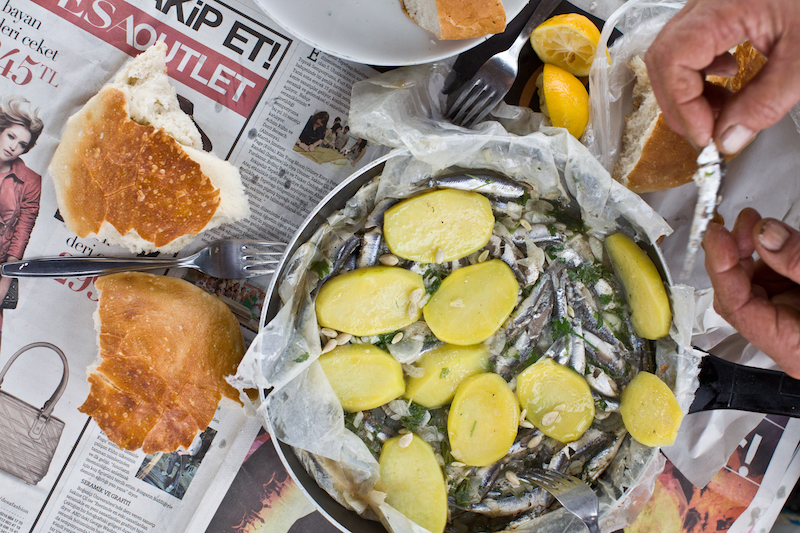
Bilal’s buğlama made with super fresh hamsi on the deck of his boat in the Black Sea, photo by David Hagerman

Photographer David Hagerman is one half of the duo behind the new cookbook Istanbul & Beyond: Exploring the Diverse Cuisines of Turkey, which will be published by Rux Martin Books/Houghton Mifflin Harcourt (USA) on October 10. Together with Robyn Eckhardt, his journalist wife and the author of Istanbul & Beyond, he has crisscrossed Turkey countless times in order to document farm-to-table food culture and discover the country’s best dishes. The resulting book is a stunning culinary journey through Turkey, one told as much through the recipes collected as through Hagerman’s arresting photos. We spoke with David about his approach to shooting the images for the book, culinary culture in Turkey and some of his favorite spots in the country.

Las Mas Altas Montañas, photo by Ben Herrera

As soon as you enter Mercado Jamaica, one of Mexico City’s largest markets, you will quickly see (and smell) its main trade: flowers. Down the long aisles, hundreds of sellers line up colorful flowers that come from Xochimilco and other states. Visiting the market truly engages all the senses. But, you may ask, how does this include taste? Well, Jamaica Market happens to be home to several outstanding food vendors, among them one of our favorite taco stands in all of Mexico City. Hidden away among the market’s produce vendors, this stand doesn’t have a sign, and you can easily miss it if you don’t know what you’re looking for. Once you find it, though, you’ll keep coming back for their superb green chorizo tacos.

Barcelona Post-Referendum

I used to joke that the only thing binding together Spain is the classic tortilla española, which in Catalonia we refer to as the tortilla de patatas – a neutral name. This potato omelet is one of the very few traditional dishes that is prepared the same way (and equally beloved) throughout Spain’s Autonomous Communities, the regions created after the Spanish Constitution of 1978, a necessary step towards creating a democratic country after the end of Franco’s dictatorship. The fact that this is one of the few dishes we all have in common highlights the significant regional differences of our traditional cuisine, despite our common Mediterranean culinary culture.

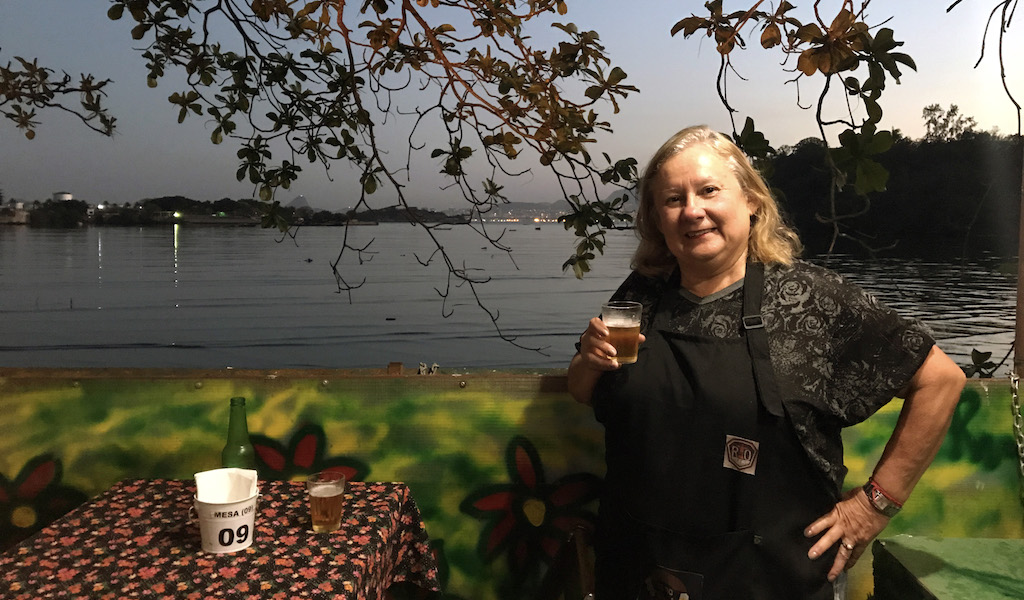
Lá na Rosi: Big Chef, Small Kiosk Featured Image

The sun is already down when the food kiosks at the entrance to the Z10 fishing colony open their doors. It’s evening and we are on Ilha do Governador (Governor’s Island), the largest island in Guanabara Bay and far away from Rio’s tourist spots – the only reason most visitors come to this working-class suburb is to catch a flight at the Rio de Janeiro International Airport. These kiosks are almost all alike: boring food stalls serving bland seafood broths, bad pizzas and standard sandwiches. But six months ago, a new kiosk set up shop, one that was completely different from the others. It’s called Lá na Rosi and serves some of the most amazing street food in Rio.

Bubbling Over

Bar chats are on fire these days in Barcelona. As the controversial Catalan independence referendum draws closer, it’s not uncommon to witness spontaneous private discussions or overhear customers express passionate or indignant comments while reading the newspaper or watching the news on the bar’s TV. There is tension in the air, and bars, perennially popular agoras for debate, have become even livelier places. Many Catalans, whether pro-independence or not, will find themselves voting under difficult conditions on Sunday, October 1, in the controversial referendum organized by the Catalan government.

A sign next to Cerveceria del Barrio invites people in to eat, photo by Martha Pskowski

In the past five years, Mexico City has flourished as an international tourist destination, and the Roma and Condesa neighborhoods are the city’s crown jewels for travelers. A typical weekend in bohemian Roma or posh Condesa might include a late lunch of tuna tostadas at Contramar, followed by a drink at Cervecería del Barrio, a bar and restaurant overlooking the scenic Plaza Cibeles. Nightclubs and bars abound, as well as tacos to chow down at 3 a.m. when bars close. But the earthquake on September 19 put the brakes on the renaissance of Roma and Condesa. At least five buildings in the area collapsed in the 7.1 magnitude quake, and dozens more suffered damage so severe that residents were evacuated.

Mikres Kyklades's interior is warm and simple, photo by Mikres Kyklades

Ilioupoli may be an unassuming residential suburb southeast of Athens, but this neighborhood, whose name means “Sun City,” has at least one shining culinary star: Mikres Kyklades (Small Cyclades). Opened by Antonis Kovaios in 2005, the seafood restaurant is named after the most remote group of islands in the Cyclades, which includes such heavyweights as Santorini and Mykonos. Clustered south of Naxos, the Small Cyclades are what you imagine islands in Greece to be – clean blue sea, natural beauty and an abundance of fresh fish and seafood ¬– minus the crowds.

View of Antakya, photo by Yigal Schleifer

Turkey’s charming southern city of Antakya lies equidistant to the Mediterranean coast and the Syrian border, in the province of Hatay. The area is famed for its unique, spice-laden cuisine, though it is perhaps overshadowed by that of its neighbors to the east and west: Adana and Gaziantep, respectively. The former is practically synonymous with kebab while the latter is famous for, well, everything, and is often touted as Turkey’s undisputed food capital. But a recent two-day trip to Antakya made it imminently clear that its cuisine deserves just as much praise as Adana’s glorious grilled skewers and Gaziantep’s divine baklava. The integrity and autonomy of its rich cuisine comes as no surprise to anyone acquainted with this special city.

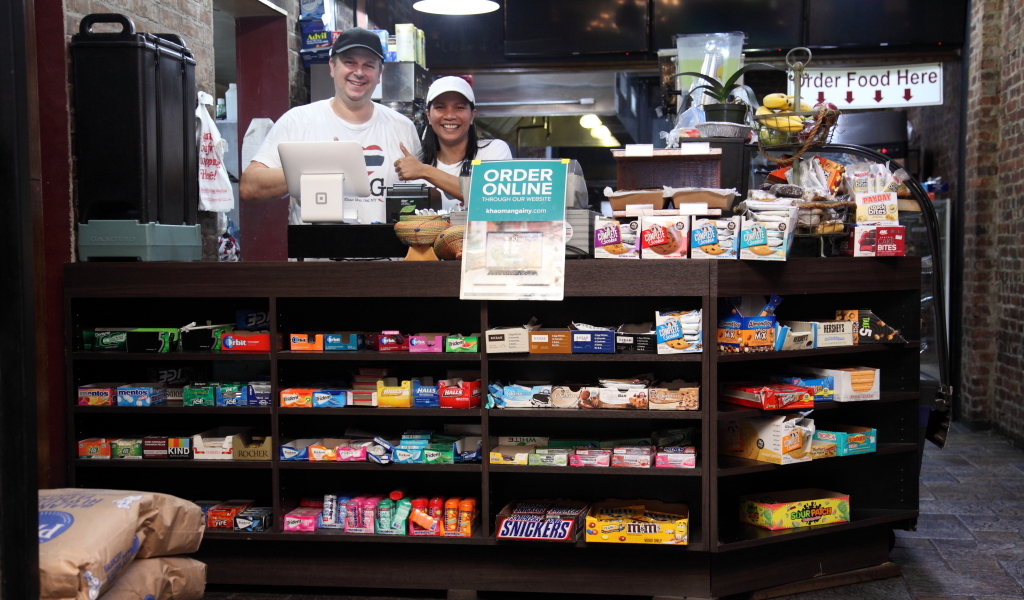
Khao Man Gai NY: One Dish Wonder (Plus) Featured Image

Some of the most successful street vendors in Southeast Asia have made their name from a single dish. The same is true in Queens – just ask anyone who has walked along Roosevelt Avenue late on a summer evening in search of the “Arepa Lady.” Surprisingly, it’s also true inside Bricktown Bagels, in Long Island City. By day the shop churns out bagels for morning commuters – from the subway station just up the street, it’s one stop to Manhattan – plus soups, salads, sandwiches and wraps. But when the ovens cool down in late afternoon, Bricktown becomes the base of operations for Khao Man Gai NY, where the chef Emorn Henshaw and her husband Eric serve the namesake Thai chicken-and-rice combo (pronounced Cow mon Guy).

Ghomi (a thick polenta), chicken and bazhe sauce, photo by Justyna Mielnikiewicz

In 2005, the city of Tbilisi bulldozed a riverside row of some the best restaurants in the capital to make way for a lackluster park and a gondola to take tourists to the ancient ruins of the Narikala Fortress, which overlooks the Old Town. City Hall justified this act of gastronomic destruction by stating the property had been illegally privatized under the previous administration, but everyone knew it was a land grab. And among the many restaurants it razed was Megrelebi Manoni, the best Megrelian restaurant in Tbilisi. Of all the regions that make up “Georgian cooking,” the western province of Samegrelo is the most distinctive.

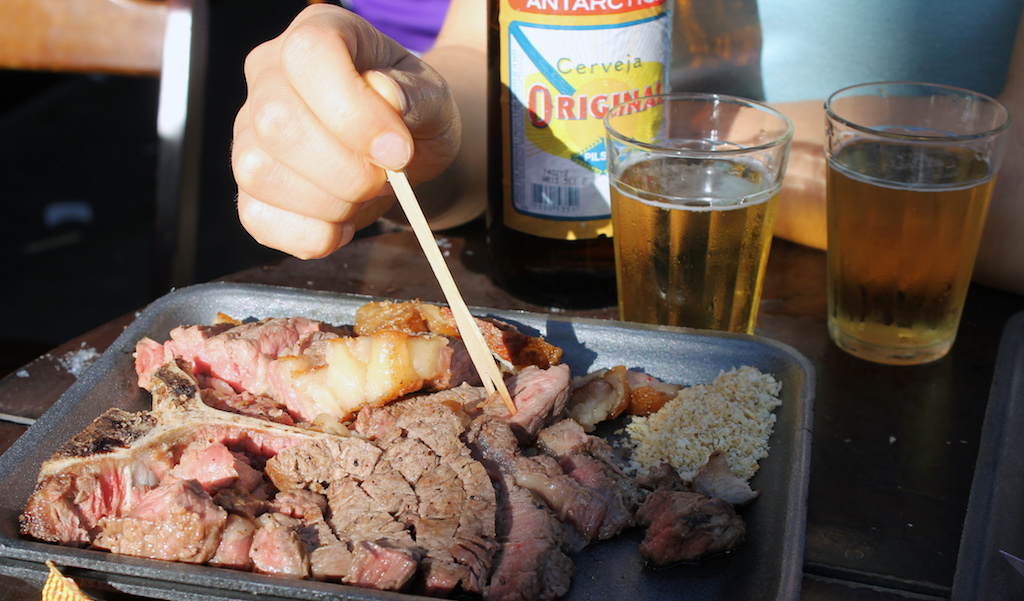
Praticità Carnes: Prime Cuts Featured Image

Where the British have a Sunday roast, Cariocas spend their Sunday afternoons at churrascos, Brazilian barbecues. Starting in the mid-afternoon, Rio’s residents typically gather in squares and street corners throughout the city and load spindly grills with slabs of meat. As the evening draws on, skewers and sausages are washed down with copious amounts of beer, and people shake their hips furiously as sizeable loudspeakers blare out samba and Brazilian pop classics. It’s a long-established recipe for a good time. Churrascos of this sort are most commonly held in the working-class suburbs. But what’s a resident of Rio’s new, more genteel, middle-class neighborhoods to do on a Sunday? The answer is being provided by Praticità Carnes, a churrascaria with the suburbanite in mind.

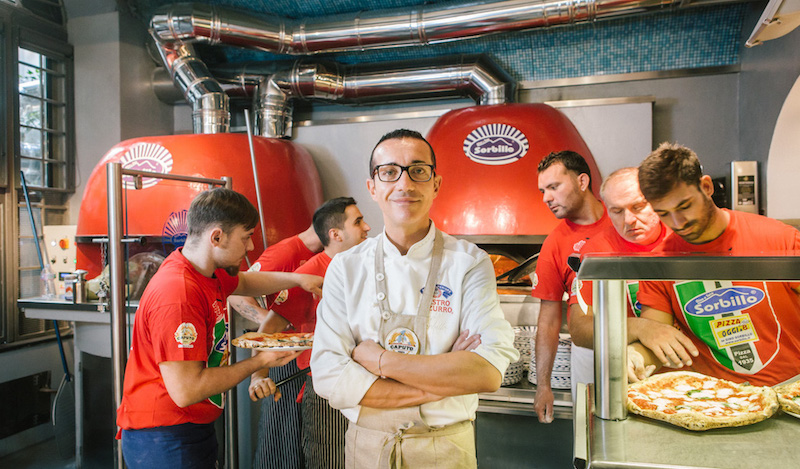
Gino Sorbillo and his team at Pizzeria Gino Sorbillo, photo by Gianni Cipriano and Sara Smarrazzo

The best pizza in Naples is a family affair, but perhaps not in the way you may think. Gino Sorbillo, the man behind the eponymous Pizzeria Gino Sorbillo, belongs to one of the oldest pizza-making families in Naples. In 1935, his grandparents Luigi Sorbillo and Carolina Esposito opened a tiny pizza shop with only four marble tables on Via dei Tribunali, the epicenter of Neapolitan pizza production. While this history is certainly interesting, the way that Sorbillo broadcasts it is what we delight in. Take, for instance, our favorite pizza, the Raimondo. Who is Raimondo? He’s one of Gino’s uncles; twenty-one out of the 23 pizzas served at Sorbillo’s are named after his father and his father’s 20 siblings (all were pizza-makers).

Choice Cuts at the Dezerter Bazaar

Tbilisi's main bazaar offers a vast array of goods, including a wide variety of the choicest pork cuts. We didn't say it was for the faint of heart! 

Kenan Usta Ocakbaşı

If Istanbul had a city museum, in the 20th-century exhibition we’d expect to walk into a life-sized recreation of Kenan Usta Ocakbaşı, a seminal grill joint in the Beyoğlu district. As visitors descended a few steps into the exhibition, sensors would trigger the harsh light of fluorescent bulbs overhead, illuminating a room covered in photographs of husky men with mustaches posing with a stout man in an apron, grill master Kenan Usta. The somber, groaning warble of the great Arabesque singer Müslüm Gürses would cue up in the visitors’ rented headsets and ducts inside the replica grill would belch out smoke scented authentically by grilled meat.

logo

Terms of Service