S M B O measurement-vertical measurement-vertical

Latest Stories

Building Blocks

The resilient almond tree flourishes in a dry climate with very little water, which makes it an ideal tree for Greece, especially in the south and on many of the islands. So it’s no surprise that almonds have featured prominently in Greek cuisine and pastry making dating back to at least the 3rd century BC, or so historians believe. Today in Greece you’ll most likely find almonds in desserts or sweet treats. Since this particular nut generally symbolizes happiness, prosperity and good luck, it plays an important role in Greek weddings and baptisms, with sugared almonds and other sweets made with almonds, like amygdalota, being offered post-ceremony.

CB Book Club: Barbara Massaad’s “Soup for Syria” Featured Image

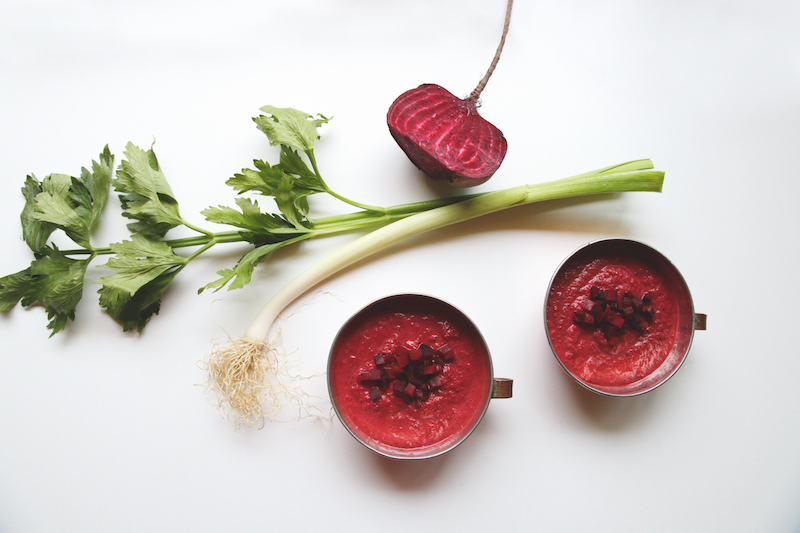
Barbara Abdeni Massaad may be an award-winning food writer and photographer, but she is also a humanitarian. After spending quite some time with the Syrian refugees who were living in horrible conditions not far from her home in Beirut, Barbara took her camera and began photographing people in the camps in Lebanon, especially children. This was the start of her book-cum-fundraising project “Soup for Syria: Recipes to Celebrate Our Shared Humanity,” a wonderful collection of pictures and soup recipes that has already raised $500,000. The profits from book sales are donated to help fund food relief efforts through the United Nations.

Some of the ingredients that go into making ratafia at the Ratafia Festival, photo by Sam Zucker

In the little town of Santa Coloma de Farners, within the Catalan province of Girona, locals have been making the herb-infused liqueur known as ratafia for centuries, with each family passing down their own version of this unique libation from one generation to the next. In 1997, within the county’s official records, came a major food discovery – written recipes for three distinct styles of ratafia dating back to 1842, which are now recognized as the oldest of their kind in Catalonia. These handwritten lists of ingredients (along with other culinary notations, savory recipes and home remedies) were discovered in the old notebooks of Francesc Rosquellas, once the proprietor of a café/restaurant in Santa Coloma de Farners whose name had long since been forgotten.

Ouzeri O Mitsos

It’s a quiet Tuesday lunchtime when we pass through Eleftheroton Square in Chalandri, one of Athens’s northern suburbs. Anyone living in the surrounding areas knows that this boisterous neighborhood is the best place to shop and go out, whether for a bite to eat or a drink. From small, quiet bars to gourmet restaurants, from cafés to wine bars, Chalandri has something for everyone. As expected, the square is dotted with places to sit and enjoy a coffee or have a meal while watching the world go by. Most of them are large, expensive-looking, and completely empty, apart from Ouzeri O Mitsos, a simple, teeny-tiny place squeezed amongst them, which is slowly filling up with customers.

Bolinhos and a cold beer at Baródromo, photo by Berg Silva

Carnival in Rio is one of the world’s best parties, and for good reason. There are the extravagant costumes, the sweaty entertainers and revelers dancing to roaring samba music, and, most importantly, free flowing alcohol: Public inebriation, whether from drinking cheap beer or slurping spiked popsicles, is heavily encouraged. While nothing can top this pre-Lent bash, a newly reopened entertainment temple in Lapa offers a Carnival-like experience year-round. At Baródromo, you can soak in the Carnival ambience while downing delicious beers, eating well and listening to the best samba music out there.

Dead Heads in Corona, Queens

On our culinary walk in Queens, we spotted some skulls made of sugar and marzipan that will be used as offerings for Day of the Dead (Día de Muertos), which officially starts on October 31.

CB Book Club: Carla Capalbo’s “Tasting Georgia” Featured Image

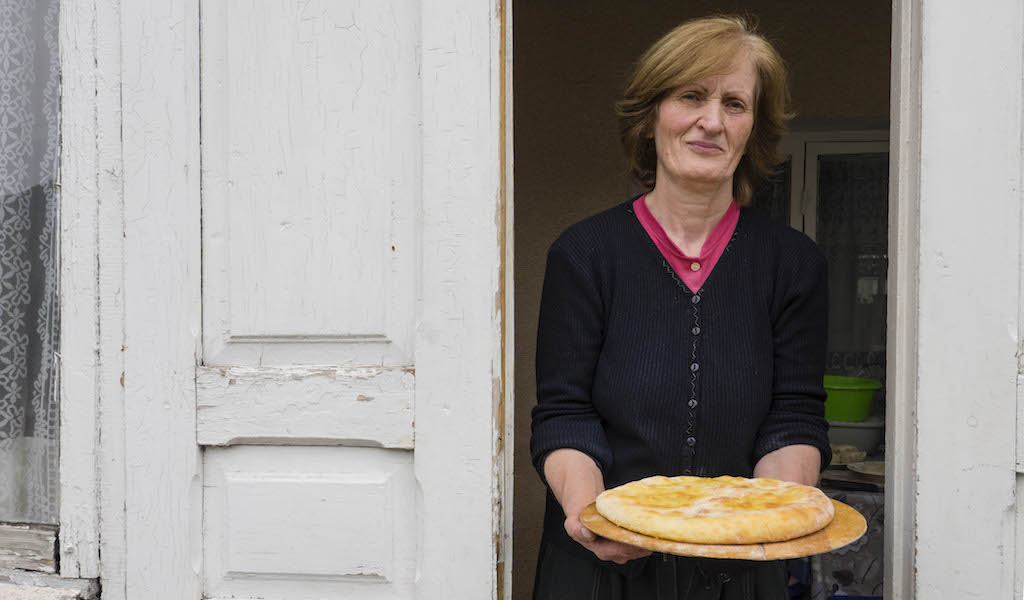
The author of 14 books, Carla Capalbo is best known for her food- and wine-centric travelogues exploring the lesser-known regions and culinary traditions of Italy. Her last book, “Collio: Fine Wines and Foods from Italy’s Northeast,” took readers on a gustatory journey through a tiny region that few outside Italy – or even inside Italy, for that matter – know much about. Several years ago, Capalbo – who was born in New York, raised in Paris and spent some 20 years living in Italy – became intrigued by Georgia and its cuisine. For her newest book, “Tasting Georgia: A Food and Wine Journey in the Caucasus” (Interlink Books), Capalbo traversed the country’s culinary backroads, collecting stories and recipes along the way.

Día de los Muertos

Día de los Muertos (Day of the Dead), or at least some variation of it, has been an annual celebration in Mexico for over 3,000 years. During the Aztec period, it took the form of a festival in August dedicated to Mictecacihuatl, otherwise known as the Lady of the Dead. Today it is one of Mexico’s most colorful holidays, encompassing popular traditions both old and new. To the Aztecs, death was nothing to be feared; it was but a passage and a continuation to the next level of consciousness. Life was viewed as a state of dreaming and death was when someone was truly awakened from their slumber. The Aztecs’ monthlong festival was meant to honor those who had passed on and to entice their souls to visit once more.

La Central de Abasto is a city unto itself, photo by Julissa Treviño

It’s no surprise that La Central de Abasto, Mexico City’s expansive wholesale market and the largest such market in the world, is constantly in motion. From the carretilleros, employees who move produce on dollies and whistle to signal that they’re passing through, to the steady stream of customers, the market pulses with energy. It’s a Friday afternoon when Diana Ávila, a programs director at the market, tours us around. As we pass neatly stacked piles of fruit and a banda playing in one of the hallways, she explains how this is the epicenter of Mexico’s food industry, a place where culture, food and community connect.

Clams at Bodega Neus, photo by Paula Mourenza

Bodega Neus, a tranquil, cozy spot on a narrow street in Gràcia, may look like a regular old bodega-restaurant. But this place, which is celebrating its centennial in 2017, merges two culinary traditions with deep roots in Barcelona: wine and seafood. In the beginning, Bodega Neus was a bulk wine-shop. Over the decades, it morphed into a bar and then a restaurant; during the course of it’s 100-year history, it was owned only by two families, both of which respected the spirit of the bodega and the traditional recipes that anchored the menu.

Tbilisoba: Harvest Bacchanalia for the Whole Family Featured Image

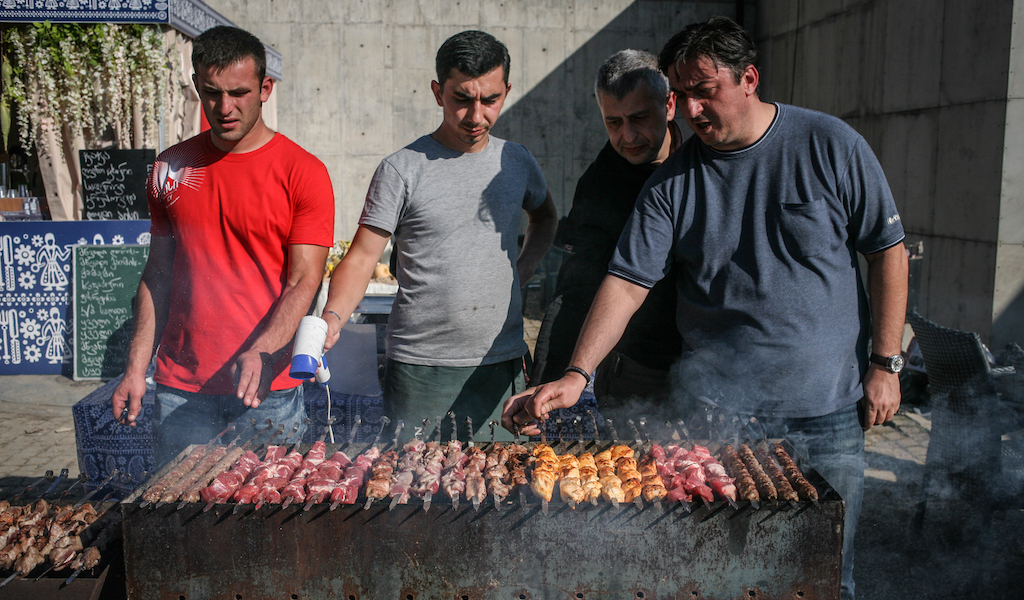
When it comes to fragrances, nothing makes you stop in your tracks and moan in delight more than the redolence of mtsvadi roasting on the coals of grape vine trimmings. It’s the juicy sizzling fat basting the chunks of skewered pork that clinches it and makes whiffing the browning meat just as good as eating it. For one October weekend every year, the entire center of Tbilisi is immersed in wafts of barbecue from perhaps hundreds of hot grills, called makhali, as men, teary-eyed in billows of smoke, turn the skewers in pop-up sidewalk picnic parties. This is part of an annual event called Tbilisoba, a kind of Georgian Oktoberfest, but much cooler.

Topik still encased in cheesecloth at Tadal, photo by David Hagerman

On a late spring afternoon I sat at the only table at Tadal, an Armenian deli in Kurtuluş. Behind me were shelves lined with imported liquors: French, Greek and Georgian wines, Russian vodkas, an admirable range of Scotch whiskies. Opposite, a refrigerated case groaned with meze (lakerda and taramasalata, rice-filled sweet red pepper dolma and mercimek koftesi, anchovies in olive oil), many varieties of olives and a range of cured meats that included not only the ubiquitous çemen-coated beef pastırma but also pork-based specimens like mortadella and salami. Cheeses were arranged next to tubs of pickles and clay dishes of buffalo-milk yogurt.

Making Moonshine in Kakheti

An important part of our chacha journey is making sure that the moonshine still is sealed with a putty made of ash, earth and water.

Liang Pi Wang: Out of the Kitchen, Onto the Counter Featured Image

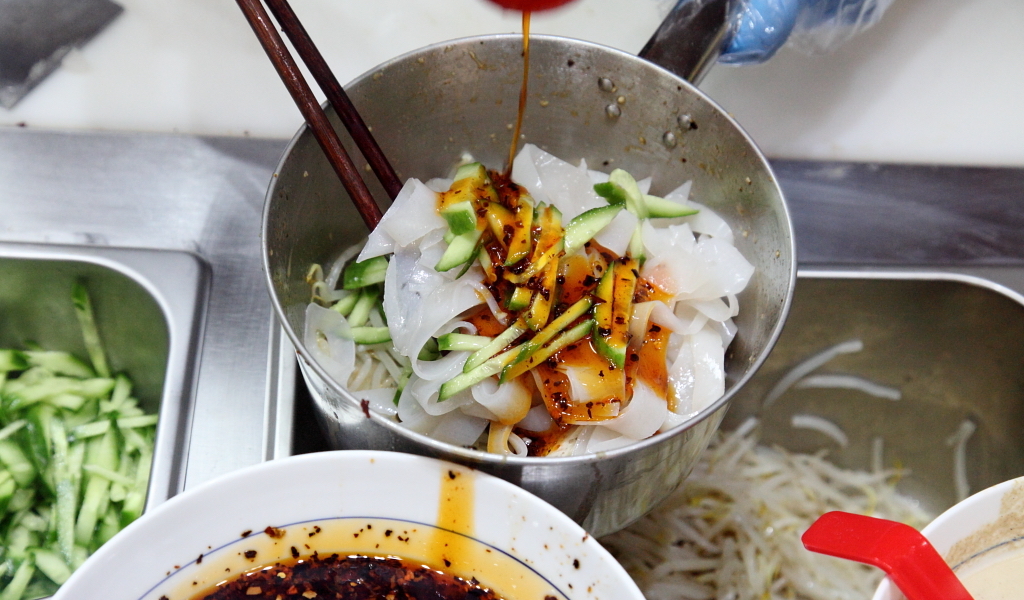
The promise of food prepared before our eyes, just for us, is a big reason that we’re constantly spreading the good word about food events in and around New York. We’re especially fond of festivals and other gatherings held by members of a close-knit group – sometimes congregants of a church, temple or mosque, almost always folks who share the common bond of a previous homeland far away. Often their dishes are assembled by (gloved) hand immediately before serving for maximal stimulating freshness. A few such events repeat periodically, but most, we know all too well, come just once a year. We’re always on the lookout, then, for businesses that take a similar up-close-and-personal approach.

Harvest Week

Late October marks the start of the olive picking season throughout Greece. From Thrace to Crete, from Corfu to Lesvos, and even in the suburbs of Athens, landowners lucky enough to have olive trees will start harvesting their fruit. And the harvest may continue for another six months. On Crete, for example, where neat rows of low trees cover vast areas, civil servants are given leave to collect their olives in January and February. On Corfu, on the other hand, where the giant trees are too tall for easy harvesting, the common practice is to spread black nets underneath them and wait for the fruit to drop. They collect it once a month until late spring.

logo

Terms of Service