S M B O measurement-vertical measurement-vertical

Latest Stories, Barcelona

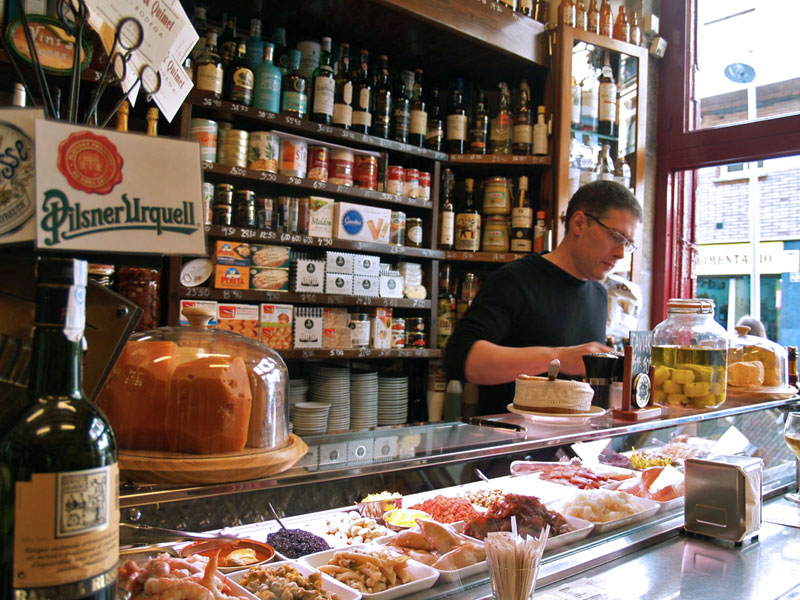
Quimet & Quimet, photo by Paula Mourenza

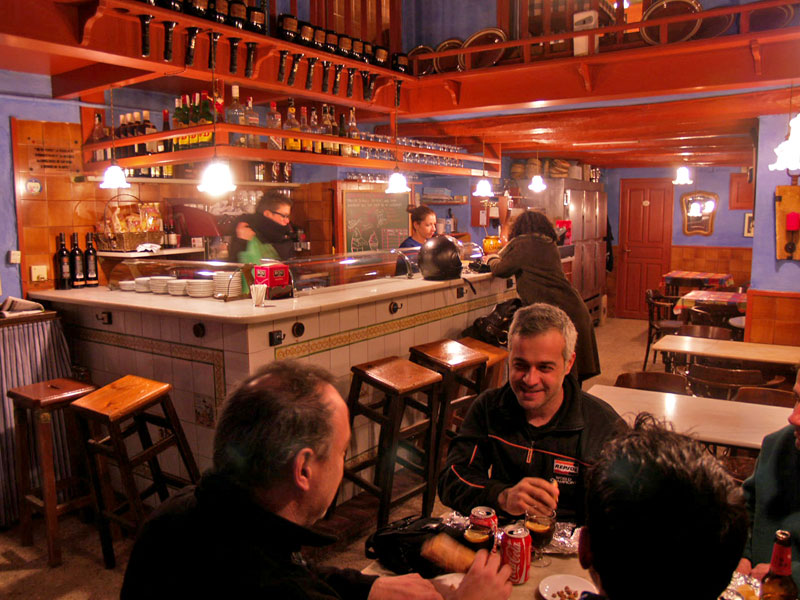
With its high walls lined top-to-bottom with a colorful array of bottles, the tiny Quimet & Quimet, a charming tapas bar in El Poble Sec, could easily be mistaken for just another wine shop. But step inside this culinary cabinet of wonders, one of the most famous and beautiful bodegas de tapas in Barcelona, and you will be magically whisked into another world of edible and drinkable delights.

Patriotically Colored Bread in Barcelona

In Barcelona, Valentine’s Day is no big deal. On the other hand, on April 23, you had better remember to buy a flower for your sweetheart. La Diada de Sant Jordi is one of the most important holidays in Catalonia, honoring its patron Saint George. The Catalan tradition – inspired by the legend of Saint George’s chivalrous slaying of a dragon to save a princess – is for men to buy roses for women and, in return, for women to buy books for men.

Ask CB: Kid-Friendly Dining in Barcelona?

Dear Culinary Backstreets, We will be visiting Barcelona with our children. Do you have any good recommendations of places in the city to eat with kids?

El Jabalí de Ronda

Editor’s note: We regret to report that El Jabalí de Ronda has closed. Barcelona’s Avinguda del Paral·lel was, for the first half of the 20th century, a bustling boulevard of theaters, cabarets, circus shows and risqué nightlife. Nowadays, most of the grand buildings and the glamour of the thoroughfare have been erased by the rapid changes that have taken place in Barcelona, with just a few theaters and old bars from the glory days still open. Thankfully, one of the holdouts is the quirky El Jabalí de Ronda, a combination delicatessen, butcher shop and tapas bar, which still welcomes customers with its signature legs of acorn-fed Iberian ham and its cozy terrace and vases of freshly cut flowers.

Ask CB: Eating Early in Barcelona?

Dear Culinary Backstreets, I hear that Spaniards take their dinner very late. Are there any good restaurants in Barcelona that start serving dinner before 9 p.m.? Indeed, Spaniards are notorious for eating late. Even when dining at home, the typical Spanish family doesn’t eat their dinner until around 9 or 10 p.m. – or sometimes even later! The main reason for this is that for most people in Spain, lunch – which usually consists of at least two courses and is eaten at some point between 1:30 and 4 p.m. – is the most substantial meal of the day. It makes sense, then, that nobody has much of an appetite again until late in the evening.

Restaurant Roma

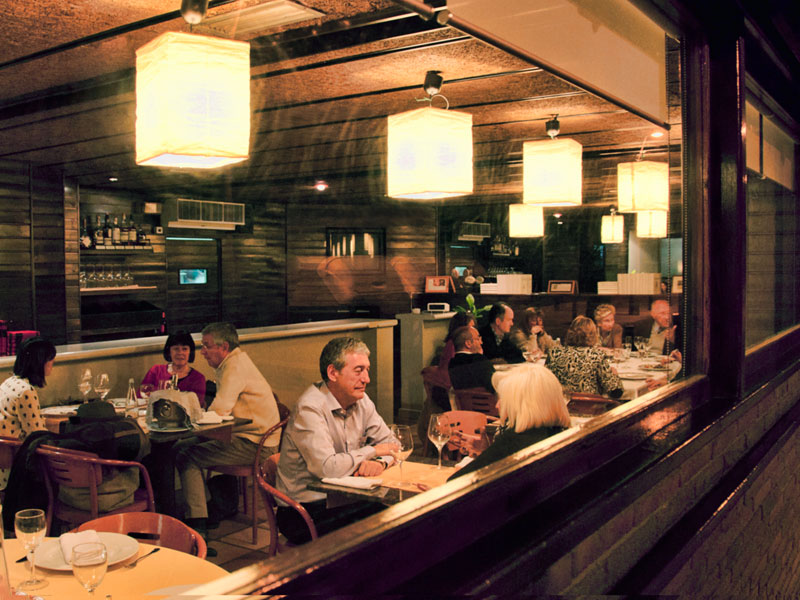
At first glance, Restaurant Roma doesn’t appear to be anything out of the ordinary. The nondescript brown tiles covering the floors, the dark wood bar, the vaguely Mediterranean-inspired wall décor and the rectangular paper Ikea lamps are similar to those at hundreds of other midrange restaurants throughout Barcelona. Situated on a quiet street in residential Sant Gervasi, Roma isn’t somewhere you’d be likely to come across accidentally, nor is it the kind of place you’d happen to hear about, unless you (or your aunt, or coworker or a friend of a friend) lived nearby. And that would be a shame because the food at Roma is good – ridiculously delicious, in fact.

When the Going Gets Tough, the Catalonians Get Brewing

Once a mostly beer-free country, Spain – traditionally a land of wine drinkers – has recently started to develop a taste for the sudsy beverage, and Catalonians seem to have been the main pioneers behind this growing trend. The number of local craft breweries is increasing and so is the number of beer fans, who are also learning how to brew the drink at home. Put it all together and you have a young and adventurous market that is ready to experiment with tastes and textures to create stellar new beers with a distinct Mediterranean flavor.

Ask CB: Lesser-Known Barcelona Food Markets?

Dear Culinary Backstreets, I’m traveling to Barcelona and I love visiting food markets. I’ve heard a lot about La Boquería, but are there any other markets that might be worth visiting?

Mercè Vins

Editor's Note: Sadly, this spot is now closed. Mercè Vins is exactly between two worlds, located on the quiet, narrow and dark Carrer d’Amargós, close to the shopping area of Portal de l’Àngel, near the Cathedral and Plaça de Sant Jaume, and on the border between the Barrio Gótico and Born neighborhoods, where there are numerous offices and public institutions, filled with employees looking for a breakfast that goes beyond a sad, ersatz “croissant” or for a lunch that approximates the kind of meal they would get if they were able to sneak back home.

Barcelona’s Restaurants Go Underground

At Culinary Backstreets, we are all about seeking out backstreets eating at venues serving authentic cuisine and frequented mainly by locals – an approach that usually leads both to delicious food and to prices that won’t break the bank. But how about underground dining, where even locals themselves aren’t always in on the secret?

Na Mindona

When Xisca Ferragut left Mallorca (the largest of the Balearic Islands, located in the Mediterranean Sea off the eastern coast of Spain) and moved to Barcelona, she had no intention of opening a restaurant. Having lost her job back in Mallorca, she had decided to study sign language and become an interpreter. Then her boyfriend, Dionis Ballester, showed up and as the two struggled to find work, they noticed something: there were literally NO Mallorcan restaurants in Barcelona.

Calçots: Not Your Average Onion

As the legend goes, a 19th-century Catalan farmer was out experimenting in his fields when he came up with a new kind of longer, juicier green onion, the calçot. In creating the onion, the farmer produced much more than a new vegetable; he also paved the way for the rise of an idiosyncratic, and distinctly Catalan, cultural event.

Ask CB: Tortilla Española in Barcelona?

Dear Culinary Backstreets, In just about every restaurant or bar I’ve been to in Barcelona, I’ve seen a dish called “tortilla.” What exactly is a tortilla and can you recommend any places where they are done especially well? Although it would seem that much of the world imagines the inhabitants of Spain subsisting largely on paella, the truth of the matter is that it is the tortilla española, also known as tortilla de patatas (truita de patata in Catalan), that  really holds the place of honor in the hearts and stomachs of Spaniards. Often translated into English on menus as “potato omelet,” this hearty round cake of potatoes, eggs, olive oil and salt has nothing to do with the traditional French omelet, nor does it have anything in common with a Mexican tortilla. At its most basic, the Spanish tortilla is made by frying up a thick mass of sliced potatoes and eggs in olive oil and then slicing it into savory wedges.
Baluard

Spain has not traditionally been known as a country of great bread, although there are some exceptional old tahonas (bakeries) scattered around here and there. But after long decades of eating poor-quality breads, typically white or light bread with excessive additives, Spaniards are finally developing their taste for the staple. In fact, the culture of bread in Spain is in full fermentation right now.

Bagauda

Editor's Note: Sadly, this spot is now closed. Everyone knows that Germany and France can both make a mean loaf of bread. But what about Spain? When was the last time you heard someone say something like, “What this meal really needs is some delicious Spanish bread!” You’ve never heard anyone say that and the reason is that the bread in Spain is, with few exceptions, decidedly mediocre, with even the smallest bakeries producing the majority of their “fresh-baked” product using partially baked or frozen dough made in factories using industrial yeasts and preservatives.

logo

Terms of Service