S M B O measurement-vertical measurement-vertical

Latest Stories

Chef Jaume Jovells of Can Pineda, photo by Paula Mourenza

The rustic family favorite Can Pineda has been holding down this corner of Barcelona’s El Clot neighborhood since 1904. It was not a restaurant originally, but a typical wine shop and canteen, where plenty of life could be found amongst the wooden barrels that now slumber peacefully on their perch up above the dining room. At that time, the place was frequented by local factory workers, who would come for a glass of wine to go with a simple meal or to drink while warming up their lunch boxes. The then-owners would put a pine branch on the door to signal the arrival of the vi novell, or new wine of the year, and from the pine, pi in Catalan, came the name Can Pineda, which translates roughly to “The Pine House.” Today, El Clot is part of the new high-tech 22@ district, which is focused on innovation and research but maintains in its oldest streets the spirit of the village (Sant Martí de Provençals) that once flourished here, with its own market (dating back to 1889) and walls that remain from Barcelona’s first Industrial Age. Can Pineda sits right in the middle, a small but welcoming eatery with just 30 seats, decorated with the characteristic blue azulejos tiles, those wooden barrels and a few excellent hams hanging behind the bar.

Breakfast in Beirut, Part 3

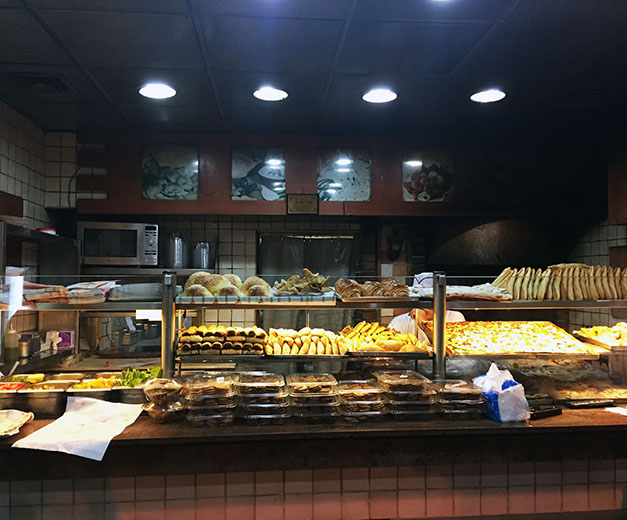
The manousheh (plural manaeesh) is one of the defining staples of Lebanese food. In a country known for its divisions, the universally loved manousheh might be the breakfast food that unites all Lebanese. A manousheh is a round flatbread cooked in a big oven or on top of a saj (a domed oven prevalent in the Levant), traditionally topped with zaater (a mix of thyme, olive oil, sesame seeds and sumac) or salty white akawi cheese. Manaeesh can be sliced or folded and, much like pizza, they can be thin or thick. In modern times, toppings have come to include a whole range of different ingredients, and there are even now dessert manaeesh that are topped with Nutella. Manaeesh are so popular that there is not one neighborhood, town or even remote village where they are not made.

Bar do Alto

You get to Bar do Alto by taking a zippy mototaxi up the snaking streets of the Babilônia favela and then walking 10 minutes up jagged staircases that eventually bear right. On the route, you’ll pass by slices of life that make favelas a museum of Rio, where the city’s symbols and icons are on display in the bare and human way that’s made possible by close quarters of self-made dwellings. There are the evangelicals raising their voices in weeknight prayers. Shirtless men with leathered skin that speaks to long day jobs, now tipping back tall evening bottles of beer. Children playing soccer as overheated cops in bulletproof vests slump on nearby benches.

Deniz Lokantası

When we picked up a cab from Meşhur Unkapanı İMÇ Pilavcısı recently, it turned out the driver had just been there for a refuel himself. Sensing a captive yet interested audience, he held forth all the way to Beyoğlu about where to eat well and cheaply – without stomachaches ensuing – in Istanbul. We’re always happy to discuss the finer points of kuru fasulye (stewed beans), but this driver seemed to have a particularly deep interest in the subject. After debating the merits of various canned brands (“Yurt” brand or nothing, in case you were interested), he dived into the subject of soup.

Kapetan Mixalis

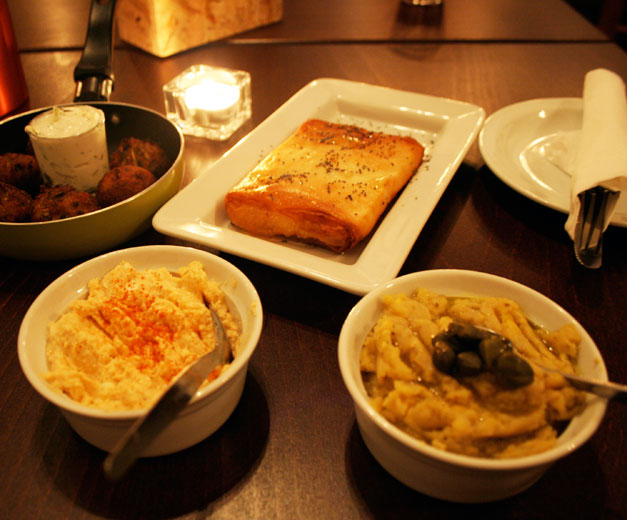
This small, charming <em>mezedopoleio</em> gets its name, which translates to “Captain Michael,” from Nikos Kazantzakis’s eponymous novel. The tribute to Kazantzakis makes sense: The eminent writer and philosopher was a native of Crete, as is the family that opened this eatery some 50 years ago. <!--more--> In the 1960s, Kapetan Mixalis was more café than mezedopoleio (the Greek equivalent of a tapas bar), offering coffee, backgammon (<em>tavli</em> in Greek), card games, live music by locals, philosophical discussions and a friendly atmosphere from morning till night. It became a meeting point for Athenian intellectuals, actors and musicians. Famous personalities sat for hours at the sidewalk tables, quaffing wine and a traditional Cretan drink called <em>tsikoudia</em> (a grape-based brandy) and eating cold cuts, spoon sweets and other simple preparations that didn’t require cooking.

Chaotic Holidays to You

While much of the West celebrates Christmas in an orgy of shopping for presents that climaxes after a single dinner, Georgians commemorate the season with a 30-day binge of feasts that pretty much begins on December 17, Saint Barbara’s Day (Barbaroba), and peters out by January 19, the Orthodox Epiphany (Natlisgeba). Unlike Americans, Georgians don’t consume stuff for the holidays – they annihilate food. The best, if not most chaotic, place to stock up on victuals is the Dezertirebi Bazroba (“Deserter’s Bazaar”). Located near Tbilisi’s central train station, this raw, disorganized, 2,000-square-meter warren of unprocessed agrarian pabulum is the city’s largest open-air market.

Shanghai’s Top Coffee Spots, Pt. 2

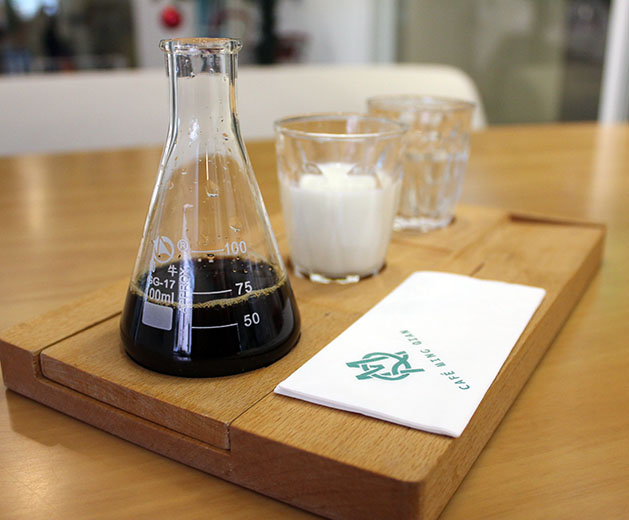
Since we last wrote about the best places for a cuppa back in 2014, Shanghai has become the city with the third-highest number of Starbucks in the world, and these new shops serve flat whites and cold brews from an interactive barista bar. We should expect more of these fancy cafés, as the Seattle coffee chain is planning to double its current number of stores in China by 2019 – going from zero to 3,000 in 20 years.

Rosca de Reyes: A Tradition Fit for Kings Featured Image

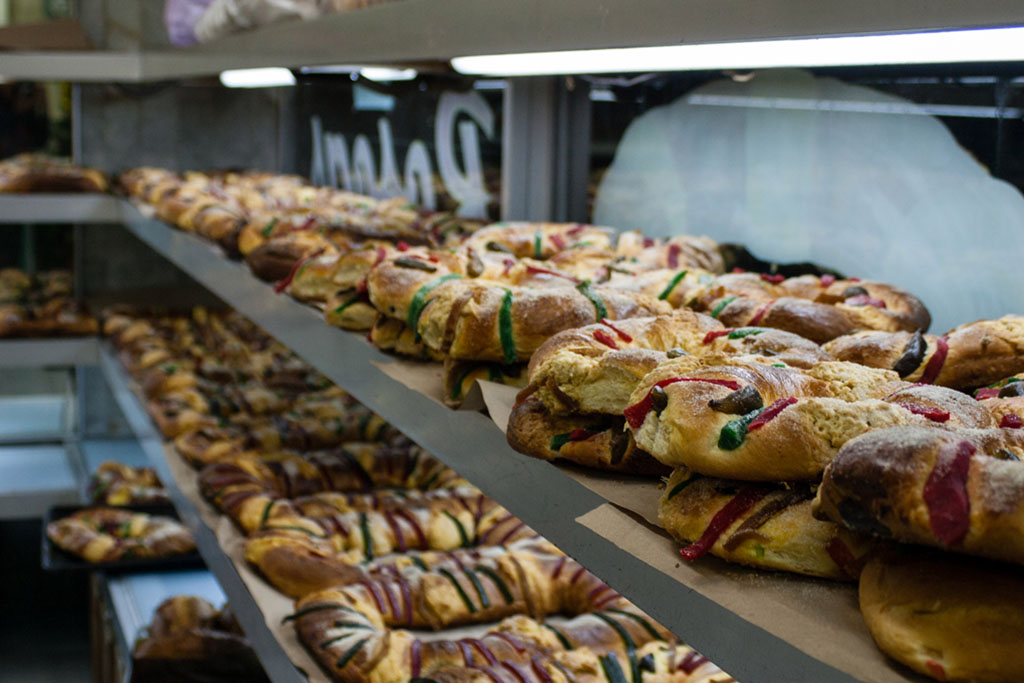
In Mexico, Epiphany (or Día de Reyes, in commemoration of the Three Magi’s visit to the baby Jesus), celebrated on January 6, offers an opportunity to extend the Christmas season. Mexican kids go to bed early on January 5, expecting to find gifts next to the Nativity scene the following morning. The traditional way to celebrate this holiday is by eating rosca de reyes ("kings’ cake"), an anise-scented, ring-shaped cake or sweet bread decorated with slices of candied fruit.

Bal Köfteci

It might sounds sacrilegious, but when we’re in Berlin, döner isn’t our go-to street sandwich. Though it is widely believed that the German capital is the birthplace of the beloved sandwich, that fact alone does not provide citywide quality assurance. The rapid ascension of the döner sandwich as the city’s eminent fast-food staple has unfortunately resulted in its mass production, which means one is likely to encounter a nondescript rotating wheel of frozen mystery meat. This isn’t to say that excellent yaprak döner (a carefully crafted cylinder consisting of freshly layered cuts) cannot be found in Berlin. But the way the sandwich is dressed in this city – with a variety of vegetables, sauces, cheese and fresh-squeezed lemon or lime – is indeed conducive to covering up the taste of boring meat.

Tsipouraki Mezedaki

Nicosia’s Old Town grabs your senses in many different ways. You still enter it through 16th-century Venetian walls. Wander its narrow streets and you’ll see architectural shadows of the Ottoman, French and British regimes that have ruled Cyprus over the past 500 years. Turn a random corner and you’ll hit a fierce-looking razor wire and oil drum barrier with an overgrown and abandoned buffer zone beyond, reminding you that this is Europe’s last divided capital, in stasis since 1974, when a short-lived coup aimed at uniting the island with Greece sparked a Turkish invasion of the northern third of the island.

Olympic Zone Eats

Editor's note: As Rio gears up for the 2016 Summer Olympics, CB has been exploring the backstreets of the city's Olympic Zones in search of gold-medal eateries. This is the first dispatch in the series. Barra da Tijuca was meant to be the best of Rio without its worst. Sandy beaches with no pickpockets. Top-notch shopping with no annoying squawking vendors. Playgrounds with no worrisome outsiders – because those playgrounds are inside gated condominiums with guards who sometimes have pistols tucked into their belts. The Avenida das Américas is 14 lanes wide, enough space for everyone to have their own car and leave the bus lanes to the white-uniformed maids and servicemen and women who bustle into Barra each day.

CB on the Road

My wife, Kurdish in-laws and I are enjoying an early meal at Gabo, one of Diyarbakır’s most successful new restaurants. It gets dark early this time of year in the city, and the dry air carries the ayaz chill, which engenders a need for a hearty soup and hot tea. The owner, Cahit Şahin, shares stories of the place’s beginnings. “When we applied for a restaurant license, City Hall just laughed,” he tells us. “‘For a vegetarian place?’ they said, ‘In Diyarbakır? Go ahead! It doesn’t matter if we grant you one or not. You’ll go under in three months!’” But that was nine months ago. Gabo, which bills itself as the predominantly Kurdish southeast region’s only vegetarian restaurant, is thriving. In fact, they are doing so well that Şahin and his fellow owners are planning to open franchises in the western Turkish city of Tekirdağ and in Istanbul. As Şahin talks, he gestures at the bustling café around him. “We used to work as tutors for students preparing for their standardized exams. We were just sick of the rat race, of always being tired and worn out. I envisioned a cozy alternative joint where I could drink tea, listen to jazz and play backgammon with my friends.” He laughs. “We haven’t touched a backgammon board since we opened the doors!”

Cookie Season

You can’t have Christmas in Greece without melomakarona and kourambiedes, two traditional cookies that are present in every household this time of year. The former were once prepared for Christmas and the latter for New Year’s, but gradually the two treats became inseparable (because why have one when you can have both?). Kourambiedes (the singular is kourambies) are believed to originate from the Azeri Iranian city of Tabriz, where they are called qurabiya. The Greeks, it appears, borrowed the name for their cookie from the Ottomans, who called them kurabiye (kuru meaning “dry” and biye meaning “biscuit”). Besides in Greece, variations of kourambies can be found throughout the Middle East, Turkey (kurabiye), Cyprus (kurabies), Albania (kurabie) and Bulgaria (kurabiiki), as well as the Andalusian part of Spain and Mexico (polboron).

Majórica

Editor's note: To give 2015 a proper send-off, we're taking a look back at all our favorite eating experiences of the year.

logo

Terms of Service