S M B O measurement-vertical measurement-vertical

Latest Stories

Tasca Tables

Roughly a year ago, José, the owner of Das Flores, was heartbroken: he had just received an eviction notice demanding that he close the restaurant. And it’s not like he hadn’t been paying his rent – he had, but there were plans to transform the whole building into a luxury hotel. That has become a common occurrence in Lisbon’s recent history: closing an old family-owned business to make way for something more profitable to its landlords. Only this time the story had a different ending. With the help of a lawyer, José managed to keep his doors open. At least for the time being. He’s now a happier host, running the place behind the counter with his business-as-usual mindset.

Shop Bagrati

We’ve seen the doleful little building a hundred times, every time we cross Tbilisi’s Dry Bridge. With the seductive words chacha, grappa and vino hand-painted on the wall enticing us like a red-light district lures lonely sailors, we would move on, thinking, “one of these days.” Then one sweltering summer night our band got a gig at the biker bar next door to the sad little building. We had a half-hour to kill until show time, and we thought, surely, one shot won’t hurt. But instead of walking into a moonshine dispensary we found a little tourist shop packed with wine, ceramic vessels and assorted knick-knacks. The real discovery, however, were three refrigerators stocked with balls of craft cheeses.

Breakfast in Beijing

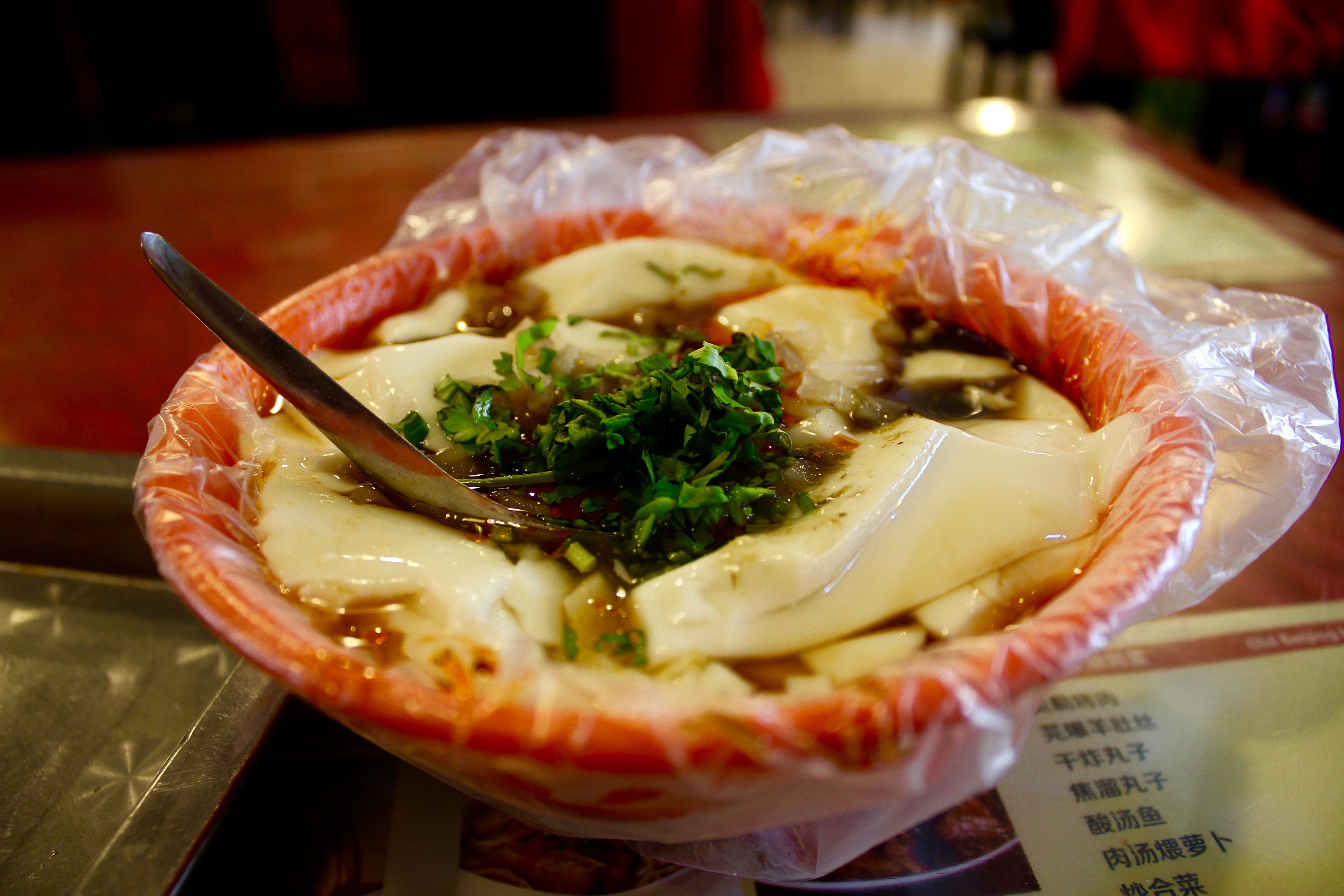
Douhua, a tofu pudding, is a breakfast staple in Beijing, and among the many morning treats that one may enjoy on our Breakfast in Beijing's Backstreets walk!

Galeto Sat's Botafogo

Even the pigeons of Copacabana know that Galeto Sat's – the old, ugly botequim located on the first block of Barata Ribeiro Street – has become one of Rio’s most important bohemian institutions since it was acquired by the Rabello family 10 years ago. The new owners changed the spirit of the bar, making it a hit – especially for those who love to eat and drink well, all night long. Even Anthony Bourdain turned the spotlight on this place for his TV show, “No Reservations.” The one problem that remained, however, was its size. Because the bar is very small – just 30 seats – it’s always crowded.

CB on the Road

Even in well-trod Mexico, little pockets of paradise can still be found. Located to the north of the Yucatán Peninsula in Mexico, where the Gulf of Mexico meets the Caribbean, little Isla Holbox is one of the most beautiful places we have visited in the country. It’s easy to lose track of time just meandering down dirt roads past brightly painted palapas (buildings with palm-leaf roofs), sunning yourself on a tranquil beach, watching spectacular sunsets and eating delicious seafood. Getting to the island isn’t easy, however. There are buses from Mérida, Cancún and Playa del Carmen to Chiquilá, and the trip can take up to four hours on roads that are not always the smoothest. From there, ferries cross over the Yalahau lagoon to the final destination.

Tasca Tables

There is a Portuguese word famous for allegedly being untranslatable in any language. That word is saudade, an emotional state caused by missing someone or desiring something that does not exist anymore. For years, children have been told that only lusophones are able to feel saudade, since others cannot express that feeling. It’s a compelling story, but, unfortunately, it’s also far from true: saudade means virtually the same thing as añorar or echar de menos in Spanish, nostalgic longing in English, or sehnsucht in German. If one is looking for a truly untranslatable word in Portuguese, he or she should look no further than right around the corner, to that cheap no-frills restaurant serving large portions of traditional food piled onto large aluminum platters.

Poema do Semba

Behind a discreet entrance on one of Lisbon’s principal avenues, a sophisticated environment with a minimal interior houses a loyal Luanda-Lisboa jetset crowd who is here for the great food – and great music. Poemas do Semba, its walls decorated with black-and-white photographs, is an unlikely find in this neighborhood. Santos is the former stomping ground of the Portuguese nobility; today some of their former palaces have been turned into embassies or luxury hotels. Students and a design-y crowd have taken over as well, thanks to the nearby college. This exclusive African restaurant was opened in 2014 by the famous Angolan singer Paulo Flores, a semba exemplar who has numerous albums to his name.

Tan Hua Roast Lamb Leg, photo by UnTour Shanghai

Inner Mongolia is famous in China for its lamb and all the different ways it’s prepared there, whether it’s braised lamb spine or thinly sliced marbled cuts dip-boiled in a hotpot. Lamb roasted whole is always a great choice, but the more common version (and the one you won’t need to pre-order days in advance) is roasted lamb leg (烤羊腿, kǎo yáng tuǐ). Legend has it that Genghis Khan’s personal servant was worried about how much of the nomadic conqueror’s time was taken up by waiting for whole lambs to be grilled to sate his hunger, so he asked the chef to prepare roasted lamb legs instead.

CB on the Road

All around Messinia lie endless fields of olive trees, their silvery leaves shining everywhere you look. This region in the southwestern part of the Peloponnese has been known for its fertile land since ancient times. Some of the best olive oil in the world comes from here. The capital, largest city and central port of Messinia is Kalamata, known around the globe, of course, for its famous namesake olives. It lies at the top of the Messinian Gulf, with a view of the water’s blue expanse. Above it towers the imposing Mount Taygetos. Together, the mountains, sea and land have created a gastronomic paradise.

Street Carts of Desire: Évelia's Courageous Tamales (Video)

Évelia, who sells tamales at the intersection of Junction Boulevard and Roosevelt Avenue in Queens, began with a grocery cart and no permit. Her story is a typical one. She arrived from Mexico in 2000. “When they arrested me [for operating without a permit], I really felt horrible,” she says. “I cried. But I had this courage inside. I decided to sell the next day.” After harassment from police, more arrests, obtaining black-market permits and contending with angry restaurant owners, she can finally sell her tamales legally. The video below tells her story, in her own words.

Sinem Kebap

We got hungry after doing some serious exploration in the Asian-side neighborhood of Mustafa Kemal, a hotbed for left-wing groups and a melange of informally built homes in the shadow of the rapidly developing district of Ataşehir. Passing by a string of uninspiring döner and pide joints, we inevitably opted to do what works best: follow our noses. The ragtag quarter is better known as 1 Mayıs, taking its moniker from a bloody, chaotic scuffle in Taksim Square on May Day, 1977, that left over 30 dead. Home to a working-class Alevi population of Central and Eastern Anatolian migrants who came to Istanbul in the 70s, the neighborhood is tagged on every other wall with the acronyms of leftist groups (legal and illegal alike) alongside posters of martyred revolutionaries

Tokyo Kissaten

Our eyes take a moment to adjust to the dim light upon walking into Ladrio. The room is like a vault, its brick walls and floor emitting a scent familiar to anyone who’s ever been in a cave or stone cellar. This mustiness is comforting, however, and the cool air a welcome reprieve from the furnace of the Tokyo summer outside. Soon we can make out several low tables extending back into the narrow space. People sit alone or in pairs sipping coffee or puffing cigarettes. Some converse in hushed tones as Edith Piaf is piped quietly from an unseen stereo. A few heads swivel in our direction but gazes never linger here.

Rows of Treats Adorn Tbilisi's Deserter's Bazaar

Delicious churchkhelas, a string of nuts dipped in a thick roux of grape juice, are among the countless treats on offer at Tbilisi's Deserter's Bazaar, the focal point of our culinary walk in the Georgian capital.

Capital Grapes

September heralds the start of Portugal’s wine season, and while harvests from Alentejo and the north usually get all the attention, many forget that Lisbon itself also offers much to try from its own soil. This old wine-producing area was previously known as Estremadura, which extends from the capital to about 100 km to the north. In 2010, the rebranded Lisbon wine region (Região dos Vinhos de Lisboa) was born. Production has since expanded on average around 25 percent annually, with 70 percent of sales now allocated for export.

CB Book Club

We recently spoke with travel writer Caroline Eden and food writer Eleanor Ford about their new cookbook, Samarkand: Recipes & Stories from Central Asia & the Caucasus (Kyle Books; July 2016). Eden has written for the Guardian, the Telegraph and the Financial Times, among other publications, while Ford has been an editor for the Good Food Channel, BBC Food and the magazine Good Food and currently writes about restaurants for Time Out. How did this book come about? Caroline Eden: It was an idea I was percolating for a long time, since about 2009. Travelling in Central Asia, mainly as a journalist but sometimes for fun, I got fed up with guidebooks dismissing the food in the region as “survival fare.”

logo

Terms of Service