S M B O measurement-vertical measurement-vertical

Latest Stories

Varinas

Varinas may no longer be prowling the streets of Lisbon, yet they remain iconic characters of the city. Until the 1980s, one would regularly hear these women loudly advertising the fresh fish they sold out of baskets they carried on their heads as they walked the hilly streets around the Lisbon. “In the 18th and 19th centuries, there was what we call the ‘aveirense invasion.’ They were coming mostly from the Aveiro region in northern Portugal, particularly from Ovar,” explains Appio Sottomayor, a journalist, author and a renowned expert in Lisbon history. (This is why they were known as ovarinas and eventually, once the “o” was dropped, varinas.) 

Zhang Mama, photo by UnTour Shanghai

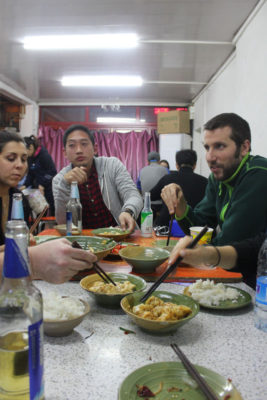
When a menu is written only in Chinese characters, it presents a language barrier for foreigners. When a restaurant offers a Mandarin-only menu and requires diners to handwrite their order in characters, that molehill becomes an actual mountain. But Zhang Mama doesn’t care – diners have been queuing up for upwards of an hour outside the dingy hutong restaurant for a bite of its Sichuan cuisine since it opened in 2009. Why? It’s equal parts delicious and cheap. Demand got so high for this hole-in-the-wall shop that they opened two more shops, one just down the street from the Dongcheng district original and another in Chaoyang district. But it’s still not easy to get a seat during peak mealtimes.

Asır

On our way to dinner one Friday evening, we hopped in a cab headed for Tarlabaşı, a rather infamous neighborhood in the dead center of Istanbul in which many people still refuse to set foot. The area was a longtime hotbed of Greek and Armenian artisans and tradesmen, once the backbone of Ottoman-era Istanbul’s commercial life, who erected rows of gorgeous European-style apartment buildings beginning in the 19th century. Many stand proudly today, while dozens of others are fenced off and awaiting renovation as part of an invasive gentrification project that seeks to remodel the now decrepit, impoverished Tarlabaşı. By the end of 1970s, Tarlabaşı's Greeks and Armenians had packed up and left the neighborhood and the country, following difficult decades of anti-minority policies and attacks. In their place came a motley crew of other disenfranchised people: Kurds fleeing conflict in the southeast of the country, Roma living on the fringes of society, transgender sex workers, economic migrants and political refugees.

Ama Lachi stis Nefelis

Through the gate on Kallidromiou and down the steps, the enchanting stone-paved courtyard at last reveals itself, a hidden oasis of fragrant lemon trees, geraniums, bougainvillea and jasmine in this densely built neighborhood. A charming mural of children in class is painted on one side of the yard, right next to the water fountains that thirsty students used to run to during their break. Inside, walls are decorated with old black-and-white photos from the school’s archives. A modern mezedopoleio housed in a historical neoclassical building, Ama Lachi stis Nefelis (If by Chance at Nefeli’s) holds the unusual distinction of being the former public primary school of Exarchia.

Fishmonger Maria Adelaide, photo by Francesca Savoldi

Matosinhos, a small city just north of Porto, is used to change. It has an industrial air to it, due to its 19th-century harbor, and its past prosperity was connected to the fish-canning sector, which peaked during World War II and declined from the beginning of the 70s. The numerous abandoned warehouses attracted nightlife during the 1990s, with clubs finding a fertile zone for noise. The completion of the long-delayed tidal pool, built by Portugal's starchitect, Alvaro Siza (who was born in the city), put it firmly on the map again after the project was delayed for decades. In January, the launch of the new, spiralling cruise ship terminal added to the contemporary design-y feel that has been developing on its otherwise rugged coastline.

Hocus Pocus DNA

In Rio, only specialty beer bars usually have a touch of sophistication, and generally, the beer there is much more expensive (mainly because of the high tariff on imported hops), the regulars are more demanding and the food is made by a “chef.” This in contrast to the humble botequim, the traditional family-run bars that serve simple snacks. But Hocus Pocus DNA strikes a balance between the two: it’s a brand-new bar with a botequim soul that slings craft beers and thoughtfully conceived appetizers to go with them. It’s also the name of an acclaimed artisanal brewery – one of the best local breweries in town, in fact, operating in Rio since 2014 – whose products are sold only in specialty stores and bars.

CB on the Road

To call San Miguel de Allende mind-blowingly picturesque is no hyperbole. Cobblestone streets and colonial facades enchant and inspire romantic notions from even the greatest cynic. Called by some “Mexico’s Disneyland for adults,” it’s a coveted destination for lavish fairytale weddings and romantic getaways and for expats and snowbirds to pass the time under azure skies in its dry, temperate climate. The historic center is peppered with fine-dining restaurants, stylish eateries, hipster pop-ups and cafés with picture-perfect open-air terraces. Its weekly farmers’ market rivals those of the “foodiest” towns in the US. So what about the “real” San Miguel?

Holiday Gifts in Tokyo

In Japan, there’s a different version of Newton’s third law of motion that applies to etiquette: for every act of kindness, there must be a similar and equal act, usually in the form of a gift. Japanese people are perpetually cognizant of the opportunities and appropriate moments for giving gifts and the many meanings and rituals attached to them. Rather than considering it a burden, many of them love to give gifts and believe it a tradition worth observing. The gold standard for gift giving in Japan are the mid-year ochugen and the end-of-year oseibo, or seasonal presents.

Holiday Gifts

Barcelona’s food shops and colmados offer culinary treasures all year long, but the holidays are a particularly exciting time for browsing their wares. The festive window displays show magnificent gift baskets overflowing with tasty treats – with many Spanish and Catalan specialties among them. Perhaps the most desirable items in holiday gift baskets here are the seasonal sweets, which previous generations would amass in quantities that would serve as “emergency” treats for unexpected guests the rest of the new year. (Thankfully, one can now find these year-round, so there’s no need to hoard them.) We’ve written previously about artisanal turrón, which continues to be handmade by a few family-run companies.

Season's Eating

The godzilla-sized tree of lights is up on Freedom Square and a gazillion more streamers of lights twinkle for eight kilometers down Tbilisi’s main drag, a clear, impressive indication the holiday season is upon us once again. The best thing about celebrating Christmas here is that tradition does not require us to buy a bunch of stuff for people that they don’t need. In Georgia, the real meaning of Christmas is indulgence in the gastronomic sense. Birthdays notwithstanding, the first feast of the season is on December 17, Saint Barbara’s Day. Being an Orthodox Christian country, the December 25 is only celebrated by expats and those Georgians looking for an excuse to feast.

Holiday Gifts in Lisbon

Though ceramic dishes or tinned sardines are the standard take-home souvenirs for visitors to Lisbon, a less traditional – but still unique – gift from the city is the source of the warming aroma that permeates its cafés morning, noon and night. A strong bica (espresso) is an integral part of Lisbon’s smellscape, and the few chimneystacks in sight over peripheral skylines reveal that there are still local businesses providing beans to restaurants and traditional stores here. Consuming this product, which has a long history, is deeply embedded in the city’s day-to-day, but cultural shifts (today it is quaffed more at the bar rather than at home), means many of the old coffee shops are now obsolete.

Ajota Bar's Francisco Bezerra, photo by Juarez Becoza

Our best eating experiences of the year include dishes at botequins old and new, as well as unexpected finds elsewhere in the city. Ajota Bar’s rooster One of the most delicious discoveries I made in Rio this year was the rooster from Ajota Bar, a very humble botequim – or traditional family-run bar – in Vila Isabel, a working-class neighborhood in Rio's North Zone. Chickens and galetos (three-month-old chickens) are very common in botequins, but not roosters, as they’re hard to cook well. Only a few bars have the guts to serve it, and of those, Ajota’s is the best. The owner and chef, Mr. Francisco, buys the rooster on Friday and brines it with spices overnight. 

Granja Elena, photo by Paula Mourenza

Barcelona continued to thrill this year with its seemingly never-ending possibilities for great eating, from ambitious family-run eateries to neighborhood restaurants steeped in Catalan traditions to world-renowned temples of gastronomy. Granja Elena With its great gastronomic aspirations and a solid foundation in farm-to-table cooking and traditional Catalan recipes, this small Zona Franca granja (literally “farm”), which was been passed down through three generations, has gone from a simple shop serving breakfast and snacks to a full-blown restaurant and total culinary wonder. Run by the Sierra-Calvo family since 1974, Granja Elena is now helmed by the third generation, who are all industry professionals: Borja runs the kitchen, Patricia the wines and Guillermo the dining room.

Best Bites 2016

Mexico is gifted with both a tantalizing array of local delicacies and street stalls beyond count, serving them up for prices designed to feed the masses. It’s paradise for adventurous foodies where the next great meal can be found by simply following one’s nose. Nevertheless, some spots rise to the top, usually building on tradition and a passion for the food itself. Arroces Baby Face In Mexico City, every year brings new discoveries, and I was fortunate in 2016 to discover a gem, parked just out of the way from major tourist footpaths … but only just.

Best Bites 2016

One of our most exciting discoveries this year was Yılmaz Tandır Evi in Istanbul's Feriköy neighborhood, where many people from the eastern Anatolian province of Erzincan have settled over the years. Yılmaz İngeç, a native of Erzincan's İliç district, serves only the finest ingredients from his hometown, including fresh honey, kavurma and tulum peynir, a salty, crumbly cheese aged in goatskin. A simple serving of fried eggs topped with tulum was a match made in heaven, perhaps our favorite breakfast this year. We were thrilled to stumble upon a secluded slice of the Black Sea province of Trabzon right here on the Asian side of Istanbul earlier this fall.

logo

Terms of Service