S M B O measurement-vertical measurement-vertical

Latest Stories

Tascardoso

Close to Jardim do Príncipe Real, the singular, beautiful park built in the 18th century above one of many underground cisterns of Lisbon’s public water system, is a cozy, rustic Portuguese eatery defying – while also benefiting from – the trends of its surroundings. Tascardoso is a typical tasca often frequented by tourists in the increasingly chic Principe Real neighbourhood, which tops one of the city’s seven hills and commands that soft Lisbon light until the last moment of the day. While fad food and French-owned business ventures abound, the restaurant’s popularity has risen with the booming interest in the area: it is especially difficult to get a table at Tascadorso for dinner.

Ask CB

Dear Culinary Backstreets, I just realized I’ll be in Tokyo for Halloween. Are there any tricks for finding special foodie treats there? Let’s remember that Japan is responsible for inventing cosplay – and that should mean a spectacular Halloween. These days, Tokyo certainly does not disappoint on that holiday, and you’re in for many treats. Halloween has not always been popular in Japan. But in the last five years it has exploded into possibly one of the top three holidays celebrated in that country. Tokyo Disneyland seeded the phenomenon by holding costume parades all through the month of October for many years. Social media exploded interest in the holiday, and now it’s a force to be reckoned with.

Arroces Baby Face

Standing on a sidewalk at 9:30 a.m. in Mexico City, waiting for food, one typically imagines pan dulce (sweet bread), tamales and piping hot atole, a drink made from corn. Yet there we stood waiting for Arroz Black Tiger – a steaming, heaping, fried rice dish with salmon, surimi, shrimp and white mushrooms, something you might find for dinner at a trendy Asian fusion restaurant in Roma or Polanco, but certainly not for 135 pesos (US$7.30) and not at that hour. Nevertheless, business was humming, and several clients rushed in and out to place orders for their office, buying early before ingredients start to run out. Why so early?

Street Carts of Desire

To organize for your right to vend is not glamorous; it involves community and trust-building, meetings, disagreements, unification around a campaign, administrative quagmires and persistence. This is what a small group of Latino vendors in Corona, Queens decided to take on. “I get too many tickets because of the ’20 feet rule’ or the ‘10 feet rule’ for vending too close to a business or crosswalk,” said a Latina street vendor. “The rules are unfair and confusing,” she added in Spanish. She was new to the monthly street vendor meetings in Corona. The more seasoned members, like Rosario, explained her vending rights. Rosario sells a few types of Ecuadorian ceviche with her partner, Jorge, on 111th Street.

Baoyuan Jiaozi Wu, photo by UnTour Shanghai

Baoyuan Jiaozi Wu was locally famous in Beijing for years, then U.S. Secretary of the Treasury Jacob Lew turned the sprawling dumpling house into a Chinese viral sensation when he lunched there in 2013. The modest meal came just weeks after Xi Jinping became the President of the People’s Republic and launched anti-corruption campaigns that tried to eliminate extravagant dinners replete with sea cucumbers and Moutai baijiu. The meal for three at Baoyuan came to just RMB 109 (US$16) – a jaw-droppingly low number for a lunch for officials in China. Netizens around the country hailed the secretary for his low-key, local choice.

Trabzon Kültür Derneği

Located just beneath Istanbul’s first Bosphorus Bridge in the Anatolian side district of Üsküdar is a secluded slice of Trabzon, the Black Sea province known for its otherworldly lush green forests, hot-tempered inhabitants and distinctly deep cuisine. The Trabzon Kültür Derneği (Trabzon Cultural Association) is something of a clubhouse for folks who grew up in the province and later moved to Istanbul for school and work. Founded in 1970 and having changed locations a number of times, the association set up shop in Üsküdar’s Beylerbeyi neighborhood at the turn of the millennium and crafted a miniature version of home in the heart of Turkey’s largest, ever-sprawling city.

Harvest Week: In Greece, A Grown Up’s Wine, Made by “Kids”

The Greek wine grape harvest is almost over. The dry and hot weather conditions throughout the year helped the grapes ripen earlier than usual, around ten days ahead of last year – a meaningful number when it comes to the delicate business of selecting what to pick for the harvest. After the previous year, a disastrous vintage for many, producers in Greece’s major wine regions finally have something to be excited about. The harvest that has us excited, though, took place just an hour’s drive from Athens, in a lesser-known wine region near Corinth. Here you can find the tiny vineyard of John Papargyriou, one of Greece’s most celebrated rising winemakers, with his wines selling out fast both at home and abroad.

Wine Harvest Week: Kakheti Diary

We have each got a couple of buckets and a pair of gardening clips and we are standing in a dewy vineyard in the middle of the majestic Alazani Valley. The autumn air is brisk, fresh with the fruity smell of grapes and the sun is warm, clouds permitting. Looming northward like some godly guardian of this huge, precious grape basket is the awe-inspiring Greater Caucasus range. It is rtveli, the harvest, and here in Kakheti, families across Georgia’s chief winemaking region are busy making wine much like their ancestors have done for centuries. They pick, crush and ferment wine in kvevri, enormous ceramic urns buried into the ground, or in oak barrels. They add nothing to enhance the fermentation process, the crushed grapes are stirred several times daily until they feel the maceration process is completed. The chacha, fermented skins, seeds and stems, is separated and set aside for distillation later, while the wine is left to age until the New Year feast season.

Wine Harvest Week

Wine and health: that was the prevailing philosophy of Joan Cusiné Hill, who in 1978 took over Parés Baltà wines, produced in Penedés, the land of cava. Cusiné Hill, who had already started working in viticulture at the age of seven, applied this philosophy first to himself – to what he ate and drank, to exercise, always with his focus on discipline and his vision. But he also applied it to his vineyards, using natural fertilization methods that included walking his sheep among the vines so that they could eat the grass and planting vines in the middle of the forest in an effort to harness the power and energy of those natural surroundings.

Wine Harvest Week

Over the last 20 years the wine industry in Baja California has grown exponentially, with the majority of production located in the Guadalupe Valley. The valley, which lies just 22 miles northeast of Ensenada, is about 14 miles long and is home to over 100 vineyards of varying sizes, from large-scale wineries like L.A. Cetto, to boutique operations like Monte Xanic, Vena Cava and La Lomita. Interest in the valley, both for its bright and rocky landscape and the unexpected wines it produces, has brought a boom in tourism. Design hotels and high-quality farm-to-table restaurants abound, making the valley a hot spot for food and wine enthusiasts.

Wine Harvest Week

Celebrating its 300th birthday this year, the Quinta do Vallado estate, located near Peso da Régua in the heart of the Douro valley, is integral to the history of the region. The current owners are the sixth-generation descendants of D. Antónia Adelaide Ferreira, a legendary visionary and businesswoman who, in the 19th century, changed Douro wines. Francisco Ferreira, the 44-year-old scion of the family, is now leading the wine making of this old estate, which for years was dedicated exclusively to port and is now producing some great red and white wines.

Street Carts of Desire

If you walk the length of Roosevelt Avenue from 69th Street to 111th Street in the early morning, you may encounter up to two dozen tamale ladies, usually at the major intersections that correspond to the 7 train’s stops. Few have licensed carts; most vend from grocery carts. Many of these women are up at 3 a.m. cooking and packing their steaming goods and are on the street by 4 or 5 a.m. Licensed or not, their business is brisk, efficient and professional. The ladies feed their own and charge prices that day laborers can pay. It is 5 a.m. on the corner of 69th Street and Roosevelt Avenue in Woodside, Queens. I am here to meet Christina Fox and her favorite tamale ladies.

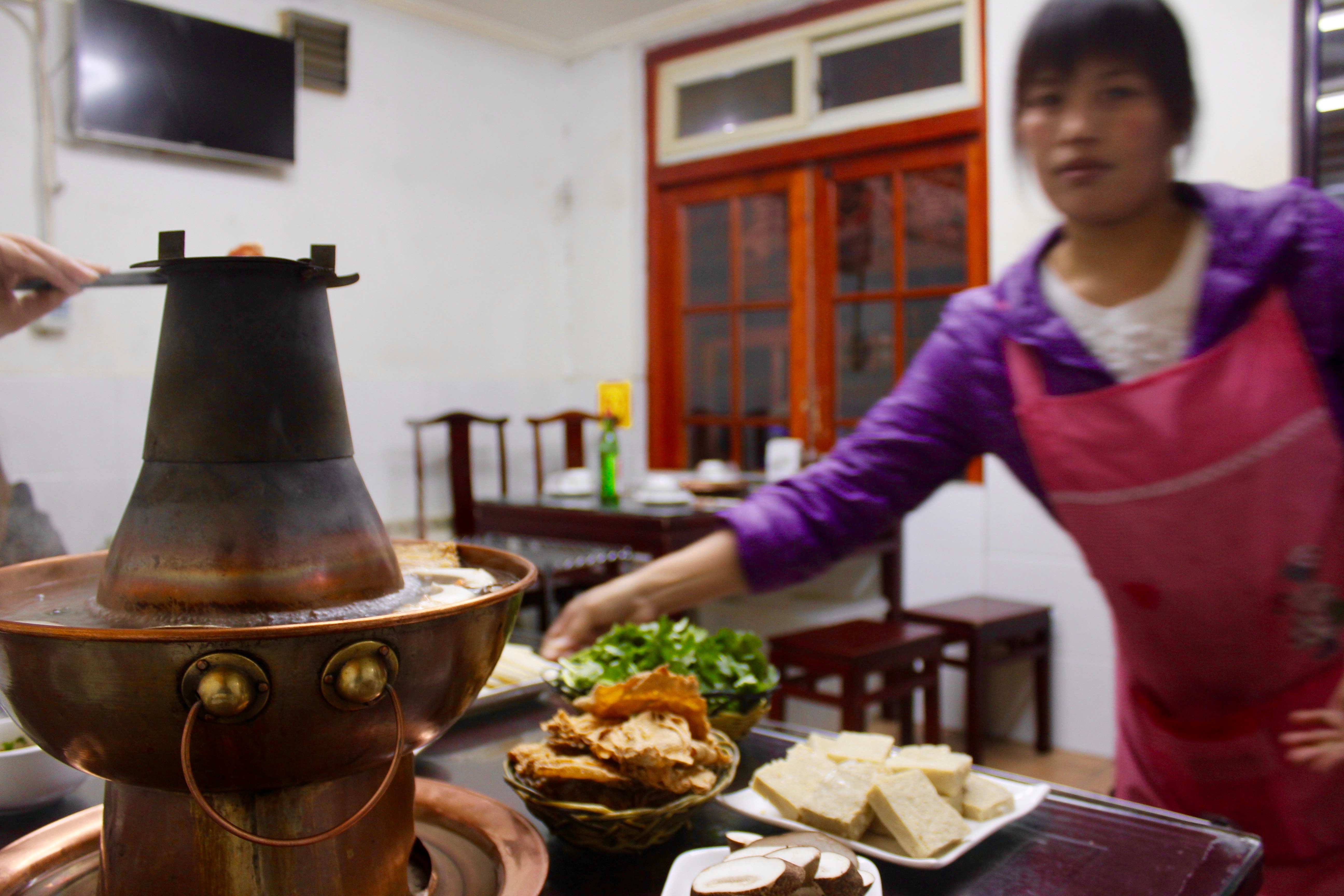
Boiling Hot Pot in Beijing

Hot pot is a Chinese favorite and among the culinary treats waiting to be enjoyed on our Beijing dinner walk.

CB on the Road

On Serifos island, local word-of-mouth advice on where to eat real Greek home cooked food – at excellent prices – will take you to the end of a beach road, a dirt path bordering the turquoise sea. Around a slight bend on a corner clearing, a dozen or so mismatched, aged wooden tables and chairs strewn in front of whitewashed house are simply lit by a string of light bulbs hanging between two thick tamarisk trees. Here, 83-year-old Kyria (Mrs.) Margarita has faithfully taken orders, cooked every dish and welcomed her summer guests for more than three decades. Hers is the prototypical traditional Greek island taverna.

Seven St. Georges' George Demetriades, photo by Samantha Shields

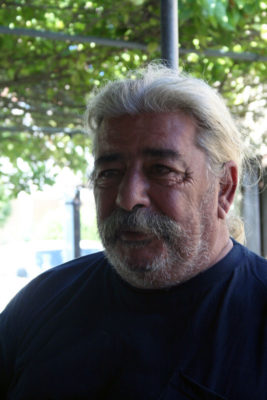
Home cooks and high-end restaurateurs alike have taken to hedgerows and beaches to forage for wild herbs and sea vegetables over the past couple of years. But 60-year-old George Demetriades, the larger-than-life owner of Seven St. Georges Tavern, just outside Cyprus’s Paphos, has been serving up incredible meze based on the flora in the woods and fields around the area he grew up in for the past 20 years. “I’ve foraged for food since I was a little boy. That’s how I grew up, as a hunter-gatherer for healthy food,” Demetriades said.

logo

Terms of Service