S M B O measurement-vertical measurement-vertical

Latest Stories

Pera Ždera: Burgers, By Way of the Balkans Featured Image

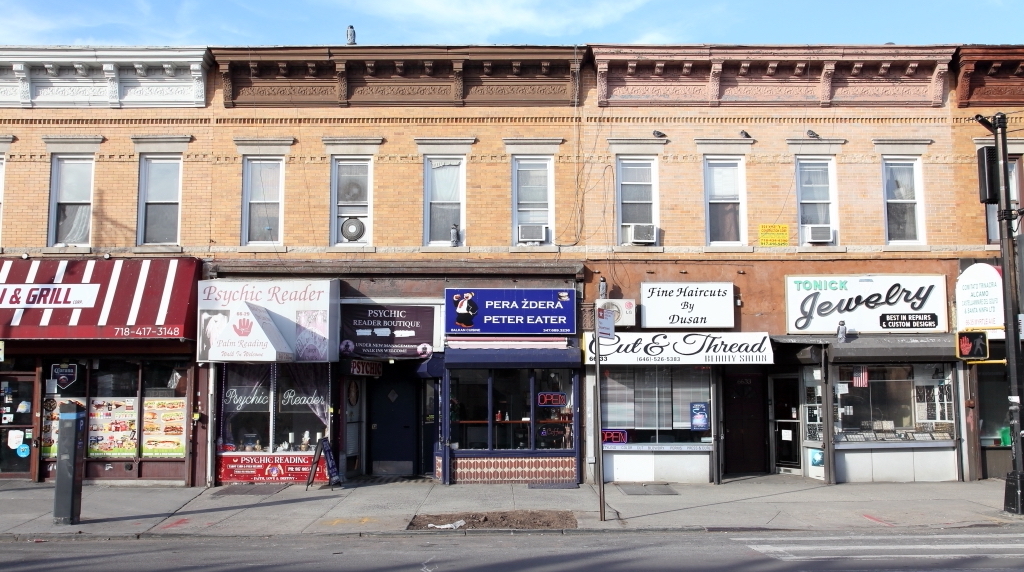
On a warm, sunny weekend afternoon in the spring of 2022, we visited a street fair on Myrtle Ave., a major thoroughfare that cuts through Ridgewood, Queens. The roadway was closed to traffic, in favor of street food vendors, for many blocks; the only bus in sight was a 1950s coach, which we boarded to peruse the vintage advertisements and the lounge-like seating at the rear. But despite our appetite, none of the street food vendors tempted us. We continued walking eastward, beyond the street fair and into the adjoining neighborhood of Glendale, until we were drawn toward the sight of a familiar, eternally hungry, cartoon character holding a hamburger.

Horo Burger

Situated on a pleasant corner in the heart of Kurtuluş is an unlikely yet warmly welcomed addition to this beloved neighborhood's excellent food scene: Horo Burger, which only features Sloppy Joes on its menu. While the name of this American classic conjures pleasant memories of family dinner for some and horrifying flashbacks from the school cafeteria for others, Horo's take on the Sloppy Joe is faithful yet elevated, just as put-together as it is messy.

Le Bada Biscuiterie

As a singular city that differs from the rest of France, it is no surprise that Marseille has its own lingo. Parler marseillais (Marseille speak) is mostly Provençal, the original dialect of Provence, peppered with Italian, Arabic and other languages spoken in the multicultural city. We call the fervent fans of our football team OM “fada,” Provençal for crazy. Tarpin, which means “very” in Romani Caló, is used on the daily by the hyperbolic Marseillais. When the fruit vendor rounds up your bag of peaches, that is the “bada,” Provençal for the “extra bit.” It makes a fitting name for a baker known for her bite-sized treats.

Locale: California Dreaming (in the Heart of Tokyo)

“Can I have some wine? I’m a little sober now,” calls chef Katy Cole to sommelier and server Ben Ward-Perkins over the buzz of conversation and clinking cutlery. We’re two hours into the brunch service. He fills her glass, and she tips it back, taking a quick gulp. “I didn’t know it was going to be that kind of morning,” she says, laughing. “I’m in a good place.” It may be drab and drizzly outside in the backstreets of Meguro, but it is always warm and sunny inside Locale, Cole’s little farm-to-table restaurant.

Down to Earth Farmers Market

"I've lived in Fresh Meadows all my life, and I never knew this was here." Kevin Sims has heard similar sentiments many times. He's the manager of the Down to Earth Farmers Market in Cunningham Park, which hosts some 20 vendors on Sunday morning and early afternoon, from April through December, at one edge of the park. Considering that Cunningham comprises 358 acres of athletic fields, hiking and biking trails and picnic grounds, and is just one part of a 2,800-acre corridor of greenspace in the wide-open spaces of eastern Queens, a once-a-week farmers market might easily be overlooked.

Slurp’s Up

In Japan, a bowl of noodles is more than just a tasty dish – it can speak to you of regional pride and culinary craft. It's art, distinguished by the broth's depth, noodle texture and the symphony of toppings. While Tokyo leans towards a subtler, often chicken-infused broth, head north to Sapporo and you'll find bowls brimming with a miso-rich, hearty concoction, tailor-made for warding off the chill. In Hakata, the Fukuoka district gifts us with tonkotsu ramen, where pork bones are simmered down to a broth that's as unapologetically porky as it is irresistible. In this city, every slurp is a testament to Japan's noodle mastery, where wheat noodles become the perfect vessel for each region's signature flavors. Wheat noodles, buckwheat noodles, green tea noodles, hot noodles, cold noodles – you can have them every which way and any time of the year. Below, we’ve shared our picks for where to find the best noodles in Tokyo, based on years of slurping.
Marti Buckley’s First Stop in San Sebastian

Editor’s note: In the latest installment of our recurring First Stop feature, we asked writer Marti Buckley about some of her favorite spots in San Sebastian. Marti is the award-winning author of Basque Country (Artisan, 2018) and The Book of Pintxos (Artisan 2024). She is an experienced speaker, chef and journalist with an expertise in Spanish and Basque cuisine, vermouth, wine and European travel. She has lived in San Sebastián, Spain since 2010 and has been writing for nearly two decades. You can follow Marti on her blog and Instagram.

Pasticceria Costa

The bright refrigerator display case illuminates a long line of pastries filled with cream pastry and topped with fruit, cannoli filled with ricotta, chocolate and fruit cakes, cassatas and almond cookies. "Sicilian pastries are unique in the world," says Riccardo Costa proudly. Alongside his father and sons, Riccardo runs the historic Pasticceria Costa, a true Palermo institution that opened its doors in 1960, a classic bar and pastry shop where you will find Sicilian confectionery excellence. "It all began with my father, Antonino," says Riccardo. Flash back to the post-war years; 1946, to be precise. Antonino Costa was only eight years old and to escape a destiny of hunger and poverty in a city still destroyed by bombs, he began to work as an apprentice, first in a bakery and then in a pastry shop. At the age of eighteen, Antonino Costa opened his own confectionery workshop to supply the various bars in the area, but it was in 1960 that he opened the historic pastry shop that bears his name, on Gabriele D'Annunzio Street.

Tencüi

After winning over hearts and stomachs with his first restaurant, Madereros, in the quiet San Miguel Chapultepec area, chef Mario Espinosa set his eyes on the incredibly charming neighborhood of Santa María La Ribera for his next adventure. The project? The mushroom-centric Tencüi, which means “connect” in Náhuatl, a traditional Uto-Aztecan language spoken by peoples native to central Mexico. As fans of Madereros and after months of hearing about the wonders coming out of the kitchen at Tencüi, we finally made it to Santa María to taste the menu for ourselves.

Neighborhoods to Visit

Just a few blocks away from Tbilisi's busy central railway station and its spaceship-like architecture, the area where Constitution and Ninoshvili streets meet was, until recently, an overlooked residential corner of the Georgian capital. But its centrality and the presence of several large unused historical and industrial buildings dating back to the 19th and early 20th centuries meant that the arrival of investors and new businesses was only a matter of time. The neighborhood has indeed been changing fast during the past few years. Part of a huge parking lot used for driving lessons is now home to outdoor courts for games of paddle (similar to pickleball), while the remaining space will be transformed soon into a brand-new park. Several of the area’s old buildings, meanwhile, now are home to some of Tbilisi’s more interesting new culinary enterprises, making the crossroads Constitution and Ninoshvili one of the city’s emerging neighborhoods to explore.

Gambrinus

Gambrinus, in operation since 1936, is the type of restaurant with fully-suited wait staff, white tablecloths, signature plates, wood paneling on the walls and a menu that touches on items such as foie gras and crêpes Suzette. If you’ve ever eaten there, it’s likely that you sat in one of the elegant, warm dining rooms designed by Portuguese architect Maurício de Vasconcelos in 1964. But for generations of Lisbon diners, especially chefs and others in the hospitality industry, food writers and photographers, Gambrinus means one thing: its bar.

Jamaican Jerk House: Bringing the Heat

New Orleans is arguably one of the most Afro-Caribbean cities in the United States. In the minds of some, we don’t even qualify as a US city, but rather the northernmost outpost of the Caribbean. From our architecture to our food and our rhythms, we sit apart from the rest of the South. We love spice and deep flavors, cooking that is evocative of people and place. Jamaican food would seem like a natural fit here, and it is, though it is not nearly as commonplace as it should be, all things considered. But Richard Rose and his wife Jackie Diaz are looking to change that with their new Upper 9th Ward restaurant on St. Claude Avenue, Jamaican Jerk House.

Von & Vonnie: A Deeper Shade of Coffee

It took four years for couple Yvonne Spresny and Morgan von Mantripp to turn an old dream into reality: opening a coffee shop where they could roast their beans from various parts of the world. From Wales and Germany, they ironically found the perfect place in a cozy space in the Bonfim neighborhood in Porto, where they have been roasting and serving coffee since the beginning of the year (January 2nd, to be exact). The couple met in Chiang Mai, Thailand when each were traveling separately through Southeast Asia, and discovered a shared passion for coffee. Von Mantripp had just completed a master's degree in Philosophy in Southampton, Wales, while Spresny had recently finished a law degree in Schleswig-Holstein, Germany. They never imagined they would fall in love in Thailand, but it was there that they bonded over countless cups of coffee. Together, they crafted a new, joint plan: to return to Europe and eventually open a coffee shop.

Barcelona’s Most-Essential Dishes and Where We Go to Eat Them

The culinary scene in Barcelona has seen a slow and steady resurgence since the 1980s, when Spanish cuisine was still being reduced to paella and sangria in the popular imagination. With rampant growth in tourism, Michelin-stars being awarded to local kitchens left and right, and renewed interest in traditional wine-making techniques, Catalan cuisine in particular has become a force in its own right. So, where to find the best traditional Spanish and Catalan food in Barcelona’s many kitchens? Culinary Backstreets has you covered. Our local guides reveal the must-try dishes and drinks of the Catalan capital, and where to track them down, from tapas to top-quality vermouth at an old-school bodega to unforgettable seafood at a family-run marisquería.

Jose Chiquito

The historic Grand Central Market in downtown Los Angeles looks very different today than it used to. Opened in 1917, Grand Central Market began as a public market with a variety of vegetable stands and meat and poultry shops, a place for people to get their daily groceries. Over a hundred years later, the market still stands, but a big revitalization project that started around 2013 has transformed this local landmark. While the architecture and interior of the market remains mostly the same, the project has drawn new, hip food vendors to the historic space, now lit with vibrant neon signs. On weekends, long lines form around popular stalls like Eggslut and Broad Street Oyster Co. Among the new vendors, legacy businesses are still holding on, serving both longtime and new customers.

logo

Terms of Service