S M B O measurement-vertical measurement-vertical

Latest Stories, Tokyo

Udon Shin

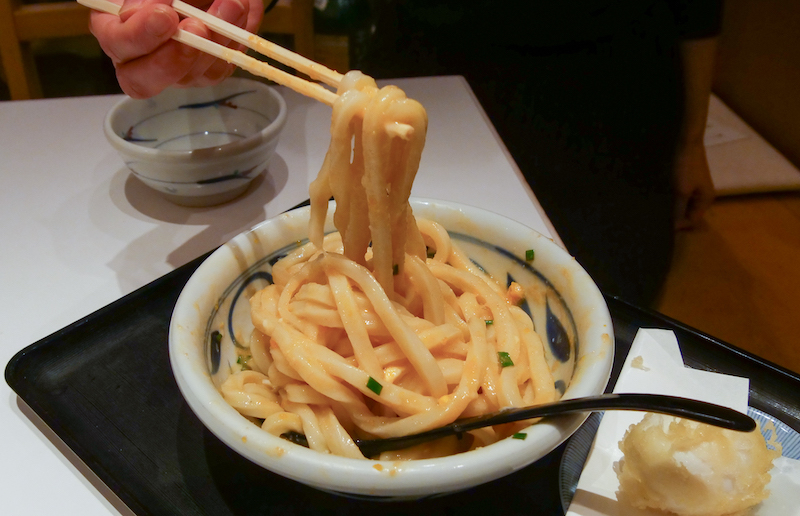
Anticipating a line, we arrived ahead of our appetite, but the slightly acrid smell of fresh dashi wafting over the street hurried our hunger. Tucked behind a handful of confounding corners southwest of Shinjuku Station in a mixed-use neighborhood of apartments, shops and offices, Udon Shin has consistently ranked among the best udon restaurants in Tokyo since opening in April 2011. At around ¥1000 (US$9) per meal, you feel like you're getting away with something. Owner and chef Shinji Narahara deftly handles the classic accompaniment to udon (think homemade dashi, deep-fried tofu and tempura) but elevates the humble noodle to modern heights with their trademark carbonara udon.

Ask CB

Dear Culinary Backstreets, I just realized I’ll be in Tokyo for Halloween. Are there any tricks for finding special foodie treats there? Let’s remember that Japan is responsible for inventing cosplay – and that should mean a spectacular Halloween. These days, Tokyo certainly does not disappoint on that holiday, and you’re in for many treats. Halloween has not always been popular in Japan. But in the last five years it has exploded into possibly one of the top three holidays celebrated in that country. Tokyo Disneyland seeded the phenomenon by holding costume parades all through the month of October for many years. Social media exploded interest in the holiday, and now it’s a force to be reckoned with.

Tokyo Kissaten

Our eyes take a moment to adjust to the dim light upon walking into Ladrio. The room is like a vault, its brick walls and floor emitting a scent familiar to anyone who’s ever been in a cave or stone cellar. This mustiness is comforting, however, and the cool air a welcome reprieve from the furnace of the Tokyo summer outside. Soon we can make out several low tables extending back into the narrow space. People sit alone or in pairs sipping coffee or puffing cigarettes. Some converse in hushed tones as Edith Piaf is piped quietly from an unseen stereo. A few heads swivel in our direction but gazes never linger here.

Ichiran

There are times when food is just so profoundly, soul-satisfyingly good that we find it difficult to divert our attention enough to do the socializing often required when eating out with company. The folks who devised Ichiran Ramen must have taken that into account when they set up shop. Their concept is to offer complete personal space so that customers can give their undivided attention to the Hakata-style ramen served there. Imagine being encouraged to loudly suck up your ramen in the privacy of your own personal counter “booth.” Nobody really knows or cares who’s there, and whatever slurping happens there stays there.

Umeshu Dining Myoujou

Long valued for its medicinal properties, the East Asian stone fruit ume appears in Japan’s oldest pharmacological dictionary, written in 918. Something between a plum an apricot, the ume is more acidic than both and rich in antioxidants. The first mention of umeshu, a liqueur made by steeping ume in usually distilled spirits and commonly translated as plum wine, came centuries later in a book of Japanese cuisine published in 1697. Ume’s medicinal value appears to have carried over, though, as this later work claims that the flavorful tonic both spurs the appetite and counteracts poisons.

Nihonbashi Maishi

Nakaochi appears to be a chopped-up mound of Japanese tuna, but it isn’t. It looks like it should be an inexpensive cut of fish, but it’s not. Instead it’s a rare delicacy, a one-of–a-kind culinary experience we can’t get enough of. Nihonbashi Maishi looks like just another restaurant grouped in the basement compound of the Tokyo Nihombashi Tower, but it isn’t. It appears to be an ultra-expensive establishment, but at lunchtime it’s not. It’s a favorite go-to place for true aficionados of Edo-mae sushi and nakaochi. Edo-mae sushi is considered the root of all sushi.

Behind Bars

If it weren’t for the dozens of brightly lit signs and paper lanterns promising libations of every sort, you might mistake the two narrow alleys alongside the train tracks on the northeast side of Shibuya station for a derelict apartment block. In reality Nonbei Yokocho (AKA Drunkard’s Alley) is one of Tokyo’s few remaining yokocho (side street) bar districts. Like the much larger and better-known Golden Gai in Shinjuku, Nonbei Yokocho is a collection of aging and tightly packed microbars. Each watering hole is scarcely more than a few square meters, and if longtime regulars aren’t taking up the scant floor space, newcomers may try any number of doors before they find an empty seat.

Ichiba no Chubo

The warren of streets surrounding the current Tsukiji Market – Tokyo’s main wholesale market – are filled with sushi joints, ramen stands, coffee shops and assorted other restaurants tucked between the stalls and knife makers. Walking around during morning hours one could often wonder where the people who work inside the market have their meals. The gentrification of Tsukiji has brought such an influx of tourists that the early market is now closed to outsiders. Visitors are limited to the outer parts of the market and the food stands. Restaurants are jammed. Beginning at 3 a.m. workers drift into the heart of the market and begin to set up for the 5:30 a.m. tuna auction.

Karē wa Nomimono: Japanese Curry Roulette Featured Image

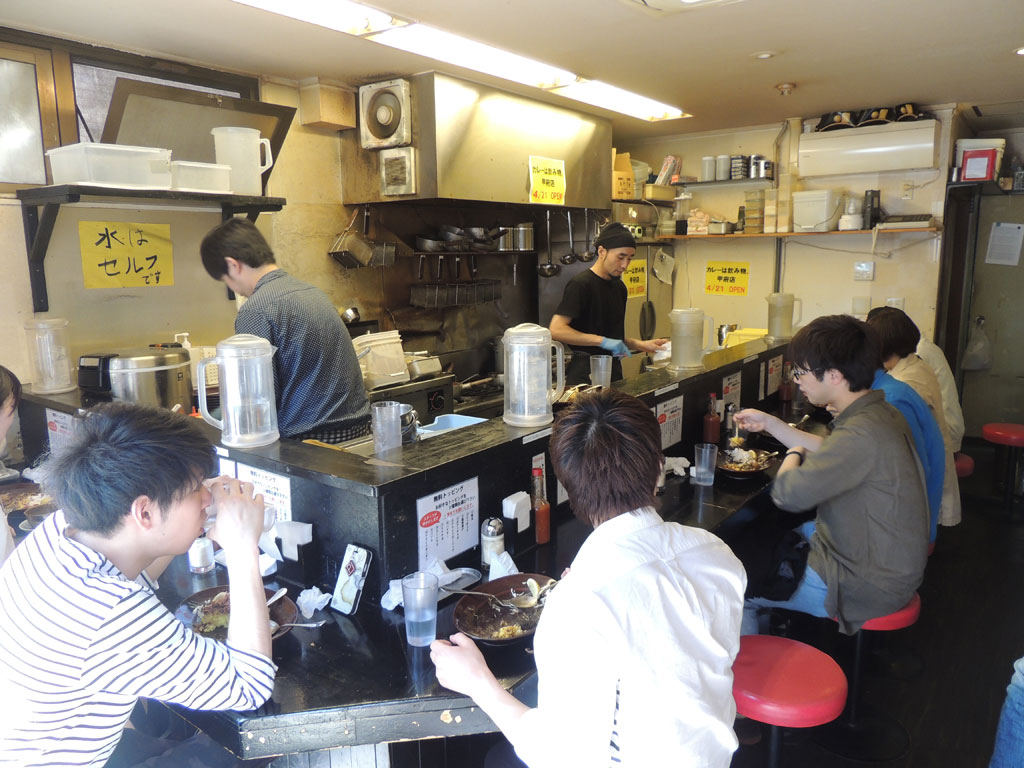
There’s a general rule of thumb in Tokyo that if you see a line in front of a restaurant, it’s probably worth standing in. Maybe that’s how we first discovered Karē wa Nomimono. Or maybe it was the heady scent of fresh curry that wafts out the kitchen door before the restaurant opens every day. As many times as we’ve been back, it’s hard to remember. Touted as a national dish since at least the mid-20th century, curry rice is for many Japanese the quintessential comfort food. While some shops pride themselves on making curry just like mom used to, others are taking the classic dish in bold new directions.

Savoy Pizza and Cheese Shop Shibuya

We consider ourselves fabulously lucky every time we snatch up one of the ten counter stools or the three-seater table inside the triangular shaped and miniscule Savoy Pizza. Up a few steps as the street curves around behind itself, this smallest of small restaurants is easily missed; the space seems carved out of the corner of a building, almost like the bow of a ship. The best way to find it is to look for the clutch of hungry people hanging around outside, waiting for their slice of Neapolitan-style heaven. It is the kind of place that one is told about and then hesitates to tell more people lest the line outside never end.

Ask CB

Dear Culinary Backstreets, I’m on my way to Tokyo in the next few weeks and wanted to enjoy the cherry blossoms at a typical hanami celebration. Where can I find such a celebration, and what kind of food can I expect and where can I find one? We can fully understand why you want to partake of a hanami, or cherry blossom viewing party, as most Japanese people do. The ritual has been around for over a thousand years in Japan. Cherry blossoms – sakura – will bloom in lavish displays of wonderful pink magic all over Japan, starting on the southern island of Kyushu at the end of March and moving north to Hokkaido by the end of May.

Soba Combo Watanabe

We crept down an almost unmarked flight of stairs, then through a dim, winding corridor and finally pulled back a noren curtain to find ourselves in the world’s only Ippudo ramen location that serves soba noodles instead of ramen. As we seated ourselves on stools around the U-shaped counter, the aroma of tonkotsu (pork bone) broth reached our sinuses and informed us that we had arrived in a place like no other. Shigemi Kawahara opened his first Ippudo ramen shop on the southern Japanese island of Kyushu in1985 and over the next 15 years became a revered ramen master by winning numerous ramen championships on TV.

Drink Like a Local

Editor’s note: This is a new installment in an occasional series about where to wet your whistle in true Tokyo style. Every Tokyo neighborhood has its standing bars, usually near the train station. Azabu Juban’s most popular, Juban Stand, is located on a backstreet running parallel to the shoten gai shopping street. It spills out onto the sidewalk, where old kegs offer patrons the chance to drink a few beers while enjoying life on the street. Inside, a standing area snakes down the bar to the back, ending with a jumble of stools and stairs leading to a small balcony with a few wonky tables for those who prefer to sit and linger.

Nihonbashi Suminoe

As the towers of Tokyo’s Nihonbashi financial district began to proliferate and grow taller, developers took special care to preserve and in many cases not displace the area’s mainstream department stores, art galleries and varied restaurants, and so traditional establishments were often incorporated into the new buildings. The Mitsui real estate group, which opened the two Coredo Towers in 2014, made sure to include time-honored restaurants in the new setting, including an amazingly good, classic Edo-mae sushi bar lured from an outdated setting, an outpost of a Kyoto home-cooking restaurant and a dazzling array of famous sweets shops. The developers were also clever enough to include a classic izakaya, or pub-style establishment, enticed away from the Tsukiji market. Every evening, office workers pour out of local mega-buildings and pack into Nihonbashi Suminoe to enjoy the collegial atmosphere and flavorful charcoal-cooked fish. Sakaya means a location in which to purchase sake, and “i” means to stay in a place and feel at ease. Thus, i-sakaya becomes “izakaya” when pronounced correctly, and it’s the perfect way to describe Nihonbashi Suminoe.

Best Bites 2015

Editor’s note: As the year comes to a close, we honor some of the people who are keeping up traditions on the Japanese food scene. And we remember the foods we’ve dreamt about eating again and again from each of them. Nodaiwa This 200-year-old restaurant, one of Tokyo’s best sources of wild-caught unagi (freshwater eel), is housed in a building brought from Hida-Takayama in Gifu prefecture, which is famous for gassho-zukuri farmhouse architecture, with its massive dark wooden beams and thatched roofs. The structure was dismantled and then hauled down to Tokyo piece by piece and reassembled in the modern building where Nodaiwa offers a small glimpse of traditional taste and skill, with vintage touches throughout. Fifth-generation chef Kanejiro Kanemoto keeps the tradition alive and deserves his Michelin star. His passion for offering only the best eels available is evident in everything he serves.

logo

Terms of Service