S M B O measurement-vertical measurement-vertical

Latest Stories, Tokyo

CB on the Road: Glorious Gelato at Aomori’s Natura Due

On a warm August morning two years ago in an orchard somewhere west of Aomori City in Japan’s Tōhoku region (about 4 hours from Tokyo by train), we watched blackcurrant farmer Kenji Hayashi scoop dark magenta gelato into paper cups. Ribena had nothing on this. It tasted like summer incarnate, an electric blackcurrant explosion tempered with sugar and brightened with lemon juice. We ate greedily, trying to finish our gelato before the heat turned it into a puddle. “So, how did you make the gelato?” We asked him. “I met Ayumi-chan at a bar,” he replied. He’s not alone. This is apparently how Ayumi Chiba of Gelato Natura meets all her fruit suppliers: drinking at bars.

Natsu no Shun

After the merriment of sakura cherry blossoms has faded, bringing with it the dreary Japanese rainy season, the hot, humid days of July and August follow shortly thereafter. When summer temperatures and the humidity reach a point of sticky and awful, Japanese people tend to change their diet so as to shake off natsubate, the physical fatigue of summer. In a country where the main religion is nature-worshipping Shinto, most people practice the custom of shun: celebrating nature’s cycles and each season’s profusion of food. Loosely translated, “shun” means the height of nature’s abundance. Each of Japan’s fruits, vegetables and also animal proteins has its own shun, and in the essential and enduring wisdom of Japanese cuisine, that has influenced the preparation of Japanese food for thousands of years.

Kooriya Peace

It’s 9 o’clock in the morning and the narrow streets that fringe Inokashira Park are largely empty. This part of Kichijoji, a lively neighborhood in west Tokyo, has yet to wake up. Storefront shutters are yet to be lifted; staff inside cafés can be glimpsed preparing for the day. Yet, on one corner, a couple of girls duck into an enclosed alleyway and reappear five minutes later. Next, a solo lady strides inside, emerging after a minute or two. People drift in and out, marking an unusual pattern of activity. This is the entrance to Kooriya Peace, a renowned kakigori (shaved ice) store that’s so popular customers secure their dessert hours in advance – although for early birds it might become their breakfast.

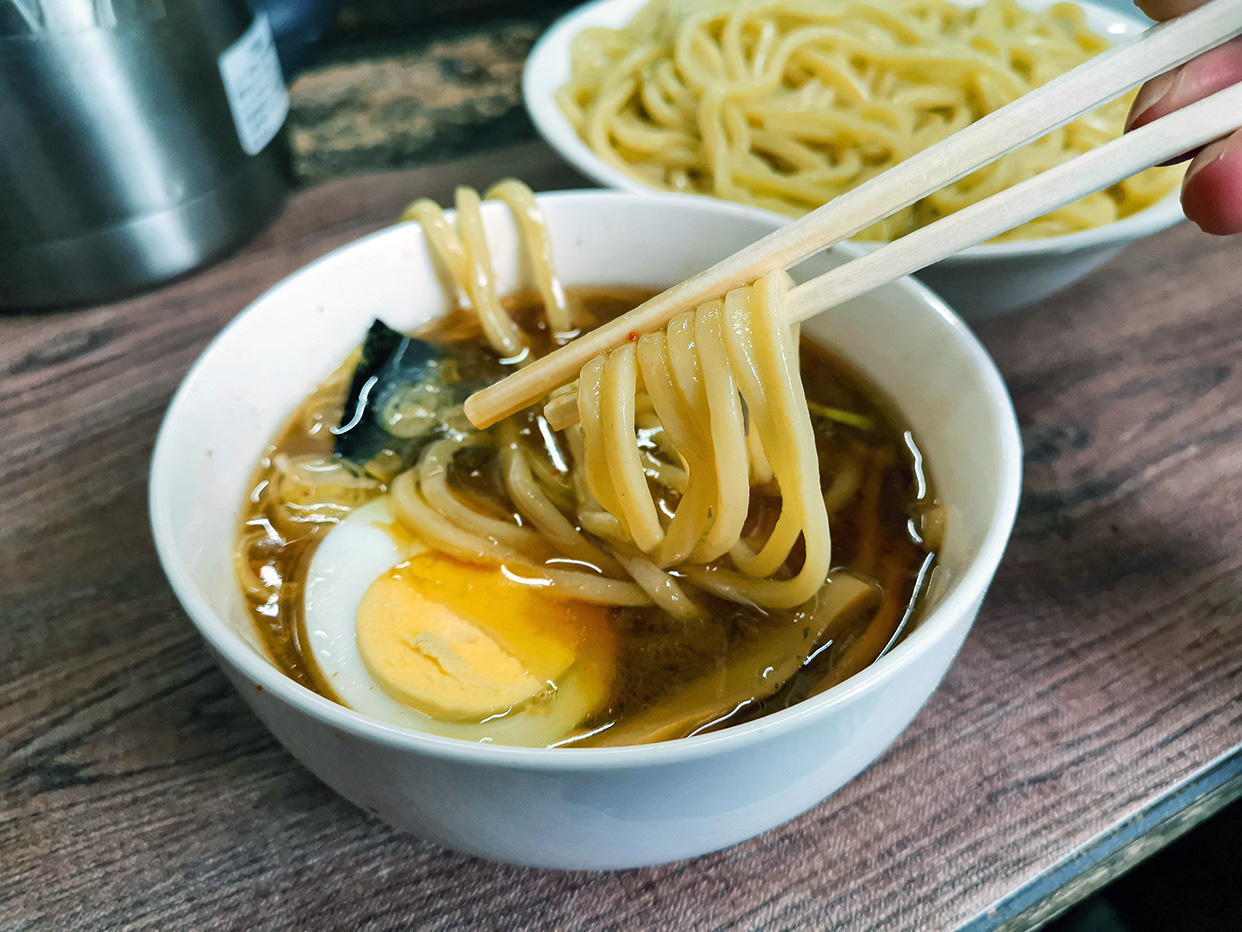
A bowl of noodle nirvana at Ura Sablon in Tokyo, photo by Phoebe Amoroso

Ramen joints are often easily recognizable, either by large windows illuminating slurping customers, a vending machine dispensing meal tickets at the doorway, or the brightly lit signs; usually it’s some combination of the three. When it comes to Ura Sablon, however, one might easily pass it by. The narrow entrance is tucked away between a storage locker and an air conditioning unit; a small notice, illegible unless up close, is attached to a traffic cone; and the paper lantern reading “tsukemen” – a kind of dipping noodles – could easily have ended up there by chance.

Spring Gone Wild

One of the great joys of spring in Japan is anticipating the appearance of sansai, or mountain vegetables. When cherry blossoms begin to flutter on warming breezes, hikers take to the hills to forage for the first wild edibles. Supermarkets mount special displays of packaged (and unfortunately often hot-house-raised) young sprouted leaves, shoots and tubers. Restaurants proudly offer up special seasonal dishes, providing an opportunity to bring the freshness of the outdoors to the table, even in the inner city. A bounty of deliciousness awaits those fortunate enough to get out of Tokyo and roam the hills. Fukinoto, taranome and warabi form a trifecta of green vegetables gleaned from mountain walks. Cooks wait all year to prepare dishes of these fragrant yasai veggies.

Pizza Marumo: The Dough Whisperer

Every day, Yuki Motokura records the temperature and the humidity, and checks in on his pizza dough. He adjusts the flour, water and salt in minute increments, and logs the results with precision. “Even if the data is the same, it might not come out the same,” Motokura says. “Pizza is just that difficult.” While there’s no failsafe trick, he says he’s developed a kind of sense for how the dough might behave during his years of experience. “I lift the lid on the fermenting dough and I have a kind of discussion with it,” he explains. “‘What shall we do today?’”

Soul Food House: Southern Comfort in Tokyo

LaTonya Whitaker’s favorite food is catfish, but the dish she loves cooking most at Soul Food House is the gravy chicken and waffle. Craving country-fried chicken and waffles one day but not having the space for both, she simply – in her words – “mashed it up and put the gravy on.” It’s not our first rodeo at this restaurant in Azabu-Juban. This time, on LaTonya’s recommendation, we tackled a plate of waffles larger than our faces, palm-sized pieces of country-fried chicken on a bed of mashed potatoes, the whole affair drenched in gravy and a small pitcher of maple syrup alongside. It’s unabashedly over-the-top. You have to eat fast, or risk the whole thing turning into stodge.

Nanohana: Cuisine from Sado Island

Nanohana could almost be mistaken for someone’s house if it weren’t for a small lectern, propping open an enthusiastically-scrawled menu. The restaurant is small and discreet, tucked down a side street, where its sandy-colored walls and wooden door with glass panels blends into a charming old neighborhood in Ueno in the east of Tokyo. We pull open that door to reveal a cosy, retro interior, a few dark wood tables, green lamps on the wall and an S-shaped counter behind which lies the kitchen. Most striking, however, is the paraphernalia from Sado Island – maps, old photos and bottles of sake line the walls. It’s clear we have stumbled into a home-away-from-home, a labor of love created by Nanohama’s owners, couple Tadahiro and Nami Ishizuka.

Sichuan Tantanmen Aun: Noodles That Turn Up the Heat

In Japan, people opting for new year noodles will most likely pick soba buckwheat noodles. Often eaten on New Year’s Eve as “toshikoshi soba” (literally, “year-crossing noodles”), which are served in a light dashi broth, they symbolize good luck, longevity, and breaking off the hardship of the previous year. During the chilly days of January, however, we find ourselves craving a different kind of noodle to start the year: tantanmen. Punchy, oily, and spicy wheat noodles topped with minced pork, this gloriously fiery dish might not give us a long life, but it’s something we’re planning to eat life-long. 

Hokkaido Soup Curry

Take a rich chicken bone stock and toss in a handful of whole ground spices and herbs. Add a whole chicken leg, braised until the meat is almost sliding off the bone. Slip in a bouquet of cooked vegetables – the bare minimum being carrot, broccoli, bell peppers, eggplant and potato – and serve alongside rice. This is a classic Hokkaido soup curry, a spicy, vibrant soup-and-rice dish guaranteed to warm even the cold, dead bodies of your enemies. But this isn’t its final form. Like the Choose Your Own Adventure books of the 1980s, you can customize almost every aspect of your bowl.

Best Bites 2022: Tokyo

Japan has finally reopened to international tourists, and many residents are not only ready to welcome back visitors, but are delighted to do so. While there are inevitable grumbles about the inevitable queues, these are outweighed by an excitement generated by the fresh energy that fresh eyes bring to the city.   Returnee visitors to Tokyo will find much has changed, but much has stayed the same as well. The capital has always been a restless, competitive city – pandemic or no – and restaurants often pop up like mushrooms, and disappear just as quickly.  

Pizzeria GG: A Slice of Naples in Kichijoji

Tomoyuki Kohno seems like someone who would rather be making pizza than talking about pizza. He speaks slowly, probing the words as they emerge from his mouth as though he’s hand-writing them down; we struggle to hear him over the background music. Our conversation is pregnant with pauses. We’re at Pizzeria GG, a cozy basement-level pizzeria in the backstreets of Kichijoji near Inokashira Park. Today’s ominous skies meant that the lunch service was relatively quiet for a Friday, but the restaurant was still full of customers, right until the pizza oven went dark at a quarter to three. It’s nice to know you can get a pizza at half past two – lunch options in Tokyo dramatically dwindle after 1:30pm.

Koike no Iekei: Soul Food Ramen

Ramen has been, arguably, one of Japan’s biggest culinary exports in the past few years. Across the globe, new legions of converts will proclaim to be tonkotsu (pork bone broth) fans, avid followers of the shoyu (soy sauce) style, or miso ramen aficionados. Yet a new store in Sugamo, a northern Tokyo suburb, is throwing its weight behind a type of ramen – iekei – still little known outside of Japan. Sugamo isn't the kind of place that's known for being trendy. In fact, it's colloquially known as "Obachan no Harajuku" (Grandma's Harajuku) due to the array of shops catering to the elderly – although there are a couple of less salubrious streets geared towards a certain male clientele.

Land of the Rising Dough: The Story of Bread in Japan Featured Image

All things considered, bread is a relatively new arrival in Japan, having found its way there in 1543, when the first Portuguese ship arrived carrying missionaries and merchants who had come to spread the word of God and seek new markets. These Europeans brought with them commodities both tangible and intangible. When the Sakoku Edict, which essentially closed Japan to all international contact, came into effect in 1635, some of these commodities remained in one form or another. The vast majority of Japanese would never encounter bread during the subsequent Tokugawa Era (1603-1868), though the concept of doughy baked goods – pan in Japanese, from the Portuguese pão – remained.

Tempura Dining Itoi: Tempura for the Times

It might easily be mistaken for a hipster café. From the street in buzzing Shinjuku City ward, a large window illuminates an open kitchen where Yuichi Itoi, sporting a baseball cap, white T-shirt and piercings, is prepping ingredients. As we step inside, we’re greeted by the sound of low-key hip-hop and the chatter of two young couples sat at the counter, sipping drinks. Two men are at a table butted up against a bare brick wall, an open laptop amidst their plates. But this is no café. Tempura Dining Itoi is a restaurant born from chef-owner Itoi’s devotion to washoku – traditional Japanese cuisine. Except here, he’s doing things his way. 

logo

Terms of Service