<p><span style="color: rgb(0, 0, 0)">This 2025 opening is catching aesthetes’ attention: Acuario is housed inside an architectural gem, the Modernist and Rationalist-style, 1938-constructed atelier designed by architect Antonio Bonet Castellana (the B in the BKF trio who conceived the legendary steel-and-leather butterfly chair). Previously a leather store, sommelier Mateo García de Onrubia, together with his sisters Jules and Lucila, breathed new life into the shapely property, marine blue hues and stainless steel curves replicating waves, giving a much-needed nocturnal injection to often-overlooked Retiro. Stocking “labels we like to drink and finish,” Acuario focuses on natural wines.</span></p>
Retiro: Where Buenos Aires' Grand Past Meets Its Everyday Appetite


<p><span style="color: rgb(0, 0, 0)">Arroyo Street is known as one of the most beautiful streets in Buenos Aires. Hidden along it is one of the city’s best-known bars, Florería Atlántico. You casually walk into an actual flower shop; behind it, a door leads down to the basement, home Tato Giovannoni’s bar. He is perhaps the most famous Argentine bartender in the world. Order your favorite cocktail knowing it will be flawlessly executed, or venture into one of the house creations, made with local ingredients and a distinctly Argentine identity.</span></p>

<p><span style="color: rgb(0, 0, 0)">Korean immigration is an important part of Buenos Aires’ cultural mosaic, and Martín Ho is one of its best-known representatives, having spent almost a decade at the helm of Mr. Ho. In a relaxed setting, the restaurant serves Korean staples such as bulgogi deopbab (beef marinated in soy sauce and seasonings), tteokbokki (small rice cakes served with fish paste, vegetables and egg), and the fiery kimchijjigae (a stew made with pork, kimchi and white rice). There is plenty of spice, but the menu clearly flags heat levels and the staff knows how to guide diners through the dishes: unlike in other South American countries, Argentinians are not accustomed to spicy food. A great value lunch menu has won over a loyal crowd of office workers.</span></p>

<p><span style="color: rgb(0, 0, 0)">It is hard not to expect beauty from a café on the ground floor of the Kavanagh building, one of Buenos Aires’ great Art Deco landmarks and, until 1947, the tallest skyscraper in South America. Cora lives up to the setting with designer furniture, delicate crystal lamps, sculpted columns and a turntable spinning records throughout the day. Most people come for coffee and pastries, but the menu is designed to carry guests from morning into the afternoon. There are sandwiches and salads for a light lunch, and even cheese boards to ease into the evening over a bottle of wine. One final surprise waits downstairs: an exhibition room hosting rotating art shows.</span></p>

<p><span style="color: rgb(0, 0, 0)">Los Dos Escudos has been around for almost half a century, its history closely tied to the sandwich de miga, its signature product. Descended from the Italian tramezzino, these soft white-bread sandwiches come generously filled and in a wide variety of combinations, from the classic ham and cheese to blue cheese and walnut or pineapple with hearts of palm. The sandwiches are not the only draw. This is one of Buenos Aires’ best old-school bakeries, with excellent medialunas, <em>cañoncitos</em> (tube-shaped pastries filled with dulce de leche or pastry cream) and<em> fosforitos</em> (flaky rectangular pastries filled with ham and cheese). Everything can be taken away or enjoyed at one of the café tables, newspaper in hand.</span></p>

<p><span style="color: rgb(0, 0, 0)">The first thing that stands out when entering Los Jardines de las Barquin is the sense of complete calm, almost unbelievable just half a block from busy Avenida del Libertador. The restaurant is named after the nieces of Countess María Ignacia de Velasco Tagle Bracho, who lived on the property in the late 18th century. Today, following a 1922 reconstruction, the building is home to the Isaac Fernández Blanco Museum of Hispanic American Art, well worth visiting before sitting down to eat. Citrus trees, climbing vines, flowering plants, benches and ceramic-tiled fountains surround a simple menu designed to make choosing easy: the true star is clearly the setting. Starting with the light yet flavorful mushroom ragout empanada is highly recommended, followed by a tried-and-true classic: Swiss chard, spinach, and cheese cannelloni.</span></p>

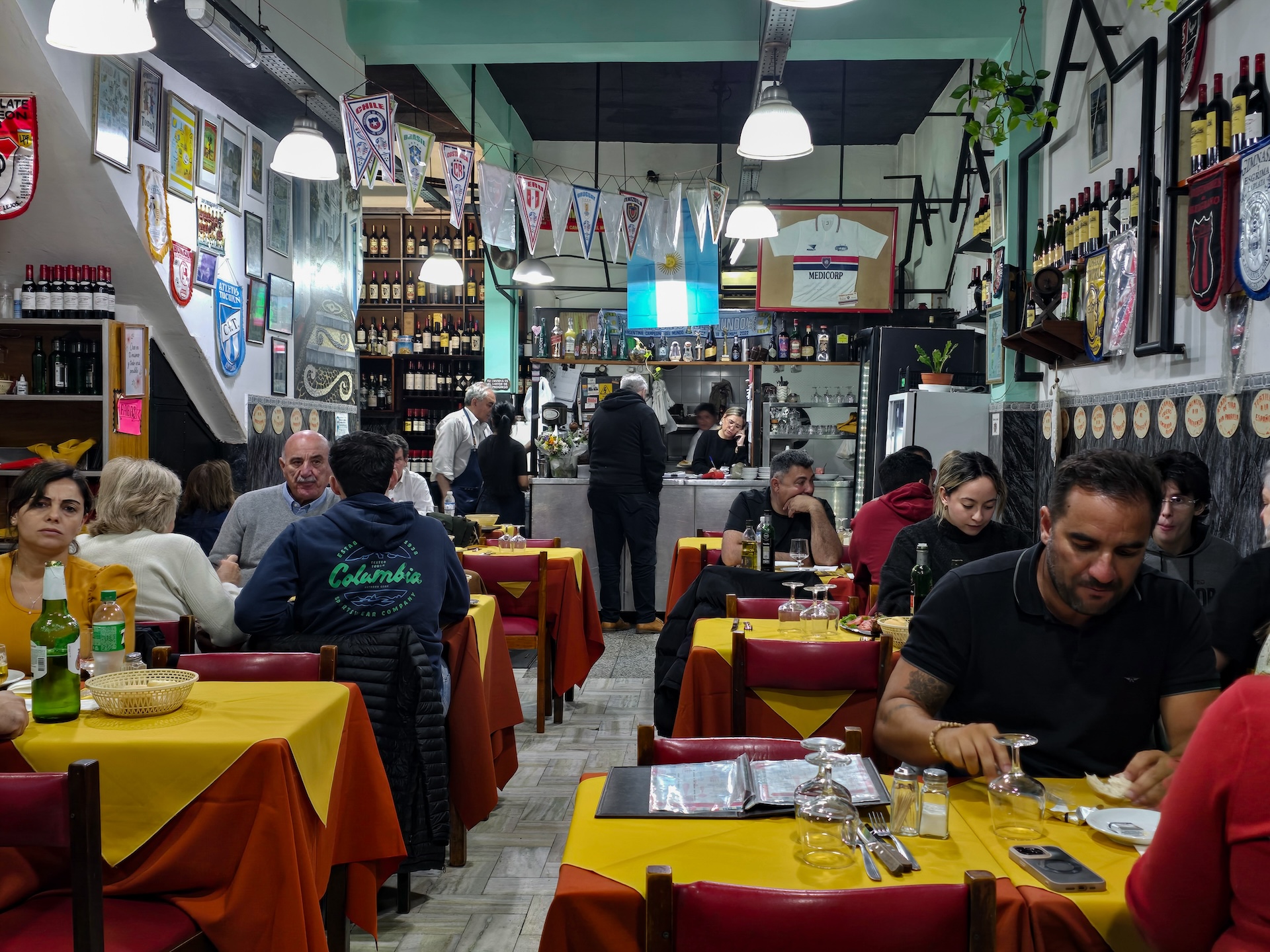
<p><span style="color: rgb(0, 0, 0)">“How about starting with a drink?” asks the first page of the menu at Restaurante Norte. It immediately lowers your guard, helped by a room packed with small signs advertising house specials, football memorabilia, and framed pictures from every era. Founded in 1970, Norte ticks all the boxes of a classic <em>bodegón</em>, those Buenos Aires institutions where immigrant cooking took on new forms, customers have been loyal for decades, and waiters tend to be seasoned professionals. There is a well-stocked list of grilled beef cuts, along with the inevitable beef and chicken milanesas. But there are also nearly forgotten classics such as <em>escalopes de lomo</em> (slices of beef dipped in an egg-and-flour batter before frying) served here with a Marsala-style wine sauce. After so much nostalgic comfort, it is almost impossible to leave without a smile and a full stomach.</span></p>

<p><span style="color: rgb(0, 0, 0)">Hidden at the back of the Ricardo Güiraldes Library (a fantastic Tudor-style building dating from the 1920s) Clorindo takes its name from architect Clorindo Testa, a pioneer of Argentine Brutalism. The tribute continues in the geometric design, clean lines and exposed concrete, paired with blue, cream and orange accents, minimalist tableware and pale wood. The experience definitely begins with the eyes. Specialty coffee is the main attraction, and weekend brunch is one of the house’s biggest hits, though Clorindo is also open for a quick lunch and even serves vermouth and a handful of cocktails to make the afternoon a little livelier.</span></p>

<p><span style="color: rgb(0, 0, 0)">In Spanish, “chuchú” is the childlike sound used to imitate a train. So the name makes perfect sense: chef Facundo Kelemen (also behind the kitchen at Bib Gourmand Mengano) opened the restaurant next to the National Railway Museum and just steps from one of Buenos Aires’ main train station hubs. Styled as an elegant railway-station diner, Chuchú is open throughout the day with a menu that filters Porteño comfort food through a more polished lens. From meats and pastas to milanesas and salads, the restaurant is built around generosity, consistency, and the kind of food that turns first-time visitors into regulars.</span></p>

<p><span style="color: rgb(0, 0, 0)">Old films, boxing posters, tango through the faces of local icons like Carlos Gardel, Roberto Goyeneche, and Aníbal Troilo (once a devoted regular) and, of course, football. El Cuartito’s walls are an explosion of references, but when it comes to ordering, the path is clear: the classic move is a mozzarella or fugazzeta pizza, a beer, or, for an even more authentically old-school Porteño experience, a glass of sweet Moscato wine. Since 1934, when it operated from a tiny storefront with a window onto the street, El Cuartito has embodied BA’s great tradition of thick, fluffy-crusted <em>media masa </em>pizza. An almost unavoidable stop for any pizza lover.</span></p>

<p><span style="color: rgb(0, 0, 0)">Lomito sandwiches are hardly unusual in Argentina, but La Rambla’s version has achieved legendary status thanks to the way the beef is handled: a thick yet tender cut cooked medium rare. The most popular option is the Porteño<em>,</em> topped with roasted red peppers. La Rambla’s appeal goes beyond the sandwich. Resembling an English pub rather than a place founded by Spanish immigrants, the interiors are warm and elegant, built around wood and brass. Along with a quiet, leafy corner location, they round out a place made for lingering even if all you order is a coffee and a couple of medialunas.</span></p>