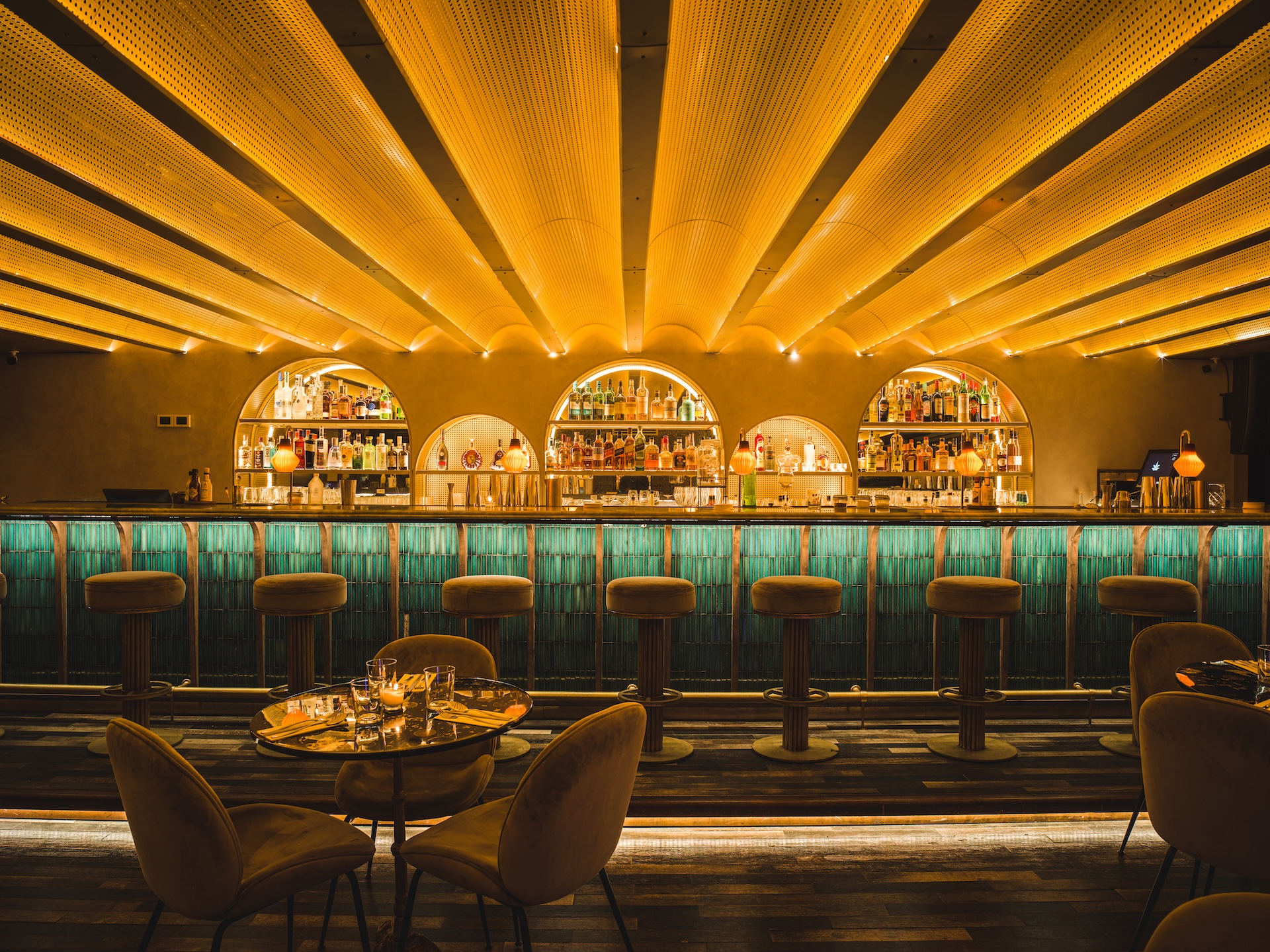
<p><span style="color: rgb(0, 0, 0)">This 2025 opening is catching aesthetes’ attention: Acuario is housed inside an architectural gem, the Modernist and Rationalist-style, 1938-constructed atelier designed by architect Antonio Bonet Castellana (the B in the BKF trio who conceived the legendary steel-and-leather butterfly chair). Previously a leather store, sommelier Mateo García de Onrubia, together with his sisters Jules and Lucila, breathed new life into the shapely property, marine blue hues and stainless steel curves replicating waves, giving a much-needed nocturnal injection to often-overlooked Retiro. Stocking “labels we like to drink and finish,” Acuario focuses on natural wines.</span></p>
Nightlife in the City of Fury: A Guide to Buenos Aires’ Bars


<p><span style="color: rgb(0, 0, 0)">Fun, irreverent and a little chaotic: this is Tres Monos, Argentina’s most renowned bar. A neighborhood dive bar in the iconic Palermo district, built around the idea of keeping things close to home and showing the world what Argentine hospitality is all about. Graffiti all over the walls, national music plays nonstop, and young bartenders sing at the top of their lungs as they mix the bar’s signature cocktails. They’re the undisputed kings of Fernet and Coke (they even have a special glass for it), while a seasonal menu features native ingredients from all across the country like yerba mate, huacatay or suico. At midnight, the national anthem starts playing and one lucky guest is chosen to raise the Argentine flag. It’s quite a scene.</span></p>

<p><span style="color: rgb(0, 0, 0)">“Irse a la cochinchina” is a popular Argentine expression for going somewhere very far away. This bar plays on that idea: at CoChinChina, escape to a distant French-Vietnamese universe of elaborate décor and fantasy. Inés De Los Santos, an industry icon, leads the projects, guaranteeing elegance and precision behind the bar. Try one of the house cocktails (there’s something for every palate) or one of Inés’ signature classics. Martini lovers, don’t miss CoChinChina’s umami take on the classic. If the bar gets packed, chances are the mood will turn into a full-blown party, so embrace it!</span></p>

<p><span style="color: rgb(0, 0, 0)">Gran Bar Danzón is a cornerstone of Buenos Aires’ cocktail history. Now twenty-eight years old, its bar has been a training ground for many of Argentina’s finest talents. Today, with the great Ludovico De Biaggi leading the way, it remains as relevant as ever. Order a Danzón Martini (the best variation in the city, perhaps?), served with sherry and caperberry, or any of the house cocktails, which are always flawlessly executed. Wine drinkers are in equally good hands: the selection is excellent, trust their somm. </span></p>

<p><span style="color: rgb(0, 0, 0)">One of BA’s most iconic bars, with twenty-two years of history, 878 Bar (or simply “El Ocho”) is a favorite among industry workers and drinking enthusiasts. The cocktail menu draws inspiration from Buenos Aires neighborhoods, with flavors that nod to local culture and the stories behind it. For example, try the “Segurola y Habana,” inspired by the iconic street corner where Diego Maradona once lived; or go with whatever the talented young team behind the bar recommends. The food is well worth exploring too, with a distinctly local mix of Middle Eastern and Porteño flavors.</span></p>

<p><span style="color: rgb(0, 0, 0)">One of the latest additions to the city’s cocktail scene, Víctor quickly became a favorite. From the minds behind Tres Monos and La Uat, it’s one of the best listening bars in town, where music (played exclusively on vinyl) is as important as the food and drinks. The cocktail menu leans heavily toward martinis, but the team behind the bar is talented enough to make pretty much anything you ask for. The kitchen is run by Germán Sitz and Pedro Peña, the duo behind Niño Gordo, with a menu that explores retro American classics like prawn cocktail, the Philly cheesesteak, and s’mores. Drink, eat, and enjoy the DJ set.</span></p>

<p><span style="color: rgb(0, 0, 0)">Tucked away on a quiet street in Chacarita, one of BA’s coolest neighborhoods, Punto Mona is a sprawling bar where great cocktails, music, and food share the spotlight. Behind its striking bar, bartenders serve subtle, elegant cocktails that never take themselves too seriously, bearing the unmistakable signature of Mona Gallosi, a legend in the cocktail industry. A vibey room comes alive as DJs take over for the night, while a big patio is perfect for those who want to sip something outdoors. Special events are a regular occurrence, so keep an eye on the calendar.</span></p>

<p><span style="color: rgb(0, 0, 0)">Tucked away at the back of Piedra Pasillo restaurant, and up a flight of stairs, Al Fondo is a speakeasy that welcomes everyone. Located in Nuñéz, a neighborhood that could use more bars, Santiago Migliano and his team have created something personal, polished, and exciting, revisiting forgotten classics and making them feel fresh and approachable again. The <em>Frutillita Prohibida </em>(a strawberry foward and summery take on a Sazerac) or the <em>Bananhisima</em> (a scotch Caipirinha with banana and black pepper) are some perfect examples. The food menu is short but solid, and every item is delicious, especially the steak tartare and the katsu sando.</span></p>

<p><span style="color: rgb(0, 0, 0)">Non-alcoholic cocktails have been having a moment around the world for some time now, but Buenos Aires was definitely late to the party. For years, the city was stuck with uninspired options that cocktail enthusiasts would rarely choose. Then Flavia Arroyo took matters into her own hands and created an entire menu where every single drink can be ordered with or without alcohol, using house-made non-alcoholic “spirits.” Flavia’s approach to cocktail-making is subtle, delicate, and highly technical. Her work has earned numerous accolades and it’s well worth making time for a visit. As if that wasn’t enough, Casa Cavia occupies one of the most beautiful residences in the city, now transformed into a show-stopping restaurant.</span></p>

<p><span style="color: rgb(0, 0, 0)">Some people think hotel bars are always stuffy and overly fancy… and they’re wrong. Pony Line, the bar at the Four Seasons Buenos Aires, proves it. Inspired by Argentine polo, it’s a stylish yet laid-back space, with dim lighting, good music, and an easygoing atmosphere. Taru Menendez’s cocktails showcase Argentine ingredients in creative ways, like the “Negroni Vigilante,” a playful take on the classic Argentine dessert of cheese and quince paste. They also serve one of the best (and most expensive) burgers in the city: their 45 days dry aged burger is 52000 pesos, without fries. And yes, it’s worth it.</span></p>

<p><span style="color: rgb(0, 0, 0)">Kissa bars (or listening bars) are having a moment around the world, and Buenos Aires is no exception, they’ve been popping up all over the city. Among them, Roman is particularly captivating: a tiny bar with a meticulously designed sound and lighting system, and a rotating lineup of DJs. Behind the bar is Álvaro Rosales, a welcoming host who makes signature cocktails that play with Asian ingredients and techniques, blending them with local flavors.</span></p>

<p><span style="color: rgb(0, 0, 0)">One of Buenos Aires’ latest openings, Mansión Mihura is an ambitious project set in a restored mansion in Recoleta, home to two restaurants and two bars: The Parlor Bar and The Serpent Club. Both share the same cocktail menu, created by Guillermina Usqueda, who uses the classics as a starting point to craft new drinks with a style all her own. The settings, however, couldn’t be more different: one is posh and relaxed, made for lingering over a quiet drink; the other is moody, with dim lighting and red decor throughout. Both are excellent, and worth visiting on different nights. Or the same night, why not?</span></p>

<p><span style="color: rgb(0, 0, 0)">Pablo Pignatta is another legend of the industry, and his listening bar has built quite a following. Hidden above a sushi restaurant, Mixtape is an eclectic, playful spot where music takes center stage in all its forms. The cocktail menu, designed to look like a vinyl record, features classics rarely seen around the city (like an Apple Martini or a Corpse Reviver No. 2) alongside some wildly original takes of their own, including a Piña Colada unlike any other. The DJs rotate, and so do the sounds: there’s a night for every musical taste.</span></p>

<p><span style="color: rgb(0, 0, 0)">Arroyo Street is known as one of the most beautiful streets in Buenos Aires. Hidden along it is one of the city’s best-known bars, Florería Atlántico. You casually walk into an actual flower shop; behind it, a door leads down to the basement, home Tato Giovannoni’s bar. He is perhaps the most famous Argentine bartender in the world. Order your favorite cocktail knowing it will be flawlessly executed, or venture into one of the house creations, made with local ingredients and a distinctly Argentine identity.</span></p>

<p><span style="color: rgb(0, 0, 0)">Fede Cuco is one of Argentina’s most seasoned bartenders, and his bars have always been a training ground for some of the country’s best talent. Verne Club, a space inspired by the novels of Jules Verne, is no exception: behind the bar is a young, dedicated team, eager to learn and hungry to grow. The atmosphere is that of a classic cocktail bar, without a hint of stuffiness; the drinks are flawlessly executed. If classics are your thing, go for the Opium Old Fashioned, the bar’s celebrated take on the original.</span></p>

<p><span style="color: rgb(0, 0, 0)">A fan of rooftop bars? Watch Buenos Aires light up from above at Trade Sky Club’s brand-new bar in Palermo. With 360-degree views, the city seems to stretch endlessly toward the horizon. There’s an indoor space that could easily double as the set of a James Bond movie and an open-air terrace, each with its own bar but sharing the same menu. The food is very good, and the music (which gets loud) shifts in mood as the sun goes down. Definitely one for the party crowd.</span></p>