S M B O measurement-vertical measurement-vertical

Latest Stories

Memelas de San Agustín

In Oaxaca, having a proper, hearty breakfast and also being on the go are not necessarily contradictory things. Memelas de San Agustín, an easy-going spot that has been feeding hungry Oaxacans for at least 15 years, is living proof. This small stall doesn’t have an official name – people just started referring to it this way since it’s located right behind the Iglesia de San Agustín on Fiallo Street. But it’s become a beloved destination for delicious versions of its namesake dish – essentially thick corn tortillas that are pinched around the edges and in the middle, making the texture slightly uneven so that their toppings (and their juices) stay in place.

Kissos

This is a story that starts and ends with the land. First there was the father, Spyros Vracha, a farmer who owned fields nearby Chalandri, now a middle-class suburb around 8 km north of downtown Athens. His crops supplied the kitchens of the tavernas in the area, which until the 1980s was dotted with villas, rather than the apartment blocks of today. Before it closed down almost 30 years ago, Ta Marmara (“The Marbles,” so called because of Chalandri’s many marble suppliers and workshops) was one of the tavernas that Spyros supplied. It was owned by Stavros and Athena, Spyros’ neighbors.

Vinho de Carcavelos

Portugal is famed for its sweet, fortified wines. Porto and Madeira are home to some of the world’s top tipples of this kind and the muscatels produced in the hills around Setúbal have a more discreet, but growing reputation. So why has nobody heard of vinho de Carcavelos? After all, this honey-hued fourth member of the vinho generoso club is rooted right in the suburbs of Lisbon rather than some remote Atlantic island or distant northern valley. Its history dates back at least to the 15th century and is intimately linked to the greatest Portuguese statesman since the Age of Discoveries. Yet, until recently, Carcavelos was a wine at risk of extinction.

Tacos Manolo: Singular Sensation Featured Image

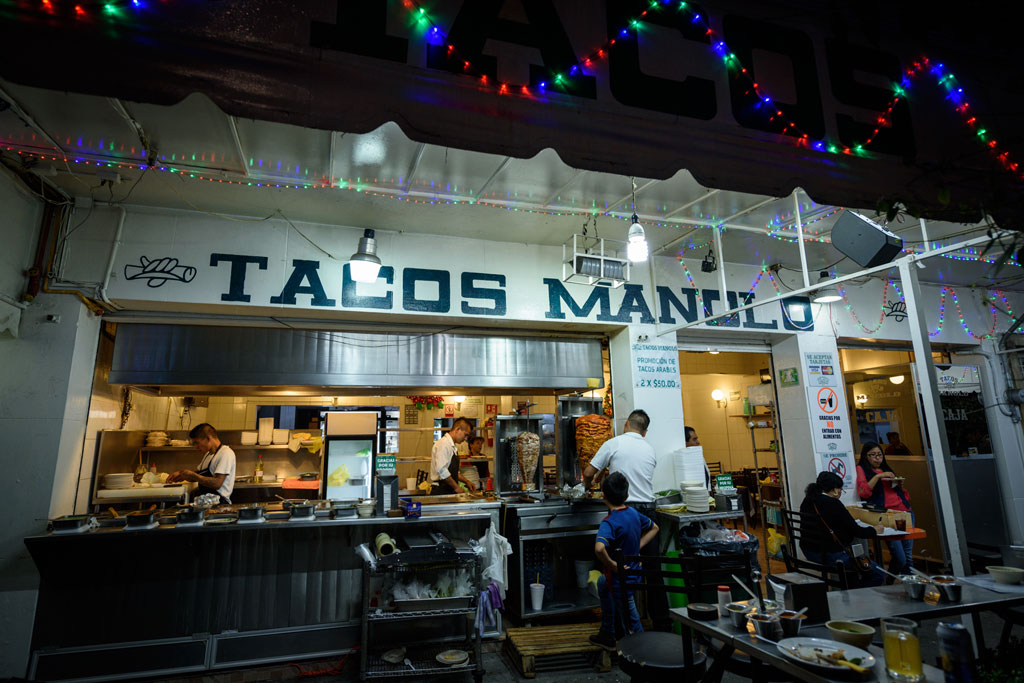
Like many of Mexico’s best taquerías, Tacos Manolo greets its patrons from a block away with its alluring smell. But it isn’t the well-known odor of fired achiote on a swirling spit of al pastor or the equally recognizable heavy scent of bistek searing on a griddle. No, the aroma wafting down this particular block of Calle Luz Saviñon is a mystery to the uninitiated – a unique, unplaceable perfume that allures as much as it confuses. It is the smell of onions and unknown meats and mystery sauces bubbling together, fusing into something greater and more delicious than the sum of its parts. It is the smell of the eponymous Taco Manolo, a one-of-a-kind dish that has brought the restaurant fame and accolades.

Monsieur Madame

Chefs have long touted – and scientific research has confirmed – that we “eat with our eyes.” Hence the swishes and swirls of plating. Yet the importance of visual stimulation extends beyond food to include restaurant design, a point that is not lost on the all-day café Monsieur Madame. The eye-catching space is so full of ‘60s and ‘70s knick-knacks that you might mistake it for a vintage shop. Vinyl records are used as placemats on the brightly colored Formica tables. Shelves overflow with old cameras and plastic figurines. From wooden crosses to mounted fish heads, the walls offer a visual feast – so chock-a-block with mementos the vivid print wallpaper is somehow mellowed.

Oaxaca

Editor’s note: We are very happy to be able to add Oaxaca to the growing list of cities CB is covering. Our coverage of that city’s deep and fascinating culinary scene begins today, with our report on Oaxaca’s State of the Stomach. Every Sunday, a vendor named Domitila heads out from a village called Etla and makes the hour-long journey to Oaxaca, where she sets up a small stand at a market on the north side of town and sells tamales filled with her homemade stews and moles. The many ingredients for these stews and moles cook slowly, for hours, after which Domitila combines them with spices, chile, chicken or cheese and mixes them into a cornmeal dough spread inside a cornhusk and then steamed – the quintessential Oaxacan snack, one that combines all of the area’s agricultural and culinary richness in one package.

La Estancia de la Espiga

When Tomás Gonzalez brought his family to New York City from Acapulco in 1985, they settled first in the South Bronx. His new home had little in common with his old home, a port city and the tourist heart of Mexico’s Guerrero State on the Pacific Coast. But one constant remained: his desire to cook. Sr. Gonzalez spent much of his life in and around the restaurant his family ran in Acapulco, a faraway paradise that most people in the States knew only from prize holiday packages on The Price is Right. He first tried selling churros on the Grand Concourse in the Bronx, but quickly realized that there were not enough Mexicans to buy them.

Cruix

When you hear something go crunch on the left side of L’Eixample, whether crispy bread or churros, croquettes or socarrat, the toasted bottom of paella, there’s a good chance it came from the kitchen of Miquel Pardo. The 30-year-old chef runs his own restaurant called, appropriately, Cruix (Crunch), a place to have fun with food and discover amazing rice dishes from Castellón, a province in the Valencian Community. A native of this region, Pardo mixes his granny’s sofritos with a creativity inspired by the Adriá brothers, cooking dishes that will fill the stomachs of his relatives and friends, among whom he counts the clients of his restaurant.

Afuri

Once the province of late-night slurping at street carts or standup counters, instant meals and cheap dining, ramen has undergone a renaissance over the last 18 years, making it onto haute hipster tasting menus in the West and creating punishing waits outside the “it” ramen-ya of Tokyo and Osaka. As the New Year began we decided to revisit the roots of classic ramen dining in Tokyo and paid a visit to the original Afuri ramen stand in Ebisu. Could it already have been 17 years since this place opened its doors to a hungry mob? Tucked into a back street in the warren that surrounds Ebisu station and facing the back exit of Ebisu yokocho (the newest trendy eating alley in Tokyo), this clean, well-lighted place has stood the test of time and continues to thrill.

Adega Solar Minhoto

The clock strikes 11:55 a.m., and the tables at Adega Solar Minhoto are already filling up with hungry customers. Many are regulars who come daily – they know that this traditional restaurant in the Alvalade neighborhood doesn’t accept bookings and is packed by midday, requiring a bit of a sprint if you don’t want to wait in line. Most workers in Lisbon take their midday meal after 1 p.m., so this is certainly an early lunch. But Adega Solar Minhoto’s fresh and delicious traditional fare, generous portions, friendly service and great value are worth rearranging your schedule for.

Yalla Falafel

A commuter hub right on the Bosphorus, Beşiktaş courses with energy. In addition to the masses streaming on and off the ferries and the cars inching up and down the steep thoroughfare of Barbaros Boulevard, the neighborhood is overrun with students – Bahçeşehir University sits a few steps from the main ferry terminal. Of the many restaurants and coffee shops catering to the large student population, Yalla Falafel, a tiny corner spot, offers something different: vegetarian fare with Lebanese flavors. Judging by the many students who buzz in and out, this lighter food is preferred after a long day of studying and classes.

Building Blocks

Tomatoes, one of the joys of summer in most locales, thrive in Campania’s hot and sunny climate. Yet good tomatoes can be surprisingly hard to find in summer – the oval, longish, rather crisp varieties that are the region’s claim to fame are mostly used for cooking, and the best ones are canned or exported to richer parts of the world. Somewhat improbably, winter is the best time to eat fresh tomatoes in Naples. As soon as the days get shorter and the nights get colder, small cherry tomatoes with a distinctly pointy end start to appear at every vegetable stall and restaurant throughout the city – this particular version of the fruit is known as pomodorino del piennolo del Vesuvio, or simply piennolo.

Trattoria Italia D’Onofrio

When it comes to food, Onofrio Ioakimidis takes his inspiration from both the north and the south. His love for cooking blossomed in Thessaloniki – he was born and raised in the northern Greek city, which is second only to Athens in terms of size and legendary for its cuisine. But his grande amore with the culinary arts really began with his grandmother Constanza. Originally from the southern Italian city of Naples, Constanza fled Italy during the difficult years of Mussolini and moved to Greece. Fate brought her to Thessaloniki and into the arms of Grigoris, who soon became her husband. Onofrio recalls a childhood spent in nonna’s kitchen, at first playing with flour and dough, and then eventually learning how to make pasta.

Aristaeus Ethno Wine Bar

The name Aristaeus Ethno Wine Bar suggests many things, some puzzling but the most obvious being that wine is served. One look at the menu, though, and it becomes clear this spot is more restaurant than bar. One food item in particular caught our attention: dambalkhacho. We first heard of dambalkhacho some years back when a friend offered us hard, moldy cheese bits cut from a ball about the size of a healthy orange. It was rich, slightly peppery with a sharp, tart finish; nothing like any cheese we had ever tried.

Senhor Zé: Back Out of Retirement Featured Image

“Where to eat in Porto?” Google search this sequence of five words and a multitude of articles listing restaurants and eateries will naturally come up as a result. Some of those suggestions – the trustworthy ones, at least – will mention Casa Nanda. It’s a fair choice: Casa Nanda is, indeed, one of the most traditional and historic joints in town. What most listings won’t mention, though, is that the couple who founded it and were its driving force are now working somewhere else.

logo

Terms of Service