S M B O measurement-vertical measurement-vertical

Latest Stories

Bar del Corso: Coffee, Baldo’s Way

The traditional way of preparing coffee in Italy is using a manual lever coffee machine, which allows for precise control over the temperature and pressure of the water, resulting in a rich and flavorful cup of coffee. But there’s more to it than just technique. In some cafés in Sicily, coffee is not simply a craft but a cultural artifact, creating it considered a work of art. Though Palermo has its fair share of coffee, it’s not always easy to find cafés where these traditions are honored with care and diligence. The Bar del Corso is one such hidden gem in the heart of Palermo. Located on the bustling Via Vittorio Emmanuel – the oldest street in Palermo, where every vendor vies for attention – its modest storefront does not catch the eye at first glance.

Eastside Italian Deli

In a relatively young city like Los Angeles, not many places have been open for more than 90 years, and even fewer have been open that long while staying relatively under the radar. Eastside Italian Deli is a delicious exception, having been around in the neighborhood that is now known as Victor Heights since 1929 (though it originally opened as Eastside Market). A small neighborhood between Chinatown and Echo Park, Victor Heights is often called the “Forgotten Edge,” but it was once home to a community of Italian immigrants who shopped at places like Eastside Market on a regular basis. These days, Eastside Italian Deli gets a steady stream of diners on weekday afternoons, from blue collar workers to high school students on summer break.

Dulces Oaxaqueños

In Oaxaca, social matters are reflected in our foodways: there are certain flavors for times of sharing and growing, others in times of mourning, and many more when it’s time to support and celebrate. Some of our earliest lessons come through the honeyed flavors of dulces regionales – “regional sweets.” These represent an interesting range of treats that look as if they were taken from a 100-year-old recipe book – which they are. Nevertheless, in a world of colorful cakes and extravagant cupcakes, these complex traditional sweets risk being lost forever. Once upon a time not long ago, colorful displays of stalls selling dulces regionales adorned almost every corner and plaza in the Historic Center, but nowadays, at least in the city, the former glory of these treats has started to fade. The current sources for Oaxacan regional sweets is down to just a few makers taking private orders, a couple of stalls in the Benito Juarez market, and a dozen street vendors in the city’s most touristic areas.

María Ciento38

There are few feelings as universally heartwarming as sitting down at the family table – that space where everyone is welcome and the food always tastes incredible. That was the feeling owner Cristina Cialona was looking for when she opened the doors to María Ciento38 in 2016. Serving classic Sicilian cuisine, something no other Italian restaurant does in Mexico City, this charming eatery in the Santa María La Ribera neighborhood upholds tradition and authenticity, one dish at a time. A meal at María Ciento38 means exploring an extensive menu that features familiar items for any fan of Italian food: burrata, spaghetti alla carbonara, pizza Margherita. But take a closer look, and you’ll spot dishes you don’t see that often.

From Galaktoboureko to Gelato

Thick and creamy yogurt topped with honey and walnuts, doughnut holes doused in honey (loukoumades), and custard-filled phyllo tarts (galaktoboureko) – Greece is home to a wide array of traditional desserts that are irresistible at any time of day or season. Here, we’ve rounded up some of the best spots to find these sweet treats, and have also included a long list of ice cream shops selling our new favorite dessert: gelato. In a place where half the year we live like it’s summer, gelato has become about as popular as it can get in Athens. Opened in July 2014 near Syntagma Square, Le Greche can be blamed for starting the trend of high-quality gelato in Athens. Only the best ingredients make it through the doors of owner Evi’s laboratory.

Casa Urola

The word pintxo is omnipresent in San Sebastian, but not all pintxos are created equal. In the Old Town, Casa Urola has become a mandatory stop for anyone making a pintxo pilgrimage, thanks to Chef Pablo Loureiro Rodil’s vision. It’s not enough for Pablo to offer classic staples frequently found in most of the bars in town. Rather, he delves deep into the concept of seasonal pintxos – one of the first chefs to try to reflect the “here and now” of his homeland in the local and familiar format of a small and casual bite. The kitchen has been a familiar landscape for Pablo since he can remember. Bearing the surname Loreiro (“bay leaf” and also related to the Loureiro grape, typical of Galicia where his father was born) may have been the first sign of his destiny.

Dumplings N1

Khinkali is king in Georgia, but another dumpling of foreign origins has also woven its way into the childhood flashbacks reminiscent of Proust’s madeleines (the French writer’s analogy that morphed into a famous metaphor for nostalgia) of many a Georgian. Pelmeni is presumably Russian in origin, but can be found across the Slavic world and Eastern Europe. These bite-sized dumplings are typically stuffed with a mixture of beef and pork, freeze well due to their tiny size, and rarely break when boiled, making them the quick meal of choice for busy moms with hungry kids. Hence the many childhood memories attached to this dish – one which remains a popular comfort food long into adulthood.

LUFU NOLA

The tall French doors and brightly colored murals that greet you upon entering LUFU NOLA are a dramatic departure from its early days as a pop-up restaurant, when Chefs Sarthak Samantray and Aman Kota were dishing out their regional Indian fare at bars and breweries across the city. The sleek, modern bar and simple, elegant dining room echo the themes of arrival, as what was once an itinerant restaurant has found a home in New Orleans’s Central Business District. And the surroundings aren’t the only thing that’s new for LUFU – a full-scale restaurant has allowed their team to showcase an even broader array of dishes that represent the culinary heritage of India.

Vida de Tasca

It’s that quiet time between lunch and dinner, and we’re sitting with chef Leonor Godinho in a tasca, or rustic, casual, Portuguese restaurant. The furniture is sturdy but unremarkable, and walls are mostly bare except for a couple old photos, a child’s drawing and the ubiquitous vitrine, a built-in refrigerator. “I knew about this place because my best friends had just moved their studio to this building,” Leonor tells us of the space, formerly known as Casa do Alberto. “I would come here all the time to eat with them, and they would joke with me, ‘It would be great if this was yours!’”

Ta Stachia: Late Night Pies

Pies, sweet and savory, constitute a massive chapter of traditional Greek cuisine, and are also a timeless popular street food all across the nation. Most classic Greek pie shops tend to open early in the morning, as pies are popular for breakfast, and close in the afternoon, usually after they have sold out for the day. That’s why Ta Stachia, a small shop in Exarchia, stands out – an after-hours pie shop, it runs steadily throughout the night, not only feeding all the pub crawlers and nighthawks, but also staying open until about noon for the early birds who walk their dogs or set off for work or school.

A Casa di Francesco

Those familiar with Palermo’s cuisine tend to associate it with indulgent street food and a rich culinary heritage that doesn’t cut corners when it comes to taste – no matter the cost for one’s health. But tucked away down a slender side street that branches off of Palermo's bustling Via Ruggero Settimo is A Casa di Francesco, a restaurant that meets the already high expectations around Palermo’s cuisine with a selection of innovative health-conscious dishes. The restaurant started out in 2015 as a boutique supermarket offering health-conscious Sicilian products and vegetarian dishes to be eaten there or to take away – an idea that was far ahead of its time in Palermo. While vegetarian options were common at home, with simple vegetable-based recipes at the center of traditional cuisine—such as pasta alla Norma (a pasta dish served with fresh tomato sauce, fried eggplant, and salted ricotta) or caponata, (the Sicilian sweet-and-sour dish made of eggplants, tomatoes, olives, capers, and various aromatic herbs) well-balanced dishes for a healthy diet were hard to find in the city’s restaurants.

Kurtuluş Pastanesi

In our beloved home base of Kurtuluş, the neighborhood's rich patisserie culture is often associated with its Greek and Armenian communities. Some of these shops churn out the best profiterole in the city, while numerous others bake sakızlı Paskalya çöreği, a subtly-sweet bun laced with mastic gum and topped with thinly-sliced almonds consumed on Easter. There are more of these excellent patisseries in Kurtuluş than we could count on both hands, but only one that features the traditional Sephardic specialty börekitas, a small, crescent-moon shaped empanada variation stuffed with either roasted eggplant or potato.

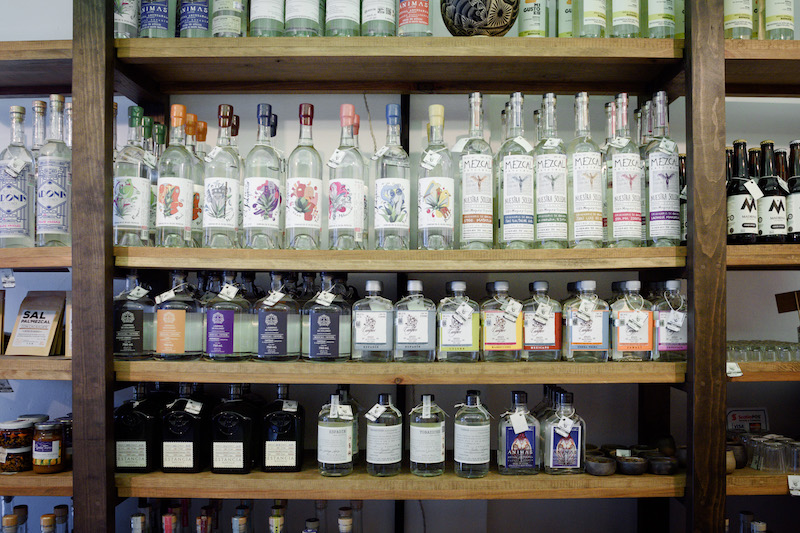
Omar makes clear to those who come in, every bottle of mezcal tastes different, even from the same brand, the same agave variety and same year. Photos by PJ Rountree.

For the thirsty traveler looking to take a load off after – or during – a long day of exploring Mexico’s capital city, there’s no shortage of drink options. From a cold beer and salty snacks at a cantina to smoky, small-batch mezcal, to the ancient elixir that is pulque, it can be daunting to navigate CDMX’s drinking scene and pick out the best bars. Here are a few of our favorite spots, including mezcalerías, pulquerías and more, handpicked by our local guides over the years.

Provisions: Road Tested Featured Image

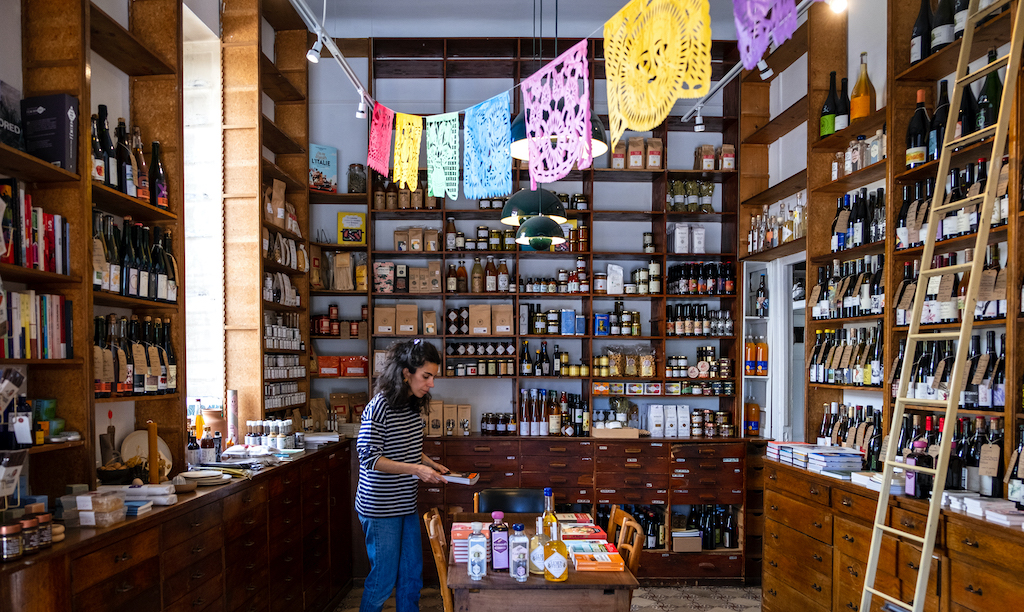
In the center of town on Rue de Lodi, Saskia Porretta-Menne and Jill Cousin were inspired when they learned that a former international bookstore was closing and the space was available. The Librairie Internationale Maurel had been in the same family for three generations and operated since 1952 in a room that felt as if from another era, its walls lined with time-worn wooden shelves and afternoon sunlight streaming in from the large windows. Upon viewing it, the two friends knew immediately that this place was unlike anything else. Unsure about exactly what they would do, they were still certain there was a calling. So in October of 2021, the women opened the doors to Provisions. The word provision, by definition, means “to supply with food, drink, or equipment, especially for a journey.”

Rob Martinez’s First Stop in Queens

My first job in Queens was in a garage in Auburndale. Not an auto body garage. It was residential – a guy named Arthur rented it out to store the goods he won at storage unit auctions. My job was to list those goods on Amazon and eBay, for which he paid me $100 a week, and an unlimited MetroCard. It was 2012. I’d take the q66 from East Elmhurst to Flushing on my way to work, and eat my way through the Golden Shopping Mall, where Xi’an Famous Foods had their first stall.

logo

Terms of Service