S M B O measurement-vertical measurement-vertical

Latest Stories

Cantina La Jalisciense

A traditional cantina with the looks of a saloon from an old Western movie, La Jaliscience is located in the southern Mexico City neighborhood of Tlalpan. Legend says that it has been there since “the dawn of time.” First it was a bodega, or warehouse, at the corner of the old government building that stands just in front – photos and written records certify its existence dating at least back to 1870. In those days this neighborhood was a town called San Agustín de las Cuevas, and La Jaliscience was the last chance to buy things for those heading to Cuernavaca or Acapulco by horse or mule; preserved goods were kept and sold here, and the customer could also have a drink before hitting the long and winding roads.

Late-Night Bites

Oaxaca’s urban identity has been shaped in part through food and eating habits, a phenomenon that is perhaps best experienced as the sun starts to set. At dusk, food stalls start to open, filling the streets with the aroma of dishes that are now staples of Oaxaca’s vibrant food scene. These sweet and savory treats have been developed over decades – if not centuries – to become integral parts of what we now recognize as Oaxacan cuisine. Each dish and ingredient here tells a long story, deeply connected to the place where it’s offered and the time of day it’s consumed. From the tortas and tostadas serving the hungry after-work crowd to lime-and-chile seasoned elote and esquites (corn on the cob or in a cup – the perfect mobile snack to enjoy in the park) to late-night tlayudas or a smoky mezcal nightcap, the Oaxacan night is for savoring.

Lahori Darbar

South Asian transplants say the best desi food is always served at home, not in restaurants. But Mohammad Yunus, the manager of Lahori Darbar in Istanbul’s Kumkapı neighborhood, thinks otherwise. “The taste here is better than what you get at home,” he said in front of his no-frills joint Lahori Darbar, located a stone’s throw from the grand Armenian Patriarchate, one of the area’s landmarks. On our visit, South Asian tourists and businessmen chatted, snacking on chana dal and chapati at the corner spot, amid a sea of blue-and-white meyhanes. Kumkapı– a stretch along the Marmara Sea – was once the center of Istanbul’s Armenian community, but a shifting kaleidoscope of immigrant groups have moved through the area, opening and closing shops and restaurants in a flash.

Salty Lunch Lady's Little Luncheonette

It's a common bond shared by children all across the United States: lining up for lunch at the school cafeteria. Our own fond memories of these meals are few and far between, particularly when we think of the institutional food on the menu. We had better luck with lunches packed from home – in part because we could show off our TV-themed lunchboxes – but for many school children, then and now, this isn't always an option. Enter the lunch lady: a nostalgic, nurturing figure who presides over the cafeteria, and who ensures that the children get what they need.

Empanadas del Carmen Alto

Oaxaca’s street food scene has surprises for us every day of the week. From breakfast to lunch, we can find plenty of stalls with a plethora of options: eggs, tamales, tortas, tacos, hot drinks, juices and more. However, when sunset bathes the streets of the historic center, most of these stalls are disassembled into heaps of tarps, letting esquites, burger and hot dog stands take over the night shift. Fortunately, this is not the case for Empanadas del Carmen Alto, a classic among locals for serving up daytime dishes until midnight. The menu at Empanadas del Carmen Alto is succinct: memelas (thick corn tortillas topped with various ingredients), the famous empanadas de amarillo (calzone-like corn tortillas filled with chicken and mole amarillo) and squash blossom or mushroom quesadillas.

La Cantina di via Sapienza: The Real Deal Featured Image

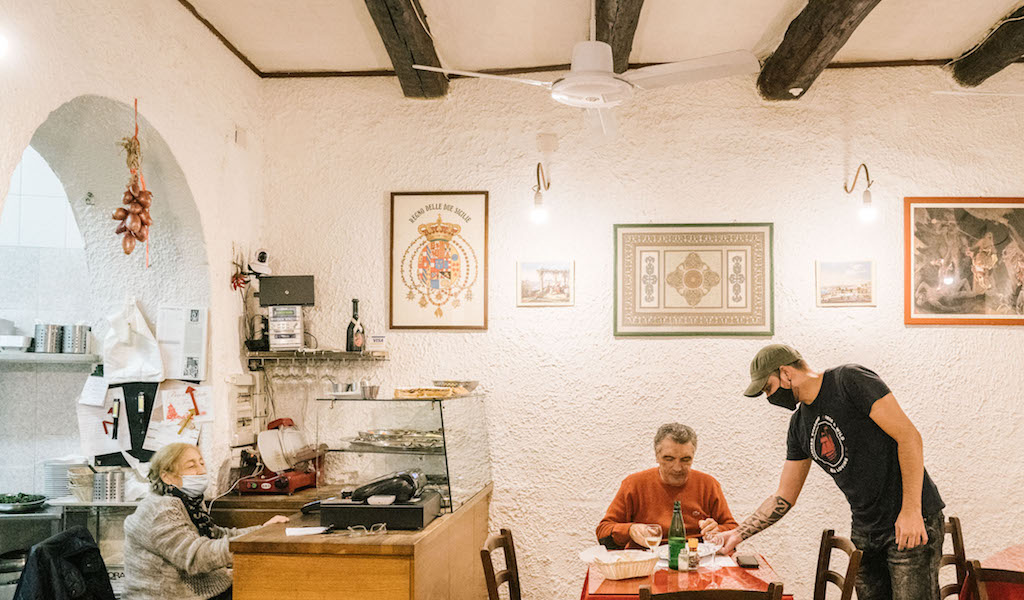
The requirements for a place to qualify as an authentic Neapolitan trattoria are simple: It must be tiny, intimate and quiet, with a small menu and a genuine atmosphere. In other words, it must be La Cantina Di Via Sapienza. This is not a trattoria with fake antiques strategically placed inside to draw tourists or chic Neapolitans looking for “aesthetic” culinary experiences. Rather, La Cantina Di Via Sapienza is a true neighborhood spot that serves meals to the employees and nurses of the nearby polyclinic, and to the students and professors from the various universities of the historic center.

L.A. Taco on Tour: CDMX

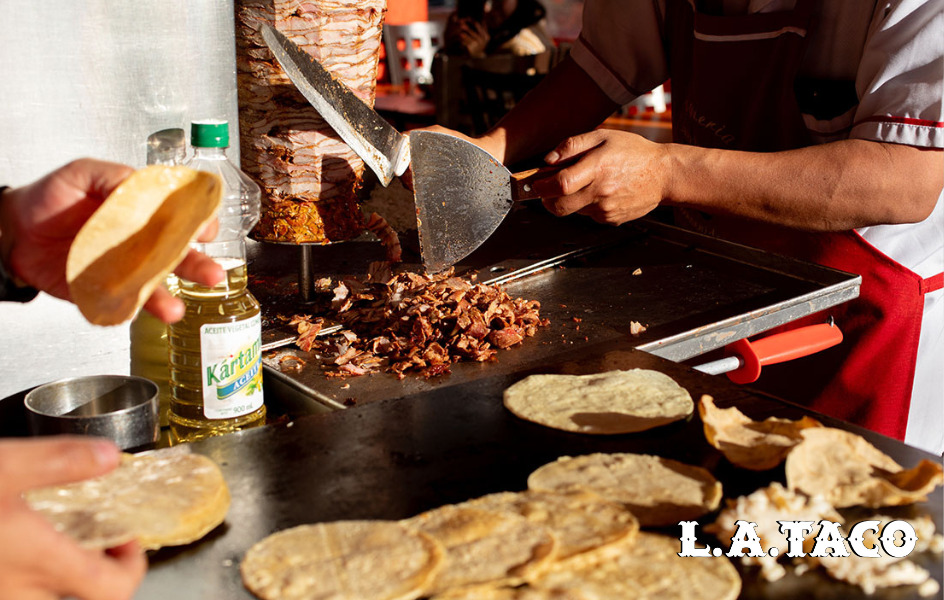
The taco, at its most simple or its most complex, may be the world’s most beloved food vessel, and for good reason – it makes just about any good food better. Stuffed peppers, stewed nopales, pork rinds, table salt, whatever, put it in a freshly-made corn tortilla and you are moving in the right direction. This is the philosophy in the taco kingdom of Mexico City and on this 5-day, 4-night trip, available only to the L.A. Taco and Culinary Backstreets audiences. Our agenda is not only to live like a taco-obsessed Chilango, but to better understand the history, ingredients, and heroes of the trompo who keep these traditions alive. You’ll be in the company of some of Mexico City’s most informed and fanatical taco specialists – who will give access to locals’ celebrated and lesser-known spots.

Galeto

Back in 1966, when it opened on Avenida da República, one the main roads connecting the new avenues of Lisbon with the city center, Galeto caused quite a commotion. Lisboetas flocked to the huge snack bar, seduced by both the design – it was styled like an American diner – and the menu, which in those days seemed wildly innovative. Locals used to more conservative Portuguese fare were suddenly introduced to club sandwiches, burgers, mixed plates that brought together some wildly disparate elements and even Brazilian feijoada. Eating at the long counters while perched on a comfy seat was quite different from sitting on a stool at an everyday tasca. When combined with the avant-garde décor, swift service, and long hours (it was open late, until 3:30 a.m.), it felt like Lisbon was catching up with the dining habits elsewhere in Europe or the U.S.

Bar Bodega Quimet

De toda la vida is a Spanish expression that basically means “It’s been around forever,” and it’s a sure thing that the locals in Barcelona’s Gràcia neighborhood will utter those words if you ask them about Bodega Quimet. Opened in the 1950s by the Quimet family, the bodega (not to be confused with Quimet i Quimet, a popular Barcelona tapas bar) was passed down from father to son until 2010, when the younger (but nonetheless old) Quimet retired and brothers Carlos and David Montero bought the venue. David Montero had always worked as a cook and dreamed of owning his own place. However, after buying Quimet, instead of doing the renovations so typical of Barcelona bars that change hands (such as modernizing the furnishings or installing a huge flat-screen TV for showing fútbol matches), the Montero brothers made the somewhat unusual decision to keep everything, from the low prices to the décor, pretty much the same as it always had been.

Cafe Tsumugi: Buddhist-Inspired Breakfast

Those arriving at Tsukiji Station on an early morning food hunt are most likely in pursuit of some breakfast sushi. Although Japan’s world-famous Tsukiji fish market relocated to Toyosu in October 2018, the ramshackle outer market remained, with its eclectic mix of household goods, tea and dried goods, and seafood donburi shops. Those in the know, however, might head for a different and very unusual breakfast experience in the area – one that has its origins in traditional vegan Buddhist cuisine. The most striking landmark upon exiting Tsukiji Station is not the market entrance, but the imposing Tsukiji Hongwanji temple. Set back from the road, this grey stone behemoth is modeled after ancient Buddhist architecture found in India and other Asian countries, with an arched roof rounded into a ringed point known as a sorin.

El Pozole de Moctezuma: Soup of the Gods Featured Image

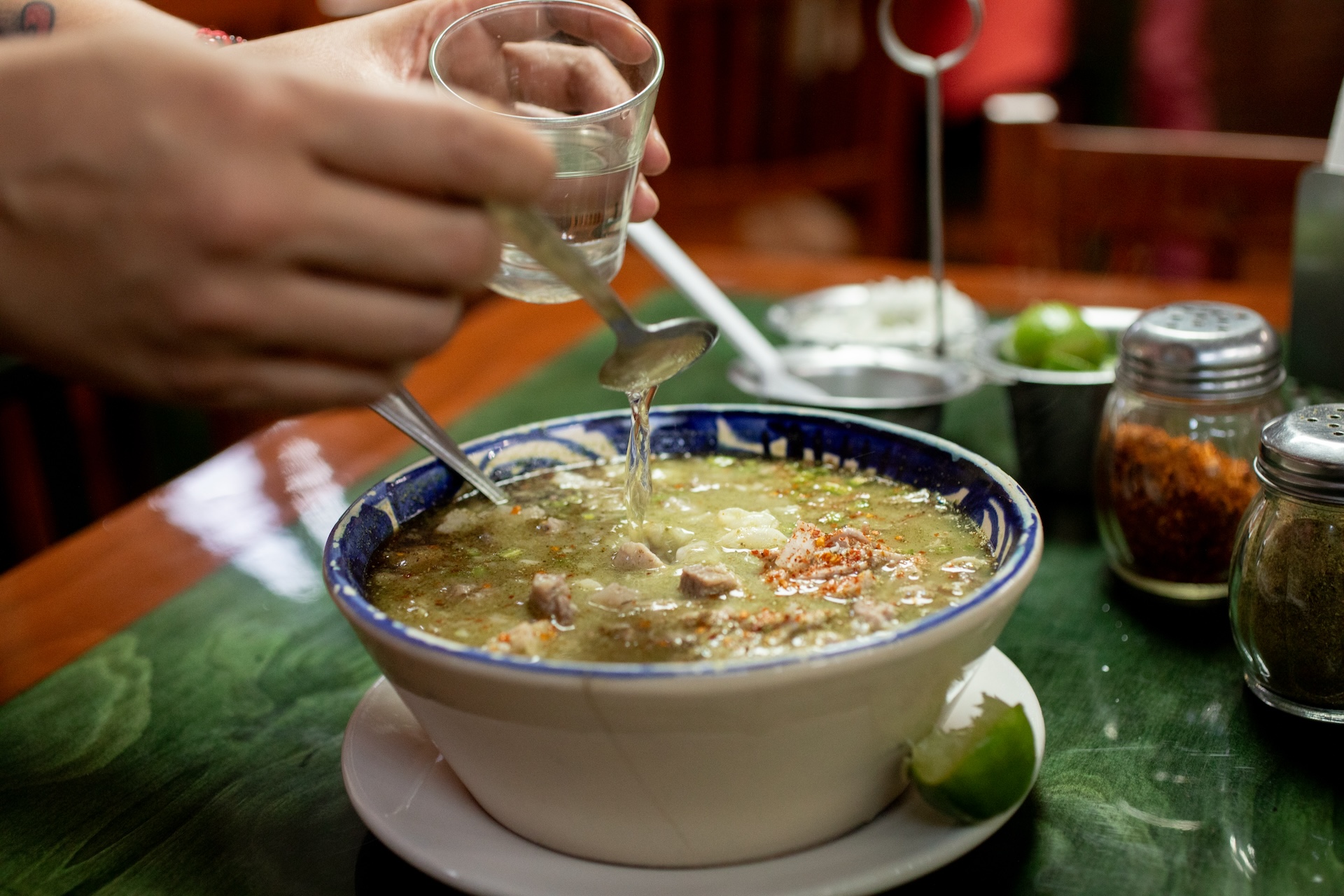
Pozole, like the tortilla, is one of those ancient dishes that seem to be embedded in Mexicans’ DNA, serving as a culinary link to the ancestral past. A type of soup or stew that was a ceremonial dish in pre-Hispanic Mexico, pozole has yet to be widely commercialized, offered mainly in pozolerías, small restaurants that specialize in serving up the dish and little else.

Renascença Clube

In the middle of the last century, upwardly mobile Afro-Brazilians were vexed by the city’s segregated social scene. Even as they became lawyers and doctors and had the purchasing power to buy into some of the city’s finer establishments, the social clubs of the city, where a carioca could dance, play sports and mingle, would turn a cold shoulder to them. Black professionals hardly wanted to shell out money to face discrimination. That’s when Renascença Clube – “Rebirth Club” – came about. Middle-class Afro-Brazilians started their own social club, first in the blue-collar neighborhood Meier in 1951. They rented the best orchestras in town to see if anyone would come to their bailes.

Kebapçı Osman Usta 1976

Kebapçı Osman Usta 1976 is located in the crowded neighborhood of Şirinevler, a corner of Istanbul that has fascinated us for years. Separated from the idyllic upper-middle class, tree-lined suburb of Ataköy by Istanbul's main highway but linked with a pedestrian footbridge built above it, Şirinevler is the polar opposite of its southern neighbor: dense, working class, chaotic, and lacking in green space. Nevertheless, it is a lively, bustling center of interactions and transactions, loaded with cheap fast food restaurants, bookstores, clothing shops and dodgy nightclubs. Şirinevler is also known for a cluster of grillhouses where the skewer slingers all hail from the district of Suruç in the province of Urfa, one of Turkey's kebab capitals.

Ibai

Activity has resumed at the narrow door hidden between the shops on Calle Getaria, in the heart of San Sebastian. Since May, nostalgic patrons of Ibai, the iconic little restaurant tucked away in the basement of an ancient house in the downtown area, can once again sit at its six indoor tables and savor signature dishes like salpicón de bogavante (lobster with a citrus dressing) and perfectly fire-kissed grilled fish. Open for almost forty years, the restaurant has held an extraordinary place in the memories of the Donostiarras (the locals of Donostia, as San Sebastian is known in the Basque language), who never forgot the kokotxas, hake, and anchovies served by Alicio Garro and his friendly team. However, the Covid-19 pandemic forced Ibai to close its doors, leaving a void in the city's gastronomic scene.

First Stop

Editor’s Note: Vérane Frédiani is a filmmaker, journalist, food lover, and feminist from Marseille. She is the author of several documentary films: The Goddesses of Food, Steak (R) evolution, Mauro Colagreco’s Mirazur, des Étoiles à la Lune, and several books including: Cheffes, Elles Cuisinent. Born and raised in Marseille and currently based in London, Vérane wrote and photographed Marseille Cuisine le Monde to celebrate her hometown’s diverse cuisine—and how it is a gateway into understanding this singular city. Translated by Culinary Backstreet’s own Alexis Steinman, Taste the World in Marseille, is the only English-language book about Marseille food written by les Marseillais. You can follow Vérane on Instagram @veranefrediani

logo

Terms of Service