S M B O measurement-vertical measurement-vertical

Latest Stories

Psarokokkalo

The sleepy residential neighborhood of Melissia, which lies northeast of downtown Athens and under Mount Pentelikon, is a rather unlikely place to visit. The suburb doesn’t have any notable sites, and apart from Kozi’s, a lovely South African meat restaurant, there’s not much in the way of distinguished restaurants. So in 2012, when Ornel ‘Oli’ Mingo opened Psarokokkalo in the suburb, everyone though he was crazy. “People told me that there’s no way clients will come here to eat. But I saw potential. The rent was relatively cheap and there was some space for tables outside,” he explains. Fast-forward six years and Psarokokkalo (which means “fish bone” in Greek) has tripled in size, taking over the adjacent shop, and is now a beloved seafood taverna that attracts customers from all over Athens.

Petite Folie

Way before brunches, special bowls, latte foam art and white marble counters took the city by storm, restaurants like Petite Folie, Lorde, Saraiva’s, Bacchus and Belcanto were the coolest cats in Lisbon. You wouldn’t walk in not wearing a nice jacket or a dress. You would never go straight to your table – first, you would sit at the bar, greet your favorite waiter, who knew you by name, and order your usual drink, which he would already be preparing. But those days are gone, like most of those restaurants – the ones that aren’t, such as Michelin-starred Belcanto or the newly reopened Saraiva’s, have changed dramatically.

Minimalist

In 2001, we rented a room in Vera, near the Philharmonia, and the first thing we did after dumping our bags on the bed was find some coffee for the morning. The best we could score from the little neighborhood market was a can of Pele, a fine-ground instant coffee powder that seemed less toxic than Nescafé, which was also much more expensive. There were no coffeehouses in Tbilisi back then. Pretty much the only place you could find an espresso was at the Marriott and Prospero’s, an English language bookshop and expat hangout. Otherwise, there were little joints with “café” signs serving khachapuri and Turkish-style coffee brewed in little plastic electric kettles – providing there was electricity. That was Tbilisi’s coffee culture.

Last Catch

Nestled in a small cove that hides it from the nearby center of Sarıyer, not far from where the Bosphorus meets the Black Sea, Rumeli Kavağı is officially part of Istanbul yet has managed to keep the structure, atmosphere and relative isolation of a real village. The only apparent sign of the surrounding megalopolis is the sight of the massive Yavuz Selim Sultan Köprüsü, the third bridge to span the Bosphorus, opened in 2016. Over a quarter of the neighborhood’s almost 4,000 inhabitants are involved in the fishing business, an integral industry in a city that partly owes its worldwide fame to a long-standing meyhane culture. Dining on grilled fresh fish and sipping on a glass of cloudy rakı, particularly while watching the lights of the city dance on the Bosphorus, is one of Istanbul’s purest pleasures.

The Pie Shop

The humble pie is perhaps one of the world’s oldest street foods. A quick survey of global food history finds pies everywhere, from East to West, mirroring the local ingredients, agricultural practices and dietary needs of different cultures. In Greece, pies certainly go way back. There are a few references to pie-making during the Minoan times (2600-1600 BC), but most mentions are from around the 5th century BC onwards, when pies were generally known as plakous. Ancient Athens was particularly famous for its bakeries and pies, especially a cheese pie known as tyronos plakous or tyron artos. They were the main snack consumed by Athenians while listening to public speeches at the Agora or while watching theater.

Mercado de Produtores Uptown: Shelter from the Storm Featured Image

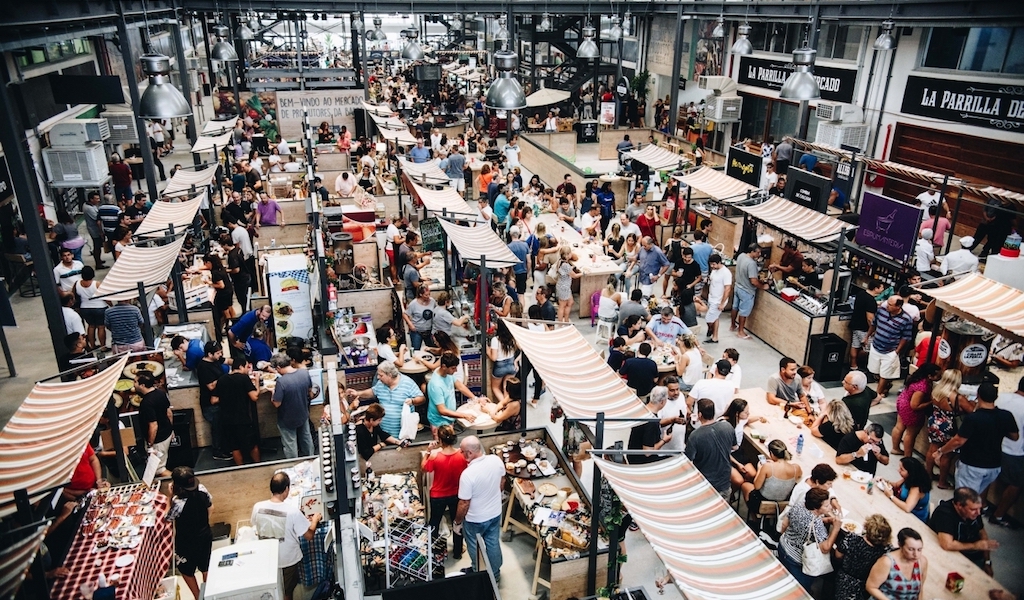
Twenty years ago, Rio de Janeiro was teeming with food markets: big indoor venues full of stalls where people could go to buy groceries, fresh meat and produce, but also stay for a while to have a drink or two, maybe some appetizers, or even sit down for a meal. As time went by cariocas spent less time in these markets, instead shopping in grocery stores and eating at restaurants; the markets continued to limp forward only because of some strong-willed and stubborn merchants who refused to shut down their businesses.

D’Angelos

New York’s street food vendors usually ply their trade where potential customers congregate. On side streets in midtown Manhattan, they set up four and five abreast for the weekday lunch rush. During warm-weather weekends, they feed footballers and their fans outside ball fields in the Brooklyn neighborhoods of Red Hook and East New York. In Queens, they do business beside a miles-long stretch of Roosevelt Avenue where it passes through Woodside, Jackson Heights, Elmhurst, and Corona; they cluster thickly near station stops of the elevated 7 train. The setting of the D’Angelos Italian Sausage truck presents a dramatic contrast. Monday through Saturday, the truck parks in a long-established spot on Woodhaven Boulevard, on the border between two largely residential neighborhoods, Middle Village and Rego Park, beside the green expanse of St. John Cemetery.

Xochimilco

A few intrepid trajinera (gondola) operators sit along the Cuemanco Dock, waiting for tourists to take through the canals. We’re in Xochimilco, the southern-most borough of Mexico City. It’s a popular weekend destination for trajinera rides, when entire extended families float along the canals, drinking micheladas (beer cocktails) and eating elotes (grilled whole corn cobs) sold off canoes. But this weekday morning is quiet. As the morning fog burns off, we set out on a green, motorized trajinera into Xochimilco’s Natural Protected Area. Before it was a preferred weekend getaway for chilangos, Xochimilco was the agricultural heart of the Aztec capital Tenochtitlan. Our destination is a chinampa, a man-made agricultural plot that “floats” on the city’s shallow lakebeds.

Pasticciando

Dozens of urban legends swirl around the city of Naples – strange stories repeated a thousand times that, somewhere along the line, become credible. One of those urban legends concerns biscotti all’amarena, or black cherry cookies: people often say that they are made from day-old cakes. To create this typical Neapolitan sweet, bakers chop up pan di spagna (sponge cake) – the bit that is supposedly reused – and then mix it with black cherry syrup, cocoa and cinnamon. The mixture is then covered with a short-crust pastry shell and baked as a loaf, after which they’re cut into small rectangles.

Seaside Simit

The best part of waking up in Istanbul is catching sight of the Bosphorus, followed closely by a breakfast of simit, the popular sesame-encrusted bagel-like Turkish bread. We spotted this simit seller in Üsküdar while on our Born on the Bosphorus walk.

Day Drinking, Pt. 2

Georgians swear that natural wine does not give you a hangover, but something is keeping us in bed watching superhero series on Netflix and it is not the compelling storylines. Vato Botsvadze, owner of Chacha Corner was also at Zero Compromise yesterday. He will insist in all seriousness that his morning headache was a result of the rain, which stopped just before the greatest party in Georgia started. We’re talking about the eighth New Wine Festival, organized by the Georgian Wine Club, a group of over a half dozen wine enthusiasts who have been at the forefront of developing, promoting and educating people about Georgian wine since 2007, when they turned their internet forum into a blog and started hosting wine tastings across the country.

CB on the Road

When I was a little girl, a Popsicle was a big deal. Summertime meant that the ice cream truck, bell tinkling, would trundle through the neighborhood where I lived. After a frantic plea to Mom for money, she counted out coins and I raced to the corner where the rest of the kids were already gathered, waiting for the vendor to dig through his icy case for cherry, lime, orange, or the reviled banana. The odor of amyl acetate (the chemical used for artificial banana flavoring) remains cloyingly in my memory. Remember? Hot summer days made those frozen snacks melt quickly, down childish fingers and the side of the hand, down the wrist and almost to the elbow in sticky trails of blood red and pale green. Nips of the cold treat slid in a chilly track from tongue to stomach, giving a few moments relief from childhood summers’ heat and humidity.

Have It Your Way

The song “My Way” may be a staple of every karaoke bar in Japan but it’s also a fitting description for the Japanese fast food staple of “curry rice” as served at both Rojiura Samurai Curry and CoCo Ichibanya. One can find four Tokyo outposts of Rojiura Samurai Curry, a Hokkaido curry maker from Sapporo, in Hachioji, Shimokitazawa, Kakurazaka and our favorite, Kichijoji. It seems these Japanese curry masters are fond of opening shops in cool neighborhoods where the locals will appreciate the uniqueness of this favored Japanese dish. Much like ramen noodles, curry rice is adapted from a foreign cuisine as a form of fast food in Japan.

Noisette

We’d passed Noisette many times in the (not quite) year that it had been open. But whenever we’d walked down those sometimes clamorous blocks of 30th Avenue in Astoria, Queens – not far from a bagel shop, a pizzeria, a comfort-food hotspot and a New Orleans-themed bar-restaurant, whose windows open wide toward the street during happy hour – we’d given little notice to the quiet bakery-café with the French name. That changed during one recent stroll, not long before dark, when a hand-drawn signboard beside the door wished us “Ramadan Kareem” and beckoned us to come inside.

Kapnikarea

Kapnikarea, a tiny music café-restaurant, takes its name from the Byzantine church nearby in the middle of Ermou Street. The street, dedicated to Hermes – a god of many attributes, including trade, thievery and smooth talking – and thronged with tourists and shoppers day and night, is an unlikely location for this unusual eatery. You might expect it in neighborhoods like Psyrri or Exarchia, where the eccentric is commonplace, but not opposite H&M and in the same zone as Zara and Marks & Spencer. In all fairness, Kapnikarea was there first. And when it opened in 1977, it was an avant-garde sandwich shop, a pioneer in the land of souvlaki and spanakopita. This version of fast food barely existed back then although it caught on fast. Nineteen years later, Dimitris Sofos took over the shop from his father and completely transformed it.

logo

Terms of Service