S M B O measurement-vertical measurement-vertical

Latest Stories

Petisco Saloio

We’ve long been tasca hounds, searching out the best that Lisbon has to offer. But in the last few years, a good number of our favorites have closed: the perfect storm of spiking rents, real estate interests, and aging owners and clients have stacked the odds against these small, cheap, familiar restaurants. For a while, the stream of closures had us thinking that the Lisbon tasca scene might face complete extinction sooner than expected. But while doing research for a story on summer tascas – places with outside seating, grilled food or simple dishes similar to the ones you can eat by the beach – we found hope, in an unexpected way.

Obento Express

Last February, we were at a Japanese pop-up dinner at Bina 37, Tbilisi’s wine cellar in the sky, organized as a tribute to Georgian-Japanese friendship and to celebrate the champion Georgian Sumo wrestler, Tochinoshin (Levan Gorgadze), soon to be promoted to the rank of Ozeki, the second highest tier in the sport. Zura Natroshvili, the owner of Bina 37, had invited a small delegation of Japanese diplomats from the embassy and set up a big screen for a live Skype chat with Tochinoshin in Tokyo while members of the Gorgadze family were at a table in front. It was a touching event, if a bit surreal.

Los Sinaloenses

The northwestern Mexican state of Sinaloa is nestled between the western Sierra Madre Mountains and the Gulf of California – putting it between surf and high desert, and the sea doth offer bounty. Be it gigantic squid, run-of-the-mill “fish” or marlin, the sinaloenses fear not the chopping block when it comes to seafood, and the state’s devil-may-care attitude (cooking with lime instead of actual heat) comes full force at Los Sinaloenses, located in trendy Roma Sur. The scrappy refuge lights onto a seafood-based, regional cuisine that manages to stand out in a nation with more than 9,000 km of coastline. It’s characterized by an array of ceviches, cocktails and other arthropod and piscine specialties.

CB on the Road

As the car crested a craggy hill, the first rays of golden sun peaked over the horizon, painting distant clouds the color of red wine. Tufts of gnarled olive trees and rows of grapes whizzed by the window as we approached the farm, outrunning the quickly approaching sun. We left Thessaloniki at 5:30 a.m. to beat the Greek summer’s heat, something of concern for both workers – and oregano plants, our destination’s star crop. Michalis and Anastasia, owners of Aetheleon, were prepared for the day’s harvest. With every rising degree, minuscule droplets of moisture and essential oils seep from the oregano in an attempt to cool them down. The plants’ sweat-like response can be easily smelled, the aromatic wafts upon the breeze a prelude to the frenzied buzzing of hordes of happy bees following the fragrant trail.

Cantina del Gallo

We’ve got a thing for small, family-run spots in Naples, particularly those that are multigenerational. If a restaurant or bakery or producer has been open for at least a century and has always stubbornly stood in the same place, continuity and quality of product are all but guaranteed. Take, for instance, Cantina del Gallo in Materdei. Established in 1898 and run by four generations of the Silvestri family, this is one of the few real outdoor taverns left in Naples. Over the years, this cozy, simple spot has attracted artists, intellectuals, musicians, travelers and many Neapolitan students looking for good food at reasonable prices.

Bodega Carlos

There we are at Bodega Carlos, enjoying a homey and delicious batch of crispy fried anchovies and succulent stewed pork cheeks, when we suddenly hear birdsong. We look up, but neither canary nor nightingale can be seen flying around the high-ceilinged bodega-restaurant. But then the birdsong instantly switches to a sound we can best describe as a falling whistle, like the one that accompanies Wile E. Coyote as he falls from a cliff. Is it a bird, is it a plane, or is it a smartphone ringing with infinite improvised melodies? No, it is Carlos Estrada Roig, the owner of this friendly neighborhood bodega and an expert whistler.

Taiwanese Pork Rice

Shanghai doesn’t fit the traditional (if often false) narrative that urban spaces consist of “good” neighborhoods and “bad” neighborhoods. Crime is not a major concern for most residents in the city, and truly derelict areas are few and far between. However, the varying levels of development and infrastructure create different zones that deeply impact residents’ lifestyles in ways that are more extreme than in other more developed countries. On a recent weekend road trip to Moganshan, a mountainous oasis of bamboo forests just a few hours from Shanghai, the starkness of the city’s “development zones” came to light as we made our way home to the tree-lined streets of the former French Concession

Yperokeanio

The first and most vivid impression one has of Piraeus is its port: bustling, ugly and uninviting. Just a place you have to endure in order to get to your destination, usually a beautifully serene Greek island. Piraeus, however, is definitely an exciting place for anyone looking for a culinary adventure, as it is a melting pot of cultures with many interesting places hidden in the backstreets, away from tourists. The whole area next to Hadjikyriakeion for example, a girls’ orphanage built in the 19th century, is well known to locals for its humble, yet high-quality tavernas, serving fresh fish and simple meze all year round.

Şato at Şato Dürüm Evi, photo by Paul Benjamin Osterlund

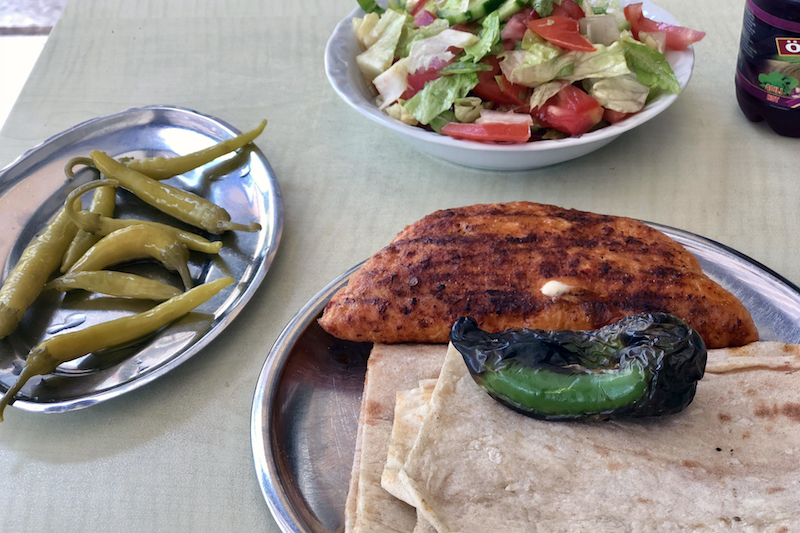
Every time we venture down to Turkey’s Çukurova region, particularly its largest cities of Mersin and Adana, we leave more intrigued than we were on the previous visit. In much closer proximity to Cyprus and Beirut than Izmir and Istanbul, these are truly southern Mediterranean cities, with blooming flowers, incredible citrus fruits, towering palm trees and scorching summers. Major cities with keen urban identities, they’re inhabited by highly diverse populations and characterized by architectural styles not seen further north. And did we mention the cuisine? Adana is the undisputed capital of kebab, and the city of Antakya is among the finest culinary destinations in the country. While Mersin may take a backseat to these regional heavyweights, it boasts its own delicacy, tantuni, which was our first source of inspiration for taking the trip south. We quickly learned that the coastal city of one million boasts a number of other culinary specialties that for the most part have not made it outside the region.

Samtavisi Marani

The medieval Skhvilo fortress prison overlooks the ancient village of Samtavisi and the rest of Shida Kartli’s Kaspi region, a rolling expanse of contours that in July are wrapped in overtones of green and gold under a sky that would make Montana buckle in envy. From here we can see the Mtkvari River Valley spreading east to Tbilisi, west towards Surami and south to the Trialeti Range. Even on blistering summer days you can count on a breeze of honeyed air brushing down from the high Caucasus suggesting that if the Garden of Eden had a vineyard, this is where it would be. This particular micro-zone is called Charmants – charming – a name French viticulturists gave it in the late 19th century, when local noblemen invited them to select the best areas to grow vines.

In & Out

In & Out arrived in Beijing years ago to rave reviews, but the Yunnan restaurant only just settled in Shanghai, confusing homesick Californians with its name. Instead of Double-Double burgers and Animal-Style fries, it serves cross-the-bridge noodles (过桥米线, guòqiáo mǐxiàn) and fried potato balls (土豆球, tǔdòu qiú). While most Yunnan restaurants in China span the whole province’s cuisine, from tea leaf salads to crispy adzuki beans, In & Out’s menu is (mostly) specific to Lijiang, a city deemed a UNESCO heritage site that lies about halfway between Shangri-La and Kunming, the provincial capital, and is home to the Naxi and several other ethnic minorities.

CB Book Club

We recently spoke to food historian and researcher Priscilla Mary Işın about her new book, “Bountiful Empire: A History of Ottoman Cuisine” (Reaktion Books; May 2018). She has previously published edited transcriptions of texts relating to Ottoman food culture and “Sherbet and Spice: The Complete Story of Turkish Sweets and Desserts” (2008), a social history of Ottoman sweets and puddings.

Off the Back of the Truck

A man sells Imeruli cheese, from Imereti, off the back of a truck in the Deserter’s Bazaar in Tbilisi, Georgia. Named after the soldiers who fled the Czar’s army in the early 19th century and sold their guns and equipment there, the bazaar today is a raw, chaotic warren of unprocessed victuals delivered daily, directly from the countryside.

Kyr-Aristos

The late Greek shipping magnate Aristotle Onassis may be world-famous, but no one could have guessed that he would be the source of inspiration for a neighborhood kebab place in a residential suburb of Athens. Onassis, who was commonly called Ari or Aristos, was born in 1906 in Smyrna (now Izmir, Turkey), only to later flee with his family to Greece in 1922, during the Greco-Turkish War. Poor but with a grand vision and a great mind, he went on to become one of the richest and most successful businessmen in the world. When Vasilis and Panayiotis, who also own other successful eateries in town, opened their kebab restaurant Kyr-Aristos (kyr is short/slang for kyrios, which can be translated as “mister”) in spring 2013, they decided to name it after Onassis, a refugee from Smyrna, where kebab was a traditional food.

Mimì alla Ferrovia

On a recent visit to the market of Sant’Antonio Abate, a pilgrimage site for fresh produce, we made friends with Salvatore, a young Neapolitan chef who was buying fruit and vegetables for his restaurant. We thought nothing of it until we bumped into him again, this time when he was buying fresh bluefish, the symbol and pride, he told us, of his restaurant. Our curiosity piqued, we asked where he worked. Mimì alla Ferrovia, he told us, a name we immediately recognized – it’s one of the custodians of Neapolitan gastronomic orthodoxy. And Salvatore Giugliano, an innovative young chef of 27, is now at the helm of this historic restaurant.

logo

Terms of Service