S M B O measurement-vertical measurement-vertical

Latest Stories

Restaurante Leka

Compared to many of the contemporary restaurants and bars in Poblenou’s 22@ district, a hub for tech companies and start-ups in Barcelona, Restaurante Leka has relatively deep roots: it first opened as a traditional truck driver’s inn and eatery in 1984. But don’t let its history fool you – this is a spot committed to the future. Reopened in 2016 as an “open source” and “honest food” restaurant, Leka creates high-quality and interesting dishes that combine local and tropical flavors, all at fair prices. Perhaps more importantly, their culinary philosophy, which is centered on creativity, innovation, environmental responsibility and openness to the international community, mirrors the spirit that Barcelona aspires to embody. The city may be on its way, but Leka is already there.

Lamoon

“Thai people in the North eat a lot of herbs,” Arada Moonroj tells us, over tea, in the dining room of Lamoon. Arada (Ah-rah-dah) opened the restaurant in 2018 with her husband, Jugkrwut Borin, and their longtime friend Piboon “Otto” Thongtanyong in Elmhurst, Queens – a neighborhood already flush with Thai restaurants and cafes. Many of these businesses feature the cuisine of Bangkok, which is heavily influenced by Chinese immigration and often tends toward sweetness. A smaller number serve the rustic and spicy food of Isan, the northeastern region that borders Laos and Cambodia. But very few, anywhere in New York, devote themselves to the food of Northern Thailand, Arada’s first home.

Layer by Layer

As one of the world’s most densely populated urban centers, Mexico City can feel intimidating at first; the hustle and bustle is as inspiring as it is exhausting. To better understand the complex cultural identity of this vibrant megacity, where pre-Hispanic, colonial, and contemporary influences collide, we organized a five-day trip – “Layer by Layer: A Mexico City Culinary Adventure” – in partnership with Atlas Obscura. Led by veteran Culinary Backstreets guide and Mexico City native Paco de Santiago, this unique trip gives a broader understanding of the city’s natural landscape and intimate culinary traditions. Through Paco’s personal anecdotes and encyclopedic knowledge of Mexican culture, the group was able to better understand the harmony as well as the dissonance that define this layered city.

Safa Meyhanesi

The main street of Istanbul’s Yedikule neighborhood is steeped in history: it is dotted with exquisite buildings built a century ago and passes through a gate that is part of the 4th-century Theodosian walls, parallel to which are a series of historic urban gardens that have been farmed for hundreds of years. Once a well-to-do area with a large Greek population, Yedikule today is primarily working-class and home to migrants from Anatolia. Meaning “seven towers,” Yedikule is named for the fortress situated at the corner of the old walls, built by Mehmet the Conqueror just a few years after he stormed into Constantinople and seized it from the Byzantines. It was used as a dungeon for centuries, and concerts were held inside as late as the 1990s.

Cocona, a hole-in-the-wall pie shop in Kolonaki, photo by Anastasia Adamaki

Like many cooks and chefs before and after her, Ioanna Amoutzaki’s biggest culinary inspiration was her mother, Lambrini. Born and raised in Xanthi, a beautiful town in northern Greece, Ioanna spent her childhood in a busy kitchen, learning the art of cooking. Both of her parents came from Smyrna (now Izmir) in Asia Minor – the Greeks from that region have always been legendary for their cooking skills, and her mother was no exception. A particularly skilled home cook and baker (the family had a wood-burning oven in the backyard), Lambrini passed all of her culinary secrets to her daughter.

A Soupy Start to the Day in Istanbul

While Turkish breakfast is a showstopper, many in Istanbul begin their day with slightly more humble (although no less divine) fare: soup. On our “Culinary Secrets of the Old City” walk, we go beyond the major monuments of Istanbul’s Old City and bypass all the restaurants aimed at tourists, instead visiting those time-honored spots where all of the serious eating – like soup for breakfast – is done.

Luna de Xelajú: Guatemalan Comfort Food Featured Image

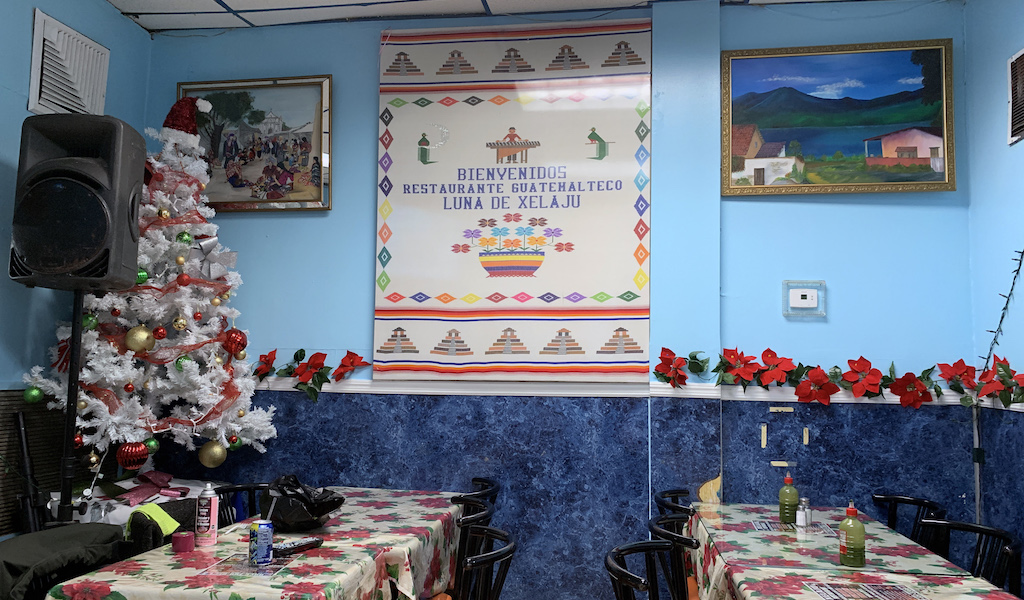
Along Parsons Boulevard one cold night in January, a crowd of people in heavy winter coats line up for the buses that will take them to Rosedale, Hollis, and Pomonok. But behind a small storefront just steps away, Luna de Xelajú offers a transporting experience of a different kind, to somewhere much warmer. The restaurant’s front room resembles the classic New York City pizzeria counter, with pies sitting in a glass display case to be heated by the slice. They do a brisk business, and their slices are popular with a diverse crowd, but the pizzas are an afterthought for most of the place’s clientele, who come to Luna de Xelajú’s front counter for the Central American-style pan.

Basem Abdulbaqi, the owner of Mocha Arabica, pours hot water over ground coffee, photo by Danielle Villasana

Sometimes tasting something straight from the source awakens primal taste memories in our genetic code we didn’t even know were there. Something like this happened when we first went to Mocha Arabica, a new café in Fatih with specialty coffees from Yemen. The first cup of java brewed for us, a variety called Balali from the Bani-Ismail region in north-central Yemen, west of the capital of Sana’a, was earthy and redolent. While we didn’t detect every single note in the wide-ranging description, it was without a doubt a highly nuanced coffee – it had a rich, silky mouthfeel, nice acidity, and botanical hints on the finish.

Sam Has The Wrong Boyfriend

Surely this is one of the most outlandish names for a restaurant anywhere. When we first heard it, we couldn’t believe our ears. First of all, Sam isn’t even a Greek name. But “informed sources” promised superlative food and a pleasant atmosphere so off we trotted, happy to be heading for the beguiling district between Keramikos and Metaxourgio, where no one had any reason to venture not even a decade ago. The first thing that struck us that dark night in mid-December were the small festive lights entwined around the restaurant’s windows, but immediately afterwards we found ourselves smiling at the graphics. Inside and out, the signs, the lettering, the images – of a girl with braids sitting on a swing, arms behind her back, unfussy, line drawings in black and white – charmed us. The clock on one wall with the letters LOVE at the cardinal points added one perfect touch.

Market Watch

Mark Twain once famously remarked, “The reports of my death are greatly exaggerated.” Perhaps Tokyo’s beloved and historic Tsukiji Market can say the same. Several years ago the Metropolitan government declared that Tokyo’s Tusikiji fish market needed to be relocated to a more efficient and workable location. Construction was begun on a new state-of-the-art site 2.3 kilometers away in the Toyosu area of Tokyo, strategically located facing Tokyo Bay.

Januarius

With a gastronomic culture that dates back almost 3,000 years, it’s no wonder that tradition plays an important role in Neapolitan restaurants. Many of our favorite places in the city have been run by the same family, in the same spot, for four or more generations. In fact, we often view this doggedness as a quality guarantee of sorts. But that doesn’t automatically discount new entries to the dining scene. Even some of the most recent additions can still be steeped in tradition, like Januarius, a restaurant born under the star of San Gennaro (Saint Januarius), the patron saint of Naples – it has solid cultural, aesthetic and culinary roots despite only opening late last year.

Kolobok

Located in the picturesque neighborhood of Santa Maria la Ribera, Kolobok – the little Russian restaurant that could – bustles in the Mexico City dusk one recent Sunday afternoon. Patrons cluster around the warm light of the to-go window, shouting out empanada orders over the sound of a band playing nearby in the neighborhood’s Plaza Morisko. Ducking inside, we grab a seat at one of the few, tightly clustered tables, feeling cozy and warm after the chill outside. Russian cuisine remains something of a mystery to most Mexicans as immigration from that country has been a mere trickle in comparison to the various waves of Chinese, Lebanese, Spanish, Argentinean and Korean migrants over the last 200 years, and their resulting culinary contributions.

Faz Frio

Lisbon, as we’ve written numerous times before, is visibly changing every day. Consequently, there aren’t many restaurants in town that have survived in the same venue, with the same name, continually serving proper meals for the last 100 years. If memory (and Google) serve us well just nine of those century-old venues remain open: Café Nicola, Cervejaria Trindade, Estrela da Sé, Faz Frio, João do Grão, Leão d’Ouro, Martinho da Arcada, O Polícia and Tavares. This, of course, in a city that according to INE, the Instituto Nacional de Estatística (the National Statistics Institute), has more than 20,000 business premises registered as restaurants or something similar.

Taverna tou Oikonomou

The most characteristic Greek dishes, the ones all Greeks know from their mothers and miss when away from home, are known as tis katsarolas, or “of the pot.” They can be meat stews or vegetable stews, often cooked with generous amounts of olive oil. Although one can find these dishes in many tavernas and restaurants in Greece, they are very rarely done correctly: bad ingredients, dubious oil and lack of freshness can affect both texture and taste and give unappetizing results. In Athens, however, Taverna tou Oikonomou in Ano Petralona specializes in this type of home-style cooking and does everything deliciously by the book.

Keti's Bistro: Nouvelle Tbilisi Featured Image

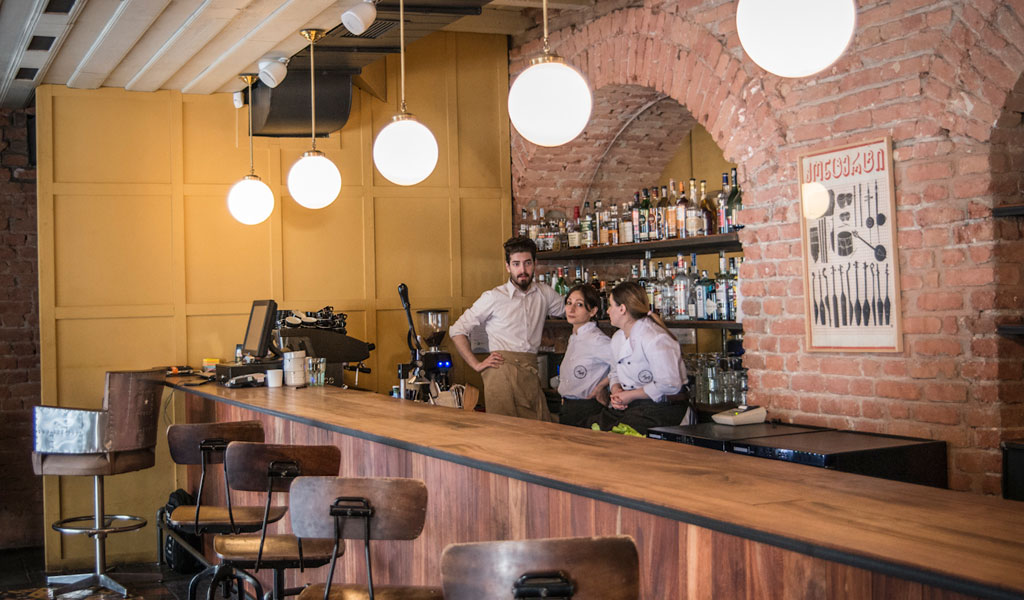
Going out for a Georgian dinner in Tbilisi used to be a predictable, belt-popping affair. There were very few variations on the menus of most restaurants, all of which offered mtsvadi (roast pork), kababi (roast pork-beef logs), ostri (beef stew) and kitri-pomidori (tomato-cucumber) salad. To open a restaurant and call it Georgian without these staple dishes would have been as ludicrous as a coffeehouse with no coffee. In the past several years, however, young local cooks have been expanding the rich possibilities of Georgian cuisine to both much applause and a lot of finger wagging for blaspheming traditional recipes.

logo

Terms of Service