We can't find the internet
Attempting to reconnect
Something went wrong!
Hang in there while we get back on track


Rio's culinary record
Rio is a city that cuts no corners when it comes to making its grub gostoso, which, in Portuguese, is used both to mean “tasty” and as a typical pick-up line to call someone attractive. If – as is popularly said here – God is Brazilian, Rio would be its Garden of Eden, brimming with the fruits of temptation.
Get the Full Story →
discover the city, street by street, bite by bite
Rio
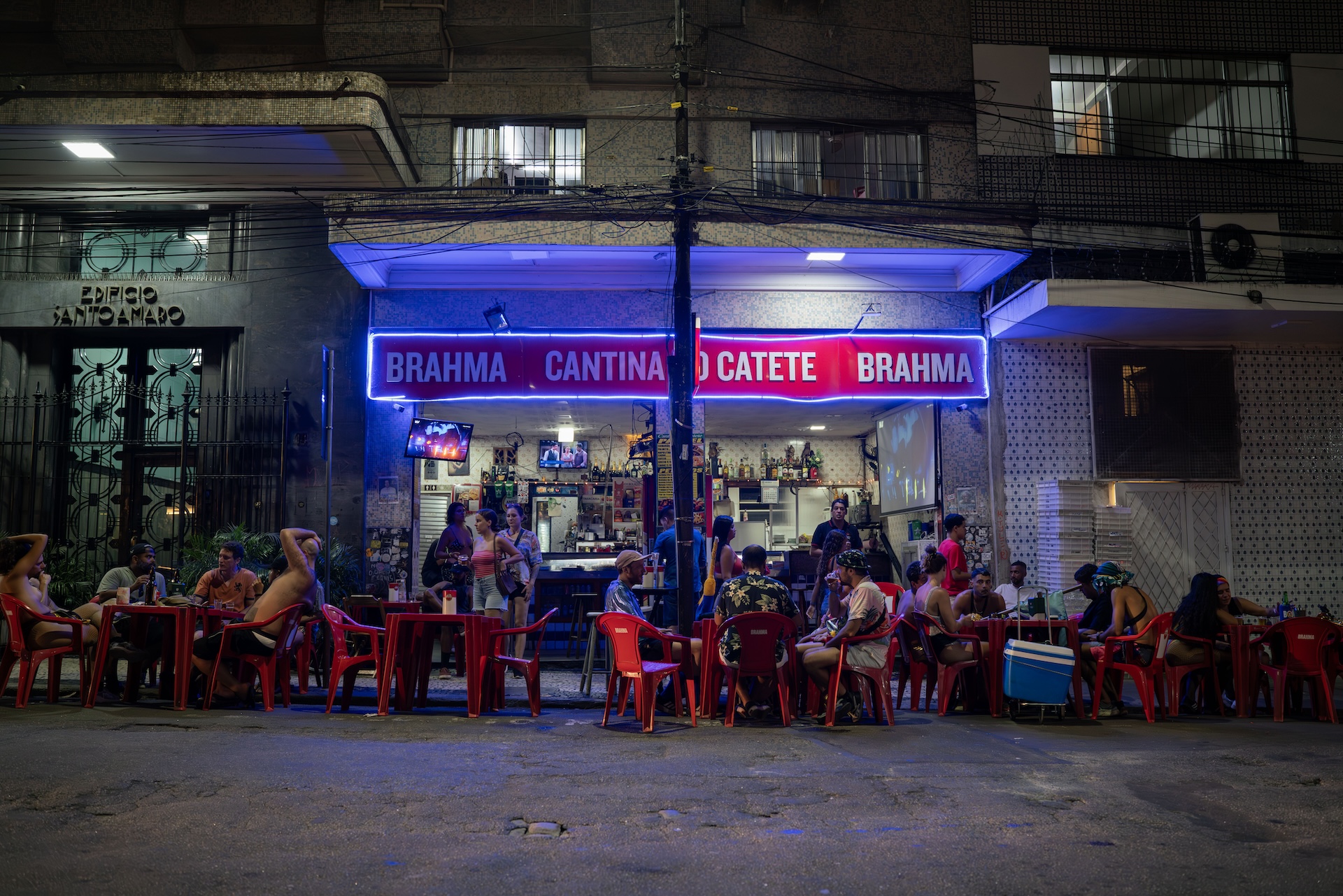
Cold Beer, Hot Petiscos: A Local’s Guide to Rio’s Best Botecos
A local guide to the best botecos in Rio de Janeiro. Discover where to eat petiscos, drink cold beer, and experience the city’s everyday bar culture.
Read more
Rio
Adega Pérola: One Fish, Two Fish
Ricardo Manuel Pires Martins likes to brag about the popularity of his bar among Japanese tourists. We don’t begrudge him that, because if you’re in the market for seafood, particularly the less-cooked kind, as these tourists evidently are, Adega Pérola is your bar. Tucked on a commercial lane a few blocks behind the Art Deco condo-and-hotel jam that is the Copacabana beachside, Rio's Adega Pérola sticks close to its Iberian roots, with wine jugs lining the high wall shelves and a selection of about a hundred tapas stewing in their respective marinades behind the glass bar window.
Read more
Rio
Café Lamas: Classic Meals, with a Side of History
From the street, Café Lamas looks almost intentionally nondescript. A fluorescent-lit bar with a glass case of snacks and a few metal chairs would make it identical to any other lanchonete (snack bar) across the city, if it weren’t for the shadowy doorway behind the bar’s aisle. Behind that door awaits a blast from the past. Café Lamas is Rio de Janeiro’s oldest restaurant – a respectable 138 years old in a city that is rapidly putting on a new face as it buzzes with Olympic, hotel and condominium construction – and the place radiates a sense of history and tradition. Bow-tied waiters politely bend as guests enter the dining room, which is dimly illuminated by lamps on ornate cast-iron mounts.
Read more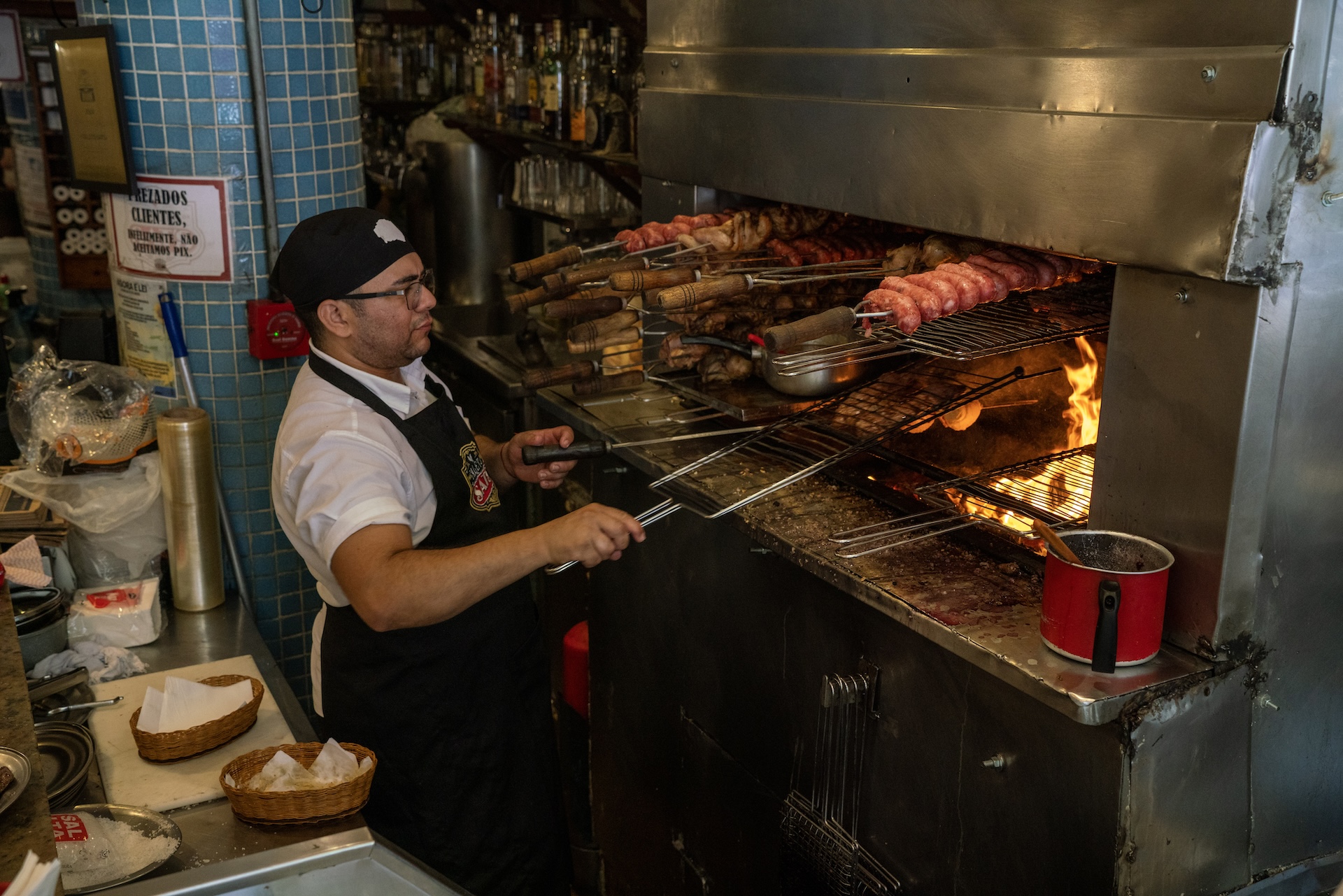
Rio
Galeto Sat's: Spring Chickens and Sugarcane Spirits
Although there are plenty of bars on Copacabana’s famous Avenida Atlântica – or even at the beach, at the so called quiosques – very few are worth a visit. Many are just tourist traps. Others are much too expensive. No, the really good bars in Copacabana are inland, along Barata Ribeiro street. That road, along with some of the side streets that let onto it, reveals the true face of Copacabana's popular gastronomy. One of the first bars you encounter on Barata Ribeiro is Galeto Sat's. Open seven days a week, always until 5 a.m., the bar is a bohemian temple – but it’s far from being only that. For many cariocas, Sat's serves the best galeto in town. A galeto is a very young chicken (no more than three months old) cooked over a big coal-fired grill.
Read more
Rio
Bar Urca: Sunrise, Sunset
In a city with no shortage of postcard views, Bar Urca’s may get the title for most picturesque in Rio. The eponymous residential neighborhood where the bar is located faces Guanabara Bay, where a colorwheel of boats and yachts bobble on the slow waves leading up to the seawall. Across the bay, the iconic Christ statue watches over everyone from atop Corcovado peak behind the neighborhood of Botafogo.
Read more
Rio
Confeitaria Colombo: Pastries over Bikinis
For a city whose natural beauty is what often sweeps visitors off their feet, Rio’s historical gems often look a little like urban ugly ducklings next to the bikini crowds and chic bars on sandy Ipanema beach. That’s a shame, because Rio Antigo has a great story to tell. Old Rio runs along the Guanabara Bay rather than the open Atlantic, and it was the former that gave the city its name – River of January – when Portuguese explorers came upon it in the first month of 1502.
Read more
Rio
Tacacá do Norte: The Amazonian Shake Shack
The eyes of Tacacá do Norte’s harried staff widen as yet another customer arrives during the lunchtime rush. The bedroom-sized snack bar can barely hold one line of chairs around its bar but they have somehow managed to squeeze in two. Impatient regulars shake hands and whistle “psst” to the young men staffing the establishment, who gingerly hand steaming pots of shrimp soup and freshly puréed juices over the packed bar.
Read more
Rio
Pavão Azul: Play It Again, João
There’s one thing about the very popular Copacabana bar Pavão Azul that remains a mystery, even after 60-odd years of business: its name. Pavão azul means “blue peacock” in Portuguese, but even the owners don’t know where this curious name come from. Some customers who have been frequenting the bar since it opened in the 1950s say that it was named after the bar in the movie “Casablanca” – except that that place was actually called the Blue Parrot. What’s not a mystery is the bar’s popularity. Once just a regular old botequim – a small bar serving simple food – Pavão Azul was discovered by food critics thanks to its patanisca.
Read more
Rio
Majórica: Steak Date
If you go to Rio’s Café Lamas to see where leftist organizers met during Brazil’s military dictatorship, go to Majórica to eat steak where the city’s business and political elites gather today. Located on a residential street in Rio’s Flamengo neighborhood, the restaurant from the outside looks like a three-story house, but for the neon red cursive sign with its name. It was founded in 1963 by two brothers from the Spanish island of Majorca. When we last interviewed the owners in 2015, it was being run by the daughter of one brother, together with (then) 79-year-old Galician-born Ernesto Rodriguez, who worked his way up from being the restaurant’s janitor back in 1965.
Read more


Daily Dispatches from the Frontlines of Rio



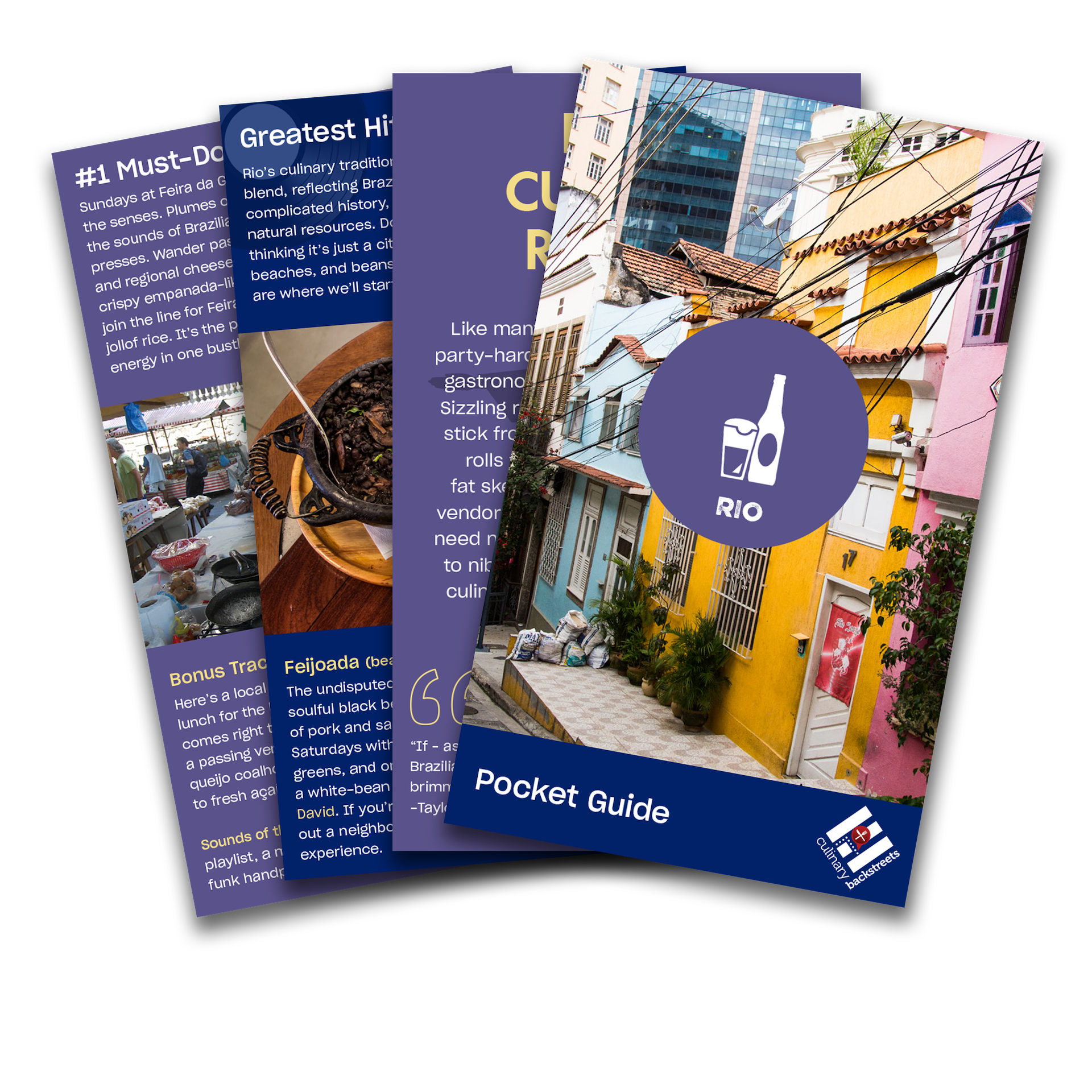
Get Your Free Rio Pocket Guide
Introducing our pocket-sized Rio guide — perfect for your next culinary adventure. Yours free when you sign up for our newsletter.
Get Your Free Rio Pocket Guide
Introducing our pocket-sized Rio guide — perfect for your next culinary adventure. Yours free when you sign up for our newsletter.
Your trips, powered by our picks
Curated Rio Travel Boards


Visual Dispatches from the Frontlines of Local Eating

Erisvaldo's Roscas

Monday Night at Renascença Clube in Rio
Culinary Backstreets® Envoys, Always Searching for the Next Hidden Gem

Marco
Rio Tour Leader

Juliana
Rio Tour Leader

Joel
Rio Correspondent

Rebeca
Rio Photographer
Your Questions, Answered
The South American city of Rio de Janeiro and its exuberant spirit sprawls along Brazil’s southeastern coast, between dramatic, jungle-clad mountains and the vast Atlantic. Dominating the view are the geological titans of Sugarloaf and Corcovado Mountains, as well as Rio’s famous beaches, including Copacabana and Ipanema.
Sugar Loaf and Corcovado are famous for a reason, and worth the line to get a sweeping view of the city. And no trip to Rio can ignore the beaches. We also recommend just walking the city’s neighborhoods, like oceanfront enclave Urca and artsy Santa Teresa, which clings to the hillside. Have a good wander until you come across live samba music in any of the city’s neighborhoods. Most of all, eat, drink, and be merry.
Rio is great year-round, but if you want to sidestep the sweaty throngs and the most intense heat, aim for March through November. Winter (June-August) is mild. Some visitors also choose to brave the summer heat to revel in Rio’s legendary carnival, which occurs during February or early March – though expect restaurants to be closed during that time and be aware that temperatures can rise to 100°F.
Think tropical. Summer (December-February) is a full-on embrace of heat and humidity, often punctuated by downpours that clear the way for even more humidity. Winter (June-August) offers a bit of a respite, with temperatures dropping a touch. Spring and autumn are Goldilocks weather – warm, sunny, and just right for wandering and eating.
Rio won’t necessarily bleed your wallet dry if you play things right. The botecos sling out incredible, affordable bites, and you can find comida por quilo (food by the kilo) joints that are both delicious and easy on the budget. The price spectrum for accomodation is wide, and the subway is generally reliable and reaches many areas visited by tourists. A decent 3-star hotel might cost $70-120 per night, though you can find hostels and pousadas (guesthouses) for less. Coffee is around $2-4, a beer about $1.50-3, and a sit-down meal $15-30 or more. Street food is certainly cheaper, from $1-6. Public transport can cost around $1.50 per ride.
Certain neighborhoods are safer than others, but in all neighborhoods, we recommend being aware, keeping your valuables close, and remaining careful after dark. We suggest researching specific neighborhoods and getting local advice to ensure a safer experience – you can always get the lowdown from your Culinary Backstreets guide.
“Best food” is a rabbit hole we happily climb into. Tackle a local feijoada or moqueca stew, snag some iced matte tea and lemonade on the beach, and head into a juice bar to take advantage of all that beautiful tropical fruit readily available. Check out our coverage from Rio locals for recommendations on the best botecos and bars for small plates, including savory snacks and seafood.
Where you stay in Rio can really shape your experience. Copacabana, Ipanema, and Leblon are iconic for a reason and lie right along the subway line. If you are looking for a slower-paced neighborhood that still has tons of character and are comfortable depending more on taxis and ride-hailing apps, Santa Teresa’s cobbled streets and artistic vibe might be the thing. So too could Urca, Lagoa, or Jardim Botânico.
Rio’s main gateway is Galeão International Airport (GIG), and it handles a large number of international flights direct from the US.
Rio is beaches. Copacabana, Ipanema, Leblon – they’re all right there, part of the city’s DNA. But if you’re feeling adventurous, a drive along the Costa Verde will reward you with even more stunning stretches of sand. Great destinations just outside of the city include Buzios, Paraty, and Ilha Grande.
Rio can definitely be a playground for kids. Beaches are a natural draw, and places like the Botanical Garden and Parque Lage offer a different kind of exploration. The cable car up Sugar Loaf is a favorite for all ages.
Several popular beaches, like Copacabana and Ipanema, offer accessible pathways and ramps, as do some of the major tourist sites. However, older sidewalks and public transportation can still be a challenge. It’s always best to research specific areas and modes for getting around.
Culinary Backstreets runs one food tour in Rio, Discovering the Culinary Soul of Old Rio. It's a full-day walk through the two most historically and architecturally rich neighborhoods of Old Rio, tracing carioca food from historic cafés and coffee-shop breakfasts to old-Portuguese confeitarias, botecos, and market food, led by resident carioca Marco Bastos.
All three. Solo travelers do brilliantly at botecos where standing at the bar with a chopp is normal and welcoming. Families are welcomed everywhere, and the beach-neighborhood casual eating is easy with kids. Groups of six to twelve are ideal for a Saturday feijoada or a churrascaria dinner, this is a city built for shared eating.
Copacabana (Pavão Azul, Galeto Sat's, inland from the beach on Barata Ribeiro). Lapa and Centro (Bar Luiz, Adega Flor de Coimbra). Santa Teresa (Bar do Gomes). Botafogo and Urca for view-plus-boteco. Laranjeiras for the reborn Mercado São José.
Four days. One for old Rio (Centro, Lapa, Santa Teresa boteco crawl), one for the Zona Sul beach neighborhoods and their casual seafood spots, one for a full-day trip to Petrópolis or a Mercado São José / Laranjeiras market lunch, one to hit a proper churrascaria and a samba-night bar.
March through November are ideal. Winter (June to August) is cool and clear, restaurants are quieter, and produce like siri-mole crab and jaboticaba fruit peak in different windows. Carnival week itself is a food dead zone, most kitchens close.
As of April 2025, US citizens require a Brazilian e-visa for stays up to 90 days. Apply online at brazil.vfsevisa.com before travel. No vaccination or testing requirements.
Feijoada (Saturdays traditionally), moqueca (Bahian or Capixaba), pastel and caipirinha at Adega Pérola, Portuguese bacalhau at Confeitaria Colombo, a proper picanha steak, tacacá, açaí bowl on the beach, and cold Antarctica beer with petiscos at any real boteco.